
2025 Honda CR-V Hybrid Sport Touring: Specs, Features, and Performance
Honda has been dominating the automobile industry with their ever-lasting reliable and hone-to-perfection cars — giving a tough time to its competitors like Toyota. One of their pinnacles in the compact SUV lineup is the new 2025 Honda CR-V Hybrid Sport Touring, which is definitely affordable, fuel-efficient, and sport-ready performance. However, there’s much more to it that you need to know before buying one!
What’s New Compared to the 2024 CR-V Hybrid?
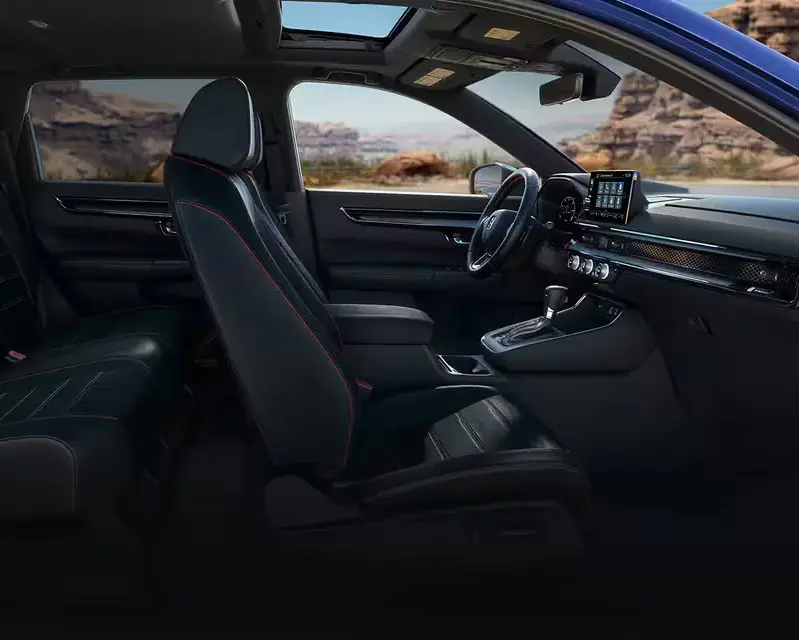
Besides the pricing point-of-view, the 2025 model offers just a few upgraded features this year such as a slightly upgraded interior, and a more contemporary and sporty front grill. However, the honeycomb mesh dashboard inlay and seating material is very much identical to the previous year.
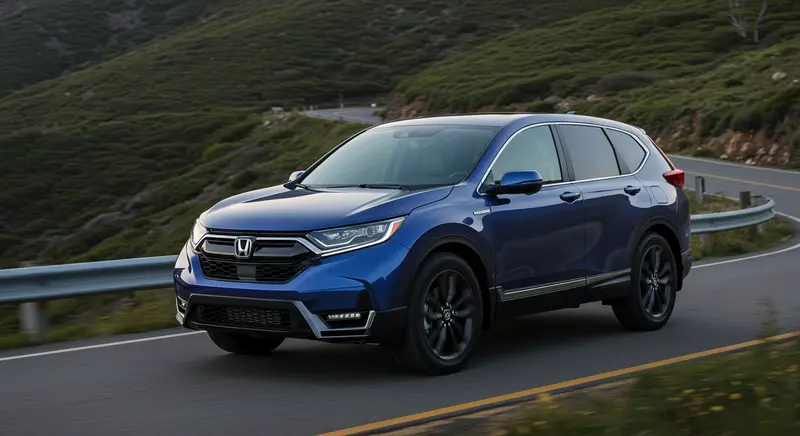
Now, the primary distinction is the pricing itself, this year’s CRV Hybrid Sport Touring starts with an MSRP of $42,450, which is a slight increase from the 2024 model which had an MSRP of $41,550. Other than pricing, every single technical and mechanical feature remains the same.
Engine and Performance: What Powers the 2025 CR-V Hybrid?
Here is the breakdown of what powers the 2025 Honda CR-V Hybrid Sport Touring:
Hybrid Powertrain: Fuel Economy and Driving Experience
The 2025 Honda CR-V Hybrid Sport Touring is powered by a 2.0-liter naturally aspirated four-cylinder engine equipped with two electric motors. They are providing a combined output of 204 horsepower. The powertrain has an EPA-estimated fuel economy of 34 mpg (on highway) and 40 mpg (in city), which translates to a combined rating of 37 mpg.
In particular, the CR-V Hybrid Sport Touring has incredibly responsive acceleration and smooth gear shifting which makes your driving experience more comfortable and dynamic. Not only that, those electric motors have enough torque for quick take-offs. Like most earlier models, the road handling is great and gives you enough confidence to take sharp turns.
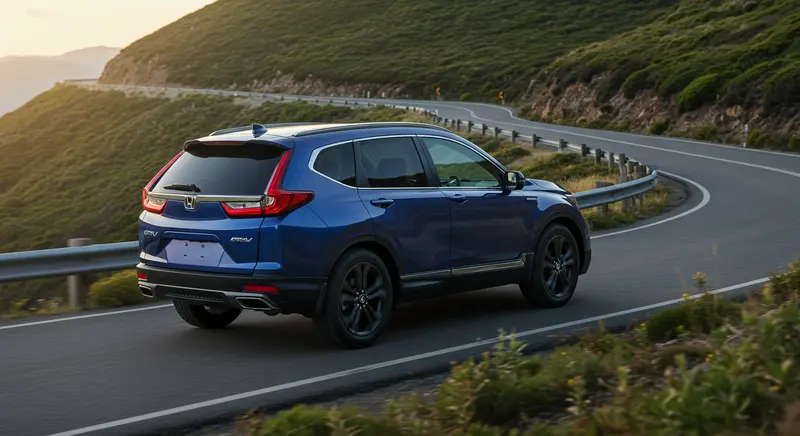
In terms of suspension, the shock absorbers are good enough to take down even the largest bumps on the road quite easily. And that regenerative braking system is responsive and highly commendable.
However, many owners have reported their grief that when the engine is subjected to rapid acceleration, the CVT (Continuously Variable Transmission) causes a loud droning noise in the engine compartment, which might not be pleasant for some people.
Acceleration, Horsepower, and Towing Capacity
The 2025 Honda CR-V Hybrid Sport Touring is ready from the factory for both sports performance and fuel efficiency. With its two electric motors, the hybrid power delivery system makes 204 horsepower, which is strong enough to pump 247 lb-ft between 0 to 2000 rpm. It can easily accelerate from 0 to 60 mph under 7.9 seconds only.
In terms of towing capacity, CR-V Hybrid Sport Touring has a maximum towing capacity of 1,000 pounds, which means you can haul a lawn mower or some motorcycle with it. That’s not it, the excellent balance of power, torque, and efficiency makes it a great machine to have.
AWD vs. FWD: Which One to Choose?
Some of the main differences between front-wheel drive (FWD) and all-wheel drive (AWD) are power delivery, fuel economy, and obviously the pricing aspect. The FWD version is more fuel-efficient, but the AWD version has better performance and traction.
If we specifically discuss fuel economy, the FWD version gives 43 mpg in the city and 36 mpg on the highway. Whereas, the AWD version has slightly less fuel efficiency of 40 mpg in the city and 34 mpg on the highway.
However, if you are deciding to select between All-Wheel Drive (AWD) and Front-Wheel Drive (FWD), it comes down to your driving needs and the conditions. In particular, the Front-Wheel Drive (FWD) model will have better fuel economy and lower pricing, but with drawbacks such as less traction on slippery roads, and torque steer while accelerating suddenly.
On the other hand, some advantages of All-Wheel Drive (AWD) are increased traction, and better handling, which gives you more confidence when driving in snow. But, this too comes with cons such as less fuel economy, and a higher MSRP. It’s your ultimate choice to finalize the one that meets your needs.
Technology and Safety Features in the 2025 CR-V Hybrid Sport Touring
Over the decades, Honda has been evidently improving their cars rather than focusing on the engine, fuel efficiency, or just the pricing aspect. The 2025 Honda CR-V Hybrid Sport Touring ticks all the boxes when it comes to modern features. Some of the greatest features are:
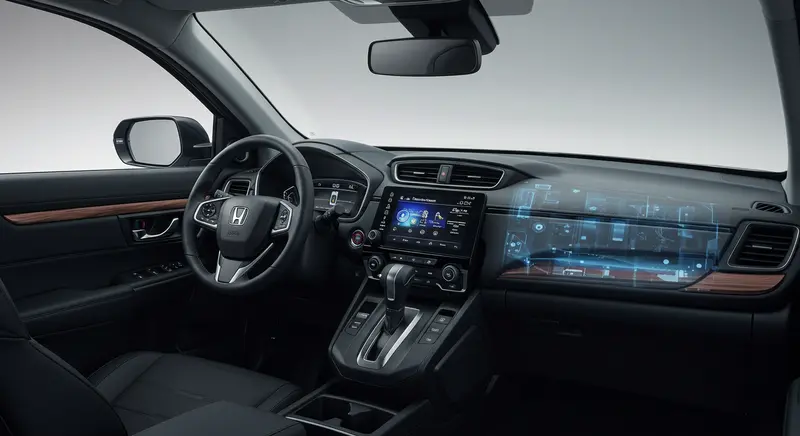
Technology Features:
- Infotainment System: The 2025 model comes with a 9-inch touchscreen infotainment system that comes with both wireless Apple CarPlay and Android Auto integration allowing seamless smartphone connectivity without connecting any cables.
- Audio System: Since Honda has lifted its game, this model now has a Bose Premium Sound System that has 12 high-quality speakers with a subwoofer included. The system altogether delivers impressive audio quality.
- Charging Options: Honda understood the essential need and has added a wireless charging pad along with two rear USB Type-C ports at the back for rear passengers to conveniently charge their devices.
- Remote Start: In winter, you can enjoy its remote engine start functionality that lets you turn on the engine from a distance, so you can have a comfortable cabin temperature upon entry.
Safety Features:
- Honda Sensing Suite: The 2025 model comes with Collision Mitigation Braking System (CMBS). which when detects any possible frontal collision, will automatically apply brakes to save you and your loved ones.
- Road Departure Mitigation System (RDM): This system is quite effective in detecting road markings and alerts the driver if their car is either leaving or about to leave the road.
- Adaptive Cruise Control (ACC) with Low-Speed Follow: Unlike many cars, Honda CR-V has a modern ACC which allows you to easily maintain a certain speed with a set following distance on highways and can adjust speed according to stop-and-go traffic.
- Lane Keeping Assist System (LKAS): This system keeps the steering stiffer to help keep the vehicle centered in its lane. As a safety feature, it can the car from getting into an accident.
- Traffic Sign Recognition System (TSR): This system scans the road identifies traffic signs and displays them on the instrument cluster, making it easier to know the speed limits and what’s coming next.
- Blind Spot Information System (BSI): CR-V has an incredibly effective blind spot monitoring system that alerts drivers when a vehicle is detected in adjacent lanes during lane changes.
- Airbag System: The most important and comprehensive system comes with front side, knee, and side curtain airbags with rollover sensors to protect you in case of any accident.
These were just some of the features that made the 2025 Honda CR-V Hybrid Sport Touring a technologically advanced and safety-focused SUV. The SUV’s design philosophy has peace of mind, comfort, and innovation.
Comparison: 2025 Honda CR-V Hybrid vs. Competitors
- 2025 CR-V Hybrid vs. Toyota RAV4 Hybrid
- How It Stacks Up Against Hyundai Tucson Hybrid
- Pros and Cons Compared to Other Hybrid SUVs
The 2025 Honda CR-V Hybrid is undoubtedly a great SUV with a compact hybrid setup, yet it still has many competitors from other automobile makers. For instance, the 2025 Toyota RAV4 is also a hybrid SUV with great features. Let’s see the analogy between both competitors:
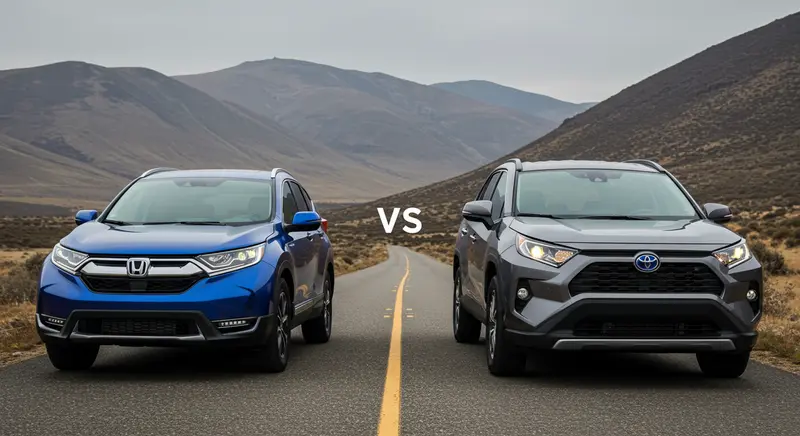
2025 Honda CR-V Hybrid vs. 2025 Toyota RAV4 Hybrid
- Engine Performance: CR-V comes with a 2.0-liter four-cylinder naturally aspirated engine assisted with two eclectic motors, collectively producing 204 horsepower, whereas the Toyota RAV4 Hybrid has a 2.5-liter four-cylinder engine paired with two electric motors, putting out 219 horsepower.
- Fuel Efficiency: CR-V has a fuel efficiency of 43 mpg in the city and 36 mpg on the highway with front-wheel drive, while Toyota claims fuel economy at 41 mpg in the city and 38 mpg on the highway. Both numbers are pretty close!
- Interior and Cargo Space: CR-V Hybrid has 39.3 cubic feet of cargo space behind the rear seats, and if the seats fold it expands to 76.5 cubic feet. Whereas, the RAV4 Hybrid has 37.5 cubic feet of cargo space behind the rear seats and 69.8 cubic feet with seats folded.
2025 Honda CR-V Hybrid vs. 2025 Hyundai Tucson Hybrid
- Engine Performance: As we already know, the CR-V Hybrid delivers 204 horsepower but the Tucson Hybrid comes with a 1.6-liter turbocharged four-cylinder engine with an electric motor, producing 226 horsepower, which is 22 more HP.
- Fuel Economy: Unlike CR-V’s consumption of 43 mpg in the city and 36 mpg on the highway, the Hyundai Tucson Hybrid has the same mileage figures of 38 mpg both in city and highway driving.
- Interior and Cargo Space: The CR-V Hybrid has 76.5 cubic feet of cargo space with rear seats folded, while the Tucson Hybrid has nearly 80 cubic feet of cargo space with seats folded.
Pros and Cons Compared to Other Hybrid SUVs
- Pros: The CR-V Hybrid has much competitive fuel economy, especially in city driving with more cargo space than most of its competitors, along with its standard safety features such as the Honda Sensing suite, including adaptive cruise control and lane-keeping assist.
- Cons: Some competitors RAV4 Hybrid and Tucson Hybrid are offering bigger engines or more horsepower than the CR-V Hybrid. The CR-V’s infotainment system has a maximum 9-inch screen and is smaller compared to competitors offering larger displays. Pricing is another great factor, where some rivals have lower pricing compared to it.
Final Thoughts
To recapitulate things together, the new 2025 Honda CR-V Hybrid Sport Touring has many more added safety features, considerable cargo space, and sort of better fuel efficiency than its most competitors but might lack in other areas where the top competing models are the Toyota RAV4 Hybrid or Hyundai Tucson Hybrid. So, the last buying choice is up to you and your experience with these SUVs earlier in life.
