
American Muscle Cars: History, Top Models & Performance Insights
American muscle cars are globally known for their aggressive looks, bright colors, and mighty powerful V8 engines — which easily dominate any drag and street race you throw at them. During the early 1960s, gasoline was relatively cheaper than now, and this is when companies like General Motors introduced their first-ever muscle The Pontiac GTO.
After its success, many other legendary muscle cars came out such as Chevrolet Camaro Z/28, Dodge Charger R/T, and Ford Mustang Boss 429. However, in the mid-1970s, there was a considerable fuel crisis, and the government had to put tighter regulations. But, the American muscle cars had their comeback again in the 2000s with models like the Dodge Challenger Hellcat and Chevrolet Camaro ZL1 — which were modern, better at fuel, and had the same performance.
The Legacy of American Muscle Cars
American drivers had a long affair with powerful and dominating cars, especially with bigger engines. This is why there’s a saying as “There’s no replacement for displacement”. These muscle cars are simply more powerful, have more speed, and rebellious nature.
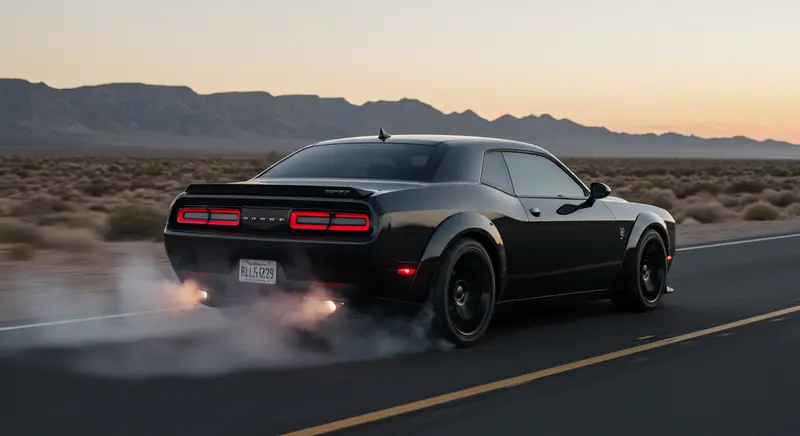
The legacy of these high-performance vehicles is more dominating due to their aggressive design and powerful V8 engines, which have left an indelible positive mark on the global automotive industry and local culture. From the golden era (in the 1960s) till today, muscle cars continue captivating enthusiasts and collectors alike.
What Defines a Muscle Car?
A simple yet most defining explanation of a muscle car is as a mid-size, high-powered vehicle equipped with a large-displacement V8 engine, designed for straight-line speed and affordability. Unlike European sports cars, which were designed for handling and aerodynamics, American muscle cars are for brute acceleration and larger displacements.
The key features of a muscle car are rear-wheel drive, a lightweight yet aggressive body. Some of the greatest examples of cars that have these specific features are the Chevrolet Camaro, Ford Mustang, and Dodge Charger.
Interestingly, the term “muscle car” was called when American automobile manufacturers started producing cars smaller in size but with oversized engines (more horsepower) — which made them high-performance yet affordable for the general public.
Evolution of American Muscle Cars Till Today
The true golden era of muscle cars was two decades from the 1960s to the 1970s — when we first saw these iconic models and their better models. After 1964 Pontiac GTO, Dodge Challenger, and Chevrolet Chevelle SS were among the first true muscle cars. Not only that, there was a rivalry between the Big Three; Ford, GM, and Chrysler — which made them produce models that had over 400 horsepower.
However, with the introduction of stricter emission regulations and rising fuel costs, there was an evident decline in the demand for muscle cars in the American market. In the coming decade of the 1970s, everyone would be considering fuel efficiency and better mileage cars.
However, things turned around again in the 1990s and 2000s, when there was a sudden increase in demand for muscle cars. Then, there were legendary models Ford Mustang GT, Chevrolet Camaro SS, and Dodge Challenger SRT Hellcat.
Even today, as you read, muscle cars are continuing to evolve to have modern technology, advanced aerodynamics, turbocharged efficiency, and hybrid powertrains but have that same retro styling — carrying all their performance heritage.
The Cultural Impact of Muscle Cars in the U.S.
Muscle cars have been deeply woven into the fabric of American culture along with other similar factors. These muscle cars are a great way to scream freedom, power, and rebellious nature — showing how fearless Americans are.
However, that’s not it, over time, the muscle car community has grown to a hundred thousand. At every car show, drag race, and restoration event, you will meet thousands of enthusiasts gathering just like it’s part of their culture now.
Top Iconic American Muscle Cars of All Time
Muscle cars have greatly transformed the modern automobile industry, particularly in the U.S. — where this category is still associated with raw power, aggressive styling, and more horsepower. However, the modern vehicles have evolved completely differently but these muscle cars remain legendary for their unmissed acceleration and sheer road presence. Here are the most iconic muscle cars that have defined generations to come:
Ford Mustang: The Pioneer of Muscle Cars
Ford Mustang was among those first production cars that kind of kickstarted the muscle car phenomenon. More specifically on technical aspects, it was affordable, smaller in size yet had a high-performance engine which instantly made it a sensation amongst youth.
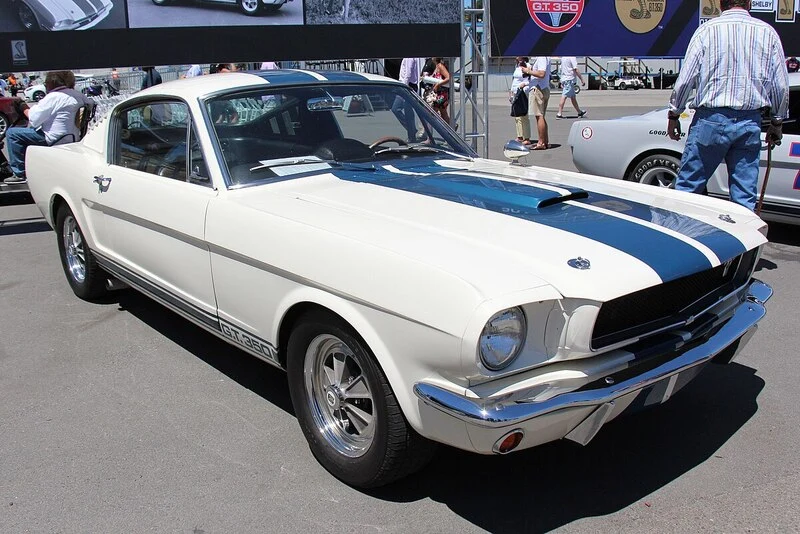
After its first introduction in 1964, Ford Motors launched another great muscle car Shelby GT350 in 1965 which completely changed the dynamics of the muscle car industry. Shelby GT350 was basically a Ford Mustang but with upgraded design and performance parts.
Even today, the Shelby GT500 has continued the true legacy of the Mustang, which proved that a muscle car can have modern technology. Other than aforementioned, some top models of Ford Mustangs are:
- 1969 Mustang Boss 429
- 2003 Mustang SVT Cobra (“Terminator”)
- 2012 Mustang Boss 302
Chevrolet Camaro: A Timeless Competitor
In response to Ford’s Mustang, General Motors launched their first muscle car named as Chevrolet Camaro back in 1966. Hardly a few years down the road, Chevrolet introduced high-end variants to the Camaro such as SS and Z/28 which quickly became popular.
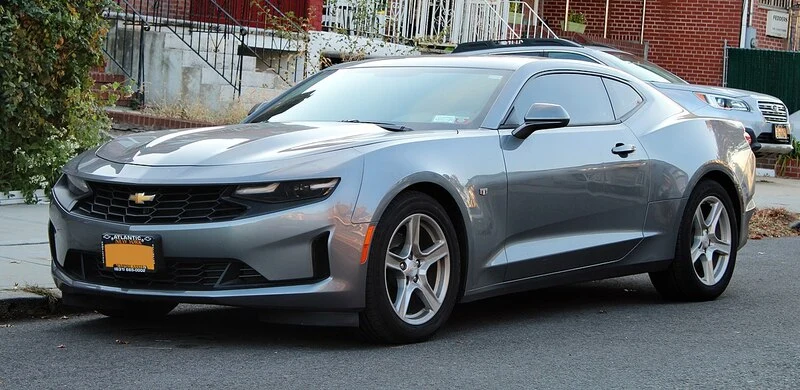
However, over the decades, the Chevrolet Camaro has evolved into a modern muscle car with advanced fuel injection and supercharged engines, and of course better sound system. Some of the timeless models are:
- 1969 Camaro ZL1
- 1970 Camaro Z/28
- 1987 Camaro IROC-Z
- 2012 Camaro ZL1
- 2018 Camaro ZL1 1LE
Dodge Challenger & Charger: Power and Performance
The Dodge Challenger is another popular American muscle car produced by Chrysler back in 1966. The original 1970 Challenger R/T came with a 426-inch HEMI V8 engine, which makes it a beast in drag racing.
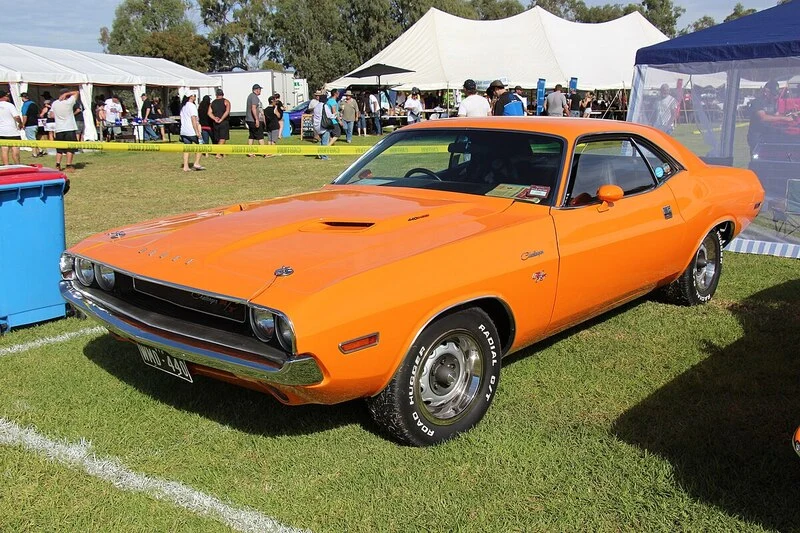
The Charger became incredibly famous due to its presence in many movies and television shows. In the fuel crisis era, Dodge also experienced a decline in their sales. However, the company revived both models (Challenger & Charger) again in the 2000s, which made it even more popular than ever before.
After the success of many models, Dodge finally came up with their modern yet powerful model Challenger Hellcat Redeye which makes 797 horsepower straight from the factory and is ready to rock and roll on the racetrack. However, the Charger is now a four-door everyday sedan yet still that strong muscle car on the inside.
Pontiac GTO: The Original Muscle Car
The Pontiac GTO is one of the first true muscle cars, which was first manufactured in 1964. This was the car that laid the foundation for the entire industry to compete and set a definition for the term “muscle car”.
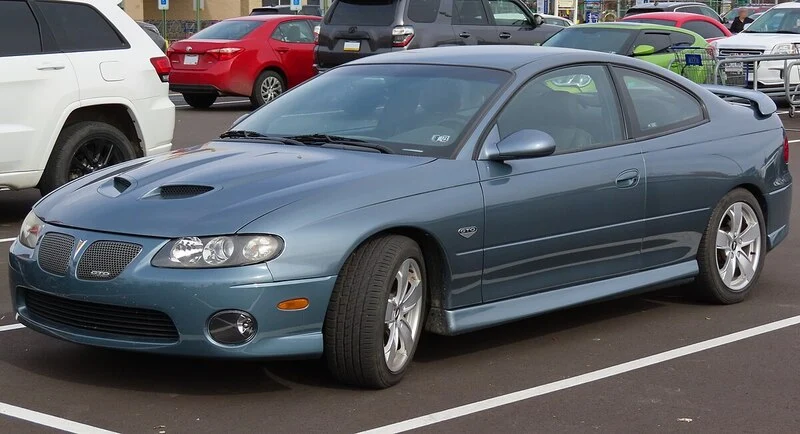
It originally came with a 389-cubic-inch extremely powerful V8 engine and had very aggressive looks. In the initial days, GTO was an instant success. However, The 1969 Judge edition with its Ram Air III engine, took its place. Despite its discontinuation, GTO still has great value in American automobile history and made the way for modern muscle cars.
Modern American Muscle Cars: Performance & Innovations
Over the decades, American muscle cars have been really close to automobile evolution — mainly with better interiors, turbocharging/supercharging, improved handling, lower emissions, and strong built quality. Whereas, we’ll still have an analogy of classics with moderns:
How Today’s American Muscle Cars Compare to Classic Models
Classic muscle cars had lesser complex technologies involved; simpler yet big engines, and no fuel injection system. However, they also had weaknesses in certain areas such as poor traction, braking, and handling due to outdated suspension and braking systems. Some examples of these classic muscle cars are the 1970 Dodge Charger R/T and the 1969 Chevrolet Camaro SS.
The 2024 Dodge Challenger SRT Demon 170 is now producing nearly 1025 hp which is nearly 425hp more than its older generation 1970 HEMI Challenger. But, this newer model also has a stronger braking system.
Compared to classic muscle cars, modern cars are superior in every way — having features like launch control, adaptive cruise control, air suspension, and better aerodynamics — which makes them faster, more reliable, and more manageable on both the drag strip and road courses.
The Role of Advanced Technology in American Muscle Cars Performance
Modern muscle cars are incredibly advanced now — such as supercharging/turbocharging, forced induction, electronic fuel injection, and variable valve timing. These advancements give out more power output without needing larger engine displacement.
Another game-changer is the integration of drive assist features, such as lane keep assistance and cruise control. Apart from these, traction control, down-hill assist, and many stability management features make muscle cars achieve record-breaking quarter-mile times.
Are Electric American Muscle Cars the Future?
With a paradigm shift towards green energy and reduced carbon emissions, the governments are now pushing automakers to switch the consumer mindset towards electric vehicles, which they have to some extent, been able to shift.
Even top-end automobile manufacturers are now introducing their muscle cars with hybrid electric systems. In the same way, the 2024 Dodge Charger Daytona SRT EV, is an all-electric muscle car.
While purists are still resisting the change, EV muscle cars are making their way with instant torque delivery, impressive acceleration figures, and nearly zero maintenance costs. We are not yet sure whether electric vehicles are going to replace the mighty V8s or whether you will be able to hear those powerful roars in the coming years.
Frequently Asked Questions:
A muscle car can be easily described as an American-made, high-performance, V8-powered engine, coupe, or sedan with a rear-wheel drive setup.
As of now, the 2023 Dodge Challenger SRT Demon 170 holds the record for the most horsepower of 1,025 horsepower on E85 fuel.
The best investment in classic muscle cars is to buy the 1970 Plymouth Hemi ‘Cuda, the 1969 Chevrolet Camaro ZL1, and the 1971 Dodge Hemi Challenger R/T.
Modern muscle cars give tough times to classics in horsepower, acceleration, and handling.
