
Car Crash Safety Features – All You Need to Know 2025
Distracted driving is one of the deadliest risks on the road, and its impact continues to grow. In 2022, the National Highway Traffic Safety Administration (NHTSA) reported that over 3,308 people lost their lives due to distracted driving-related crashes in the U.S., with hundreds of thousands suffering injuries. Whether it’s texting, adjusting a GPS, or simply losing focus, even a moment of inattention can lead to tragedy.
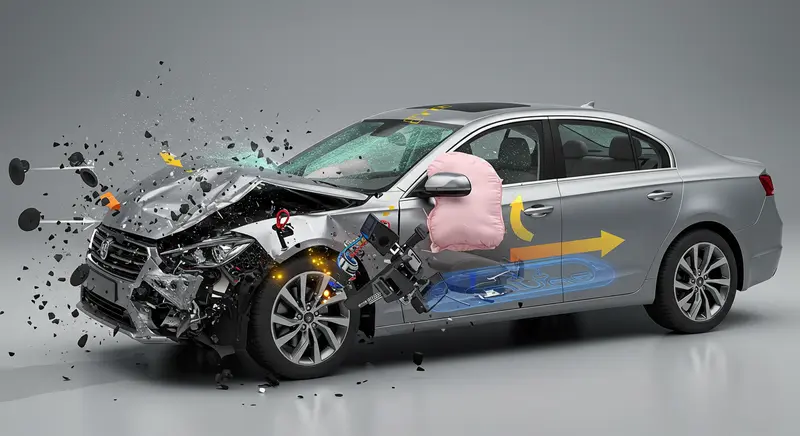
To combat this rising threat, automakers are introducing cutting-edge safety features designed to take control when drivers lose focus. Advanced Driver Assistance Systems (ADAS), including lane departure warnings, automatic braking, and AI-powered driver monitoring, are revolutionizing the way we approach road safety. Vehicles like the Tesla Model Y and Ford F-150 Lightning now come equipped with hands-free driving technology, reducing the likelihood of human error.
As the auto industry pushes the boundaries of innovation, the future of road safety is being redefined. But how effective are these technologies, and can they truly eliminate distracted driving? Let’s explore the advancements that are shaping the next generation of accident prevention.
Essential Car Crash Safety Features
Car accidents are unpredictable and can result in serious injuries or fatalities. Understanding the latest safety technologies can make a significant difference in reducing risks on the road. From airbags to automatic emergency braking, modern vehicles are designed to enhance protection for drivers and passengers. Websites like Carsrevup.com provide valuable insights into accident prevention and vehicle safety advancements, helping drivers stay informed and prepared.
1. Airbags
Airbags have been a cornerstone of vehicle safety for decades, evolving significantly since their mandatory implementation for front-seat occupants in passenger cars. According to the National Highway Traffic Safety Administration (NHTSA), frontal airbags saved over 2,700 lives in a single year. Beyond the federally mandated front airbags, many modern vehicles now feature additional side-impact and curtain airbags, with some models equipped with up to ten airbags to enhance passenger protection.
While airbags are instrumental in reducing injury severity during collisions, they are not without risks. The rapid deployment, powered by a controlled explosion generating gases to inflate the airbag, can cause injuries, particularly to occupants seated too close to the deployment zone. Injuries to the chest and face have been documented, especially when individuals are positioned near the airbag at the time of deployment.
To mitigate such risks, advancements in airbag technology are underway. Researchers are developing airbags equipped with sensors capable of detecting the distance between the occupant and the airbag. These sensors allow the system to adjust the inflation force during deployment based on the occupant’s seating position, aiming to reduce potential injuries associated with airbag activation.
These technological advancements signify a significant evolution in vehicle safety, offering consumers enhanced protection through sophisticated airbag systems.
2. Automatic Emergency Braking (AEB)
Automatic emergency braking (AEB) takes FCW a step further by automatically applying the brakes if a crash is imminent. There are two main types:
- Crash Imminent Braking (CIB): Engages brakes when the driver does not react in time.
- Dynamic Brake Support (DBS): Enhances driver-initiated braking force.
AEB systems have proven highly effective, with NHTSA studies showing a 43% reduction in front-to-rear collisions.
3. Backup Cameras
Backup cameras have been a federally mandated safety feature in all passenger vehicles since 2018, following regulations set by the National Highway Traffic Safety Administration (NHTSA). According to NHTSA, backup cameras have contributed to a 17% reduction in backup-related crashes. These cameras activate when the driver shifts into reverse, displaying a live video feed on the dashboard screen.
Modern backup cameras now include dynamic guidelines that adjust based on steering angle, 360-degree bird’s-eye views, and night vision capabilities to enhance visibility in low-light conditions.
4. Lane Departure Technology
Unintentional lane departures due to drowsiness or distraction contribute to thousands of crashes annually. Lane departure warning systems use cameras and sensors to monitor lane markings. If the vehicle drifts out of its lane without signaling, the system provides an audible, visual, or haptic warning (such as steering wheel vibrations).
Some advanced lane-keeping assist (LKA) systems can gently correct steering to prevent an unintended lane departure, reducing lane-change accidents by over 50%, according to the Insurance Institute for Highway Safety (IIHS).
5. Adaptive Cruise Control (ACC)
Traditional cruise control maintains a set speed but does not adjust for traffic conditions. Adaptive cruise control (ACC), first introduced in luxury vehicles, now appears in many mainstream cars. Using radar and cameras, ACC automatically adjusts vehicle speed to maintain a safe following distance.
According to Consumer Reports, ACC reduces driver fatigue on highways and has been shown to decrease rear-end collisions by up to 45% when combined with automatic emergency braking (AEB).
6. Forward Collision Warning Systems
Forward collision warning (FCW) systems help prevent rear-end crashes by detecting vehicles ahead and alerting the driver to potential collisions. These systems use LiDAR, radar, and cameras to measure the distance and closing speed between vehicles.
A study by the IIHS found that FCW systems alone reduce rear-end crashes by 27%, and when paired with automatic emergency braking (AEB), the reduction increases to 50%.
7. Cross-Traffic Alert Systems
Cross-traffic alert systems assist drivers when reversing out of parking spaces or driveways. These systems use rear-mounted radar sensors to detect approaching vehicles, pedestrians, or cyclists. If a potential collision is detected, the system provides visual and audible warnings.
Many newer models integrate automatic braking to prevent crashes when cross-traffic is detected.
8. Driver Monitoring Systems
Driver monitoring systems use AI-powered cameras and infrared sensors to track driver alertness. These systems analyze eye movements, head position, and steering behavior to detect signs of drowsiness or distraction. If a driver appears fatigued, the system issues a warning to take a break.
Some advanced systems, such as those found in Tesla, Mercedes-Benz, and Volvo, can even slow down or stop the vehicle if the driver becomes unresponsive.
9. Blind-Spot Detection
Blind-spot detection systems help drivers detect vehicles in hard-to-see areas. These systems rely on radar and ultrasonic sensors to monitor adjacent lanes. When a vehicle enters the driver’s blind spot, visual indicators (such as lights on the side mirrors) activate, accompanied by an audible warning if the driver signals a lane change.
Recent advancements include active blind-spot intervention, which applies gentle braking or steering corrections if the driver attempts an unsafe lane change.
What is the Best Protection Against Injury if you have an Accident
The best protection against injury in an accident includes a combination of vehicle safety features, personal protective measures, and responsible driving habits. Here are the key factors that can minimize injury risk:
1. Wear Your Seatbelt
- Seatbelts are the most effective way to prevent serious injuries and fatalities.
- Always wear a properly fitted seatbelt, ensuring the lap belt is low on your hips and the shoulder belt crosses your chest.
2. Maintain Proper Driving Posture
- Sit upright with your hands at 9 and 3 o’clock on the steering wheel.
- Keep a 10-inch distance from the steering wheel to allow airbag deployment.
- Adjust your headrest to eye level to prevent whiplash injuries.
3. Drive Responsibly
- Follow speed limits and avoid aggressive driving.
- Stay focused and avoid distractions like texting or using your phone.
- Never drive under the influence of alcohol, drugs, or fatigue.
4. Use a Properly Installed Child Safety Seat (if applicable)
- Ensure children ride in age-appropriate car seats.
- Install car seats correctly following manufacturer guidelines.
5. Stay in the Vehicle After an Accident (If Safe)
- Leaving the vehicle on a busy road can increase injury risk.
- Move to a safe location and call for emergency assistance.
- By following these measures, you significantly reduce the risk of severe injury in an accident. Would you like advice on specific vehicle safety features or accident recovery steps?
Final Verdict
Car safety technology continues to evolve, offering smarter protections against accidents. While features like ADAS, automatic braking, and AI-driven monitoring reduce risks, no system can replace responsible driving.
This guide provides accurate, expert-backed insights into these advancements, ensuring transparency about both their benefits and limitations. By staying informed and adopting safe driving habits, drivers can maximize safety and reduce the likelihood of crashes.
