
E-Bike Fever and the New Safety Risks in San Diego Beach Communities
Coastal San Diego is famous for its relaxed vibe and scenic views, but the streets are currently feeling much more crowded and chaotic. The sudden explosion of electric bikes has changed how people move through beach towns like Pacific Beach and Encinitas. While these bikes offer a great way to skip traffic and find parking at the beach, they have also introduced a new layer of danger to the roads. Drivers and pedestrians are now sharing space with machines that move much faster than traditional bicycles, leading to a significant spike in hospital visits and insurance claims.
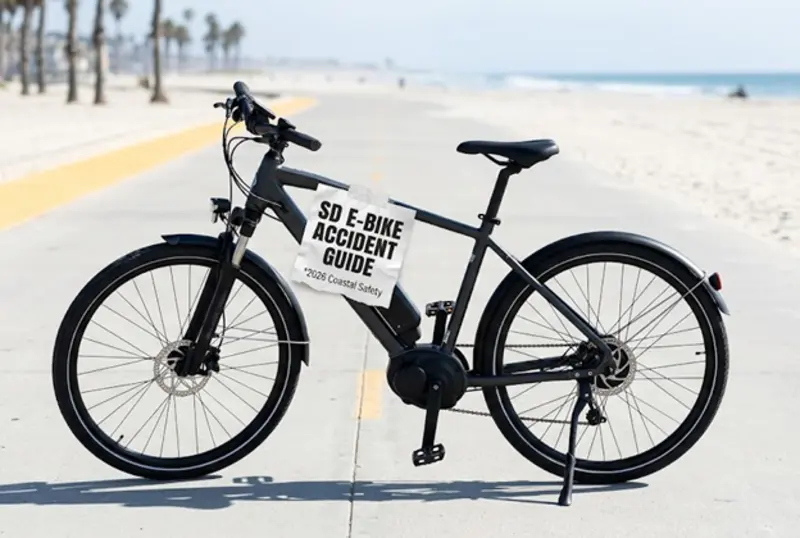
Navigating the aftermath of an e-bike crash is rarely simple. These incidents often occur at busy intersections where right of way rules are ignored or misunderstood by tourists and locals alike. Because California laws regarding electric mobility are still evolving, many victims struggle to get fair treatment from insurance companies that are eager to minimize payouts. In these situations, consulting a personal injury attorney in San Diego can help a victim understand their rights and ensure that the responsible party is held accountable for medical bills and property damage.
Navigating the Three Class System for Riders
Understanding the legal framework starts with the specific classifications of e-bikes in California. As of 2026, the state continues to use a three-tier system to regulate these vehicles. Class 1 and Class 2 e-bikes are limited to 20 miles per hour and are generally allowed on most bike paths and coastal boardwalks. These models are popular for recreational use, but their speed can still be startling to pedestrians who are accustomed to slower traditional bicycles.
Class 3 e-bikes, which can reach speeds of 28 miles per hour, now face much stricter oversight. New regulations implemented this year require Class 3 riders to be at least 16 years old and wear a helmet at all times, regardless of the specific path or road they are using. These bikes are often used by commuters who need to keep pace with city traffic, but the increased speed means that the force of an impact is significantly higher than a standard bike accident.
Battery Standards and Environmental Hazards
Beyond speed limits, California has also addressed the growing concern over battery safety. Senate Bill 1271 now mandates that all new e-bikes sold in the state must meet specific UL certification standards. This move follows a series of fires caused by low-quality lithium-ion batteries. For riders in humid or salty coastal environments like La Jolla, maintaining these batteries is even more critical.
The salt air is naturally corrosive and can damage electrical components over time. This corrosion increases the risk of a mechanical failure or an electrical short while riding in heavy traffic. Owners are encouraged to inspect their frames and battery housing regularly for signs of wear. A sudden loss of power or a braking failure on a busy San Diego street can lead to a multi-vehicle collision that involves more than just the rider.
San Diego Specific Accident Hot Spots
The geography of San Diego creates unique hazards for e-bike riders. In Pacific Beach, the heavy congestion on Mission Boulevard creates a constant risk for accidents where a driver opens their car door into the path of an oncoming cyclist. These incidents are often the result of drivers being distracted by the search for parking. Further north in La Jolla, the steep hills and winding turns of Torrey Pines Road present a different challenge.
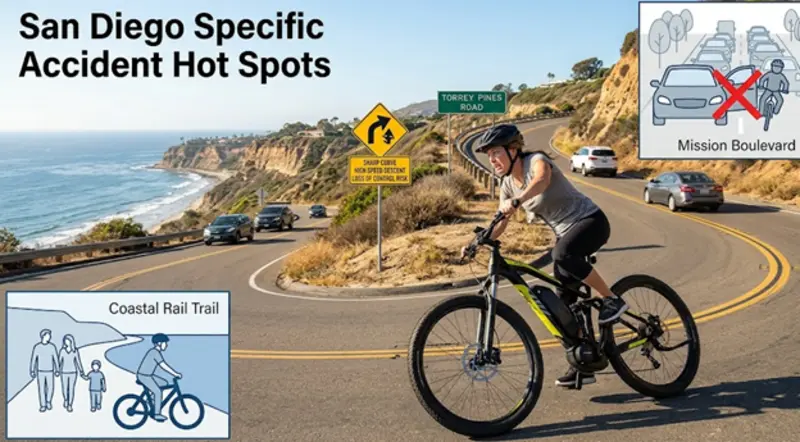
High-speed descents on e-bikes often lead to loss of control, especially for riders who are not used to the extra weight and momentum of an electric motor. Meanwhile, in Encinitas, the Coastal Rail Trail has become a high-traffic corridor where high-speed commuters often collide with families and slow-moving pedestrians. These areas require a high level of situational awareness from both the rider and the driver.
Evolving Local Regulations and Age Restrictions
Local municipalities are stepping in where state law leaves gaps. The San Diego City Council has recently discussed ordinances that would prohibit children under the age of 12 from operating any motorized cycle on public property. This is a response to the rising number of accidents involving young teenagers who may not have a full grasp of the rules of the road.
In the North County area, school districts have implemented mandatory safety assemblies and permit programs. Students who want to ride their e-bikes to school must now pass a safety test and display a permit tag on their frame. These local efforts reflect a growing realization that the technology has outpaced the general public’s understanding of road safety. It is no longer enough to just know how to balance a bike; riders must now understand complex traffic signals and yielding protocols.
Determining Liability and Insurance Gaps
Liability in these accidents is often a point of contention. Many people mistakenly believe that their homeowners or renters insurance will automatically cover a collision involving an e-bike. In reality, many policies have specific exclusions for motorized vehicles, leaving riders personally liable for thousands of dollars in damages. This gap in coverage can be devastating for a family if their child is involved in a serious accident.
Furthermore, if a rider has modified their bike to bypass speed governance, they may face criminal charges in addition to civil liability. Proving fault in a beach community accident requires a deep understanding of these local and state variables. As San Diego continues to invest in bike lanes and green energy, the presence of e-bikes is only going to grow. For residents and visitors to stay safe, there must be a mutual respect between those on two wheels and those on four. Following the speed limits, wearing the proper safety gear, and staying updated on the latest municipal codes are the best ways to enjoy the coastal lifestyle safely.
