
FCW System Failed Honda Odyssey? Here’s What It Means and How to Fix It
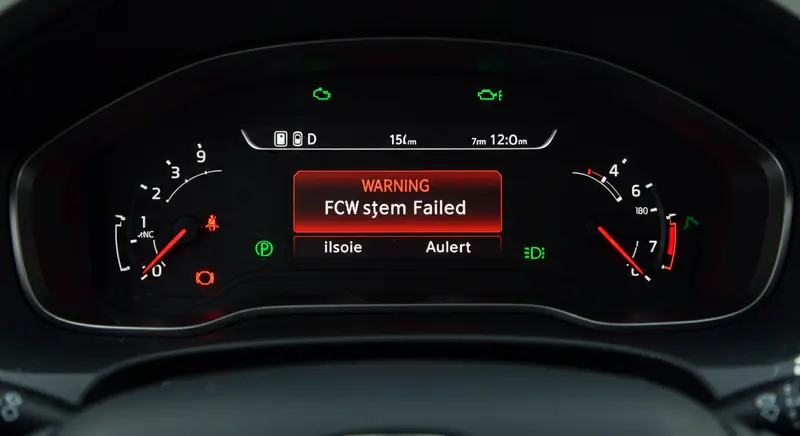
Modern FCW systems on cars, including the Honda Odyssey, are designed to prevent accidents by alerting the driver to potential collisions with the front of the vehicle. Nonetheless, this feature has posed a serious problem to many owners as the FCW system failed Honda Odyssey message turning up unexpectedly on the dashboard.
Besides making this safety feature unusable, this failure message may also affect the quality and reliability of the vehicle and its road safety. And you are not the only person getting this warning on their Honda Odyssey, which is why you should not ignore it. Here, our guide will be to deconstruct what the FCW system does, why it could go wrong, what the most typical ways in which the error is caused, and what one can do to rectify the problem or prevent it as it occurs in the future.
What is the FCW System in the Honda Odyssey?
The Forward Collision Warning (FCW) system consists of sensors, which are cameras and radar, in most cases, observing the traffic ahead. When it senses that your car is fast on the tail of another car or object with no braking indicators, it gives a warning to the driver by giving audible and visual signals.
Why is the Message of the FCW System Failed Shown?
Under normal circumstances, when the system works as it is supposed to, it will run in the background waiting to come in whenever it is needed. However, in case of failure, the dash indicates that there is an error as FCW System Failed. This message is usually meant to show that a system failure has been detected or deliberately shut down owing to onboard factors. Some critical causes can provoke this collapse:
- Sensor Blockage: The camera or radar sensor can be blocked by dirt, ice, snow, or bugs.
- Electrical/Software Faults: An electrical short, a low battery, or outdated software may affect the system.
- Camera Misalignment: A small fender bender will leave the sensor out of alignment.
- Malfunctioning Hardware: A faulty radar, camera, or sometimes both, may itself cause the warning to come on.
- Weather Interference: In case of thick rains, fog, or bright sunlight interferes with the sensors.
- The key to correcting the situation and eliminating the likelihood of recurrence is pinpointing the cause of the problem.
Reasons for FCW System failure
Here we are listing some reasons that are contributing to the FCW system failure.
1. Blocked or Dirty Front Sensors
The FCW depends on good visibility with the camera positioned behind the windshield or the radar placed in the area of the front grille.
Solution: Clean the front grille and the space behind the windshield (where the camera is located) regularly. Wipe with a micro-fiber material and not harsh chemicals.
2. Faulty or Weaker Battery
Communication between the computer of car and the sensor system can produce errors in case of low voltage. During a case of a weak battery, the FCW system may cease functioning or malfunction.
Solution: Test your battery state. Replace it if it is more than 3-4 years old or has the signs of weakening (dim lights, slow starts).
3. Software Malfunctions or Calibration Problems
The FCW may crash due to a software bug or a partial update of the firmware. Recalibration of sensors might be required following windshield replacement or collision repairs.
Solution: The answer is to go to a certified Honda technician and have a software update or recalibrate.
Internal Sensors Failure
Internal sensor parts can also wear out or break with time, and this is more likely to happen when the sensor is subjected to heat, moisture, or vibrations.
Solution: Diagnostic trouble code (DTC) scan on the vehicle. The sensor module might have to be replaced in case of a hardware overcome.
Method of Diagnosis of FCW System Problem
The FCW (Forward Collision Warning) is borne of a collection of sensors, cameras, and software, which senses obstacles and averts collisions. Error can come as a result of failing at any one of these links in the chain. The following are step-by-step procedures to help you correctly diagnose the problem:
1. Alarm Lights on the Dashboard
Begin this by checking all the lights on your dashboard. When the FCW warning lights up together with other warnings such as the Lane Keep Assist, Adaptive Cruise Control (ACC), or Collision Mitigation Braking System (CMBS), then typically there exists a sensor problem on common grounds. The same forward-facing camera or radar is regularly used by the driver assistance systems in Honda. The malfunction of one element could cause a range of alerts, and you will indicate that the problem as well as the cause is sensor-based instead of an in-isolation FCW issue.
2. OBD-II Diagnostic Scan
Then, find out fault codes with the help of an OBD-II scanner concerning the ECU of a car. The use of a scan tool to read advanced driver assistance systems or ADAS made by Honda is greatly recommended. See the code of error can mention the millimeter-wave radar unit, forward camera, or ADAS control module. The codes used to determine which part of the system is faulty: the sensor, software calibration, or a fault in the communication system. These are some of the typical FCW-related DTCs (Diagnostic Trouble Codes):
- U3000-49: Malfunction (internal) of control module
- U0416: Unknown vehicle dynamics data U0416: Unknown vehicle dynamics information
- B2A60: Forward collision warning camera error
3. Inquire about the Radar & Camera System
Most Honda autos are equipped with a camera located close to the rear view mirror (on the windshield) and a radar detector installed on the front grille or bumper. Such sensors are very sensitive and should be able to see the road with a clear view.
- Clean the sensors: Any dirt, snow, bug, or other objects may cover their vision range, and the system will fail.
- Check mounting, alignment: FCW can also fail when the camera is misaligned (during a windshield replacement, or because an accident moved a radar out of position).
- Manual check: Look at physical damages: Cracks or chips on the camera lens or bumper (where the radar is located) may cause false measurements as well.
4. Normal Driving
In some cases, the FCW warning turns on in certain cases because of weather conditions (fog, heavy rain, snow) or low sun glare, which block the sensor and camera visibility. To check whether it is so:
- Reset engine: Shut off the vehicle fully, wait for a few minutes, and switch it on again.
- Make a short drive: Drive during good weather, and on a good, open road.
- Observe the dashboard: When the warning goes away, it is possible that it is a temporary fault.
5. About Recent Repairs or Modifications
When you have replaced the windshield, made front-end repairs, and installed aftermarket accessories (grille guards, emblems, etc.), then there is are chance that the FCW system has to be recalibrated.
Inaccurate reading can be triggered by a slight variation in the angle of the camera or radar. The tools that can recalibrate the sensors in line with factory specifications are found in Honda dealerships and allied auto repair centers.
What to do on FCW System Failed Warning
The best and most frequent strategies for handling the issue are listed below:
1. Clean the camera and Sensors
The radar sensor and camera can be blocked by dirt, road grime, snow, or even dead bugs, which then result in false warnings or system failure. Radar sensor tends to be behind the front grill, whereas a camera would be at the edge of the windshield, almost at the top. Clean both parts with the help of a fluffy piece of cloth and a weak cleaner carefully. Even a hairline amount of dirt can cover the efficiency of the sensor to pick up the objects, giving rise to a failure signal.
2. FCW System Reset
At other times, all that is required is a reset in the FCW system. An electronic malfunction or power outage that lasts only briefly might provoke an alert message. Disconnecting the battery of the vehicle is one of the easiest troubleshooting processes, and this should take place in about 1015 minutes. The move clears the memory of the system and could remove the error message after a restart. But note that in the process, there will be a reset of other electronics and car settings.
3. Software ouverture
Several times a year, Honda issues software updates that increase the reliability of its Advanced Driver Assistance Systems (ADAS). These patches may solve bug issues, increase accuracy, and resolve problems in the FCW system that are known. To scan the system against any pending software update, visit your local Honda shop or Honda Honda-catered mechanic. Regular updating of your software guarantees an easier system performance and a reduction in deceptive alerts.
4. Swap Defective Parts
In case the cleaning or resetting does not do the trick, the problem can be in the component. Such common failures can be seen in hardware:
- Malfunctions of radar sensors
- Failure of the camera units
- Electronic control module problems
Obd-at times diagnostic scan can diagnose a particular fault code and assist in finding out the part which should be replaced. Never install aftermarket parts; always use replacement parts manufactured by the Honda company, since they may not be fully compatible with your car and may cause additional errors or issues.
5. Sensors Recalibration
In case you have just replaced the windshield of your Honda Odyssey, replaced the front-end of the collision, or even gone through a wheel alignment, the sensors of the FCW can be recalibrated. The failure to get excellent alignment may lead to incorrect detection of objects and can trigger repeated failures in the system.
It is required that recalibration be done with specific ADAS equipment, which would be located in a dealership or an up-to-date body shop. It is a fine task and vital in a bid to achieve full functionality again.
Is it possible to drive with a failed FCW System?
Technically, it is not impossible, and even with a disabled FCW system, your vehicle will remain operable. The downside, however, is that one of your major driver-assistance features is taken away. This implies that it is not possible to automatically alert or brake on the occurrence of an impending collision.
Without the FCW Driving Tips:
- Raise your following distance.
- Do not be distracted and take additional care on the highways.
- Think about having a repair visit as soon as possible.
Avoiding Failure on the FCW System in the Future
Although not every problem will be avoided, some habits will help to decrease the probability of system failure:
- Smear the sensors: Remember to add them to your regular car-washing schedule.
- Do not tailgate: This will create false alerts and overload the system.
- Move in clear weather: If you can, do not trust FCW during severe weather.
- Ensure that the software is updated on time: You can request that your dealership when changing oil or inspecting the car.
- Install original parts: OEM or aftermarket parts must be used when it comes to the windshields, the grilles, etc.
Conclusion
The FCW system failed Honda Odyssey can be alarming and can be quite disturbing, provided that you are trusting the safety features of your car. It is usually a simple matter of a dirty sensor or a case of a hiccup in a battery. Through proper diagnosis and early intervention, you will be able to have a functional system and drive without reservations.
The important thing to remember is not to close the message off, but rather to take it as an early warning as opposed to an annoyance. The comprehension of what the FCW system can, malfunctions, and how to resolve them helps you to be one step closer to driver safety and having a proper place in the community.
In case the problem still remains following the attempt to use some simple solutions, you can contact a qualified Honda mechanic to make sure that all the safety systems of your vehicle are currently in service.
