
How to Fix an FCW System Failed on a Honda Accord: A Step-by-Step Guide
Honda has been constantly improving their automobiles for better passenger safety across different vehicle categories. The company first introduced the Forward Collision Warning (FCW) system, which is primarily part of their Sensing suite of safety technologies.
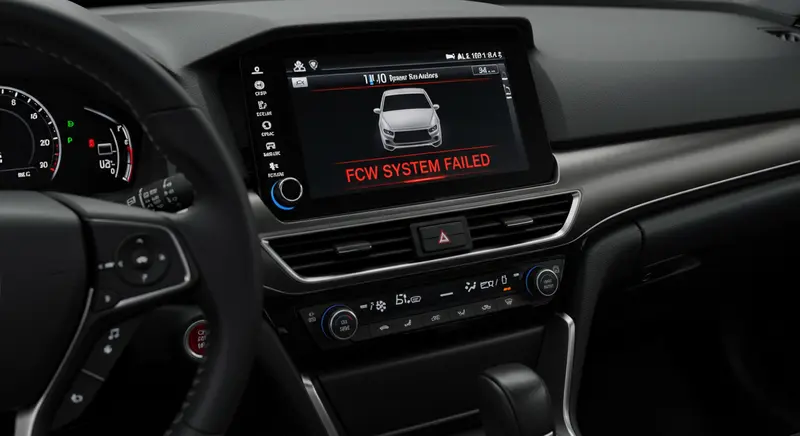
Undoubtedly, the technology is great for your safety, but many owners reported their FCW system failed, either fully or partially malfunctioned, especially in Honda Accords. After comprehensive research and insights from engineers, we have come up with a step-by-step guide for you if your FCW system failed.
What is the FCW System in a Honda Accord?
Honda introduced their drive-assistance warning system as the Forward Collision Warning (FCW) system, which is basically an advanced version of ADAS. However, this system is not completely in control of braking; rather, it is a passive system that warns the driver.
Honda’s FCW system uses an advanced combination of radar sensors and cameras to detect any obstacles on the road. It alerts the driver if there is a chance of a potential collision. Since the system is present to give visual and audible alerts to inform the driver, it does not apply the brakes automatically.
Overview of the Forward Collision Warning (FCW) System
Honda’s FCW works as an early warning system that gives a visual alert in the dash cluster and audibly warns the driver to be alert of the upcoming obstacle or when there is a potential collision risk.
This system is entirely the opposite of the Collision Mitigation Braking System (CMBS), which automatically applies the brakes. However, let’s see what technologies are involved in this entire FCW system:
Equipment Used:
- Millimeter-wave radar (mostly installed in the front grille)
- Monocular camera (usually positioned near the rearview mirror)
- Control system (module that processes data from sensors)
How Does the FCW System Work to Protect You?
In the Honda Accord, the FCW system plays a vital role in protecting you from rear-end collisions, mainly by alerting you before a potential crash situation. The rear-end accidents alone accounted for more than 29% of total accidents as per the National Highway Traffic Safety Administration (NHTSA).
Here’s how it operates:
- Detection Phase: The camera and radar continuously scan the road for any objects within a certain range (which is usually up to 100 meters ahead).
- Analysis Phase: The system calculates and decides the time-to-collision by measuring the closing speed between your car and the detected object.
- Warning Phase: If the system determines a potential collision risk, it provides a visual alert (flashing icon on the instrument panel) along with an audible alert (beeping sound) and even haptic steering wheel warning (in selected models)
Key Features of the Honda Accord’s FCW System
- Early-Warning System: Honda’s FCW is active enough to warn you a couple of seconds ahead of a potential collision situation.
- Adjustable Sensitivity: Some Honda Accord models allow their drivers to customize sensitivity (low, normal, high) via the Honda Sensing menu.
- Integration with Other ADAS Systems: FCW works perfectly without interfering or being interfered by Adaptive Cruise Control (ACC) or Collision Mitigation Braking System (CMBS) for better safety.
- Works in Various Conditions: The system can detect vehicles in low-light conditions but may struggle in heavy fog or snow due to sensor limitations.
According to the IIHS (Insurance Institute for Highway Safety), vehicles with FCW reduce rear-end crashes by 27%. In a 2022 study, the NHTSA found that FCW, when combined with automatic emergency braking (AEB), can reduce front-to-rear crashes by 50%.
Causes of the FCW System Failed in the Honda Accord
In Honda Accords, the Forward Collision Warning (FCW) system plays a critical safety role, primarily designed to alert drivers of potential front collisions. The system would work absolutely perfectly for decades, but if it malfunctions, there could be many reasons associated.
Common Causes of FCW Malfunction:
FCW is a great, reliable, and dependable system, yet it can also be prone to malfunction due to many possible reasons. If your FCW system failed, some of the most common causes of malfunction are:
Sensor Obstruction or Damage
Since the FCW system completely depends on sensors for gathering data, any obstructions such as dirt, mud, snow, or debris can impair sensor functionality, leading to overall system malfunction. The components can be radar units or, typically, cameras positioned around the vehicle’s front grille and windshield.
Software or Calibration Issues
Besides the sensor obstruction, one of the most common issues can be outdated system firmware or software glitches, which mostly occur due to windshield or sensor replacement. However, it can be easily resolved by a recalibration to function correctly.
Impact of Environmental Factors on the FCW System
Weather Conditions and Debris
As the entire system works with sensors, any adverse weather conditions can interfere with or reduce the sensitivity of the sensors, it can be heavy rain, fog, or even snow. For instance, snow on the front grille or windshield can block sensors, making the system think there’s an obstacle very near the car, leading to unwanted warnings.
Electrical or Wiring Issues
The FCW is a completely electronics-based system with multiple sensors involved, sending signals to the system module, which in turn decides when to or when not to give warnings. Even a slight disruption in the electrical pulses of these sensors or poor wiring can cause issues. For example, in the 2018 Honda Accord, the ABS modulator caused FCW system failures.
System Conflicts or Errors with Other Safety Features
The Front Collision Warning System works in balance with systems like Advanced Driver Assistance Systems (ADAS), Lane Departure Warning (LDW), and Adaptive Cruise Control (ACC).
For example, any issues with ABS sensors or the Vehicle Stability Assist (VSA) module or ABS sensors can disrupt and trigger FCW system errors, which can be easily avoided by regular sensor cleaning, timely software updates, and thorough electrical system checks.
Diagnosing the FCW System Failed on the Honda Accord
The Forward Collision Warning (FCW) system is a vital safety feature in the Honda Accord; it helps prevent accidents by alerting drivers of potential collisions with vehicles ahead. But, over time, it is likely to have issues with sensors or other systems.
However, you can diagnose the issues with the help of tools (like OBDII ) and change/replace the faulty modules or sensors to keep the system working properly. Here’s our step-by-step guide to finding the root cause of malfunctions:
How to Use the OBD-II Scanner for Error Codes
The OBD-II system can help you diagnose the FCW system failure on your Honda Accord. You will simply need an OBD-II scanner, which connects to the vehicle’s diagnostic port to read error codes stored in the ECUs.
Identifying the Error Codes Related to FCW Failure
After connecting the OBD-II scanner, you will be able to find out the error codes. Some of the most common fault codes that could hint towards a problem with the FCW system are:
- C1A01: Indicates a malfunction in the forward radar sensor.
- C1A02: Indicates a failure in the front camera sensor.
- U0235: Indicates a communication issue between the FCW system’s radar sensor and the vehicle’s ECU.
- U0200: Indicates a network fault between the FCW system and other systems.
Checking Sensor Alignment and Cleanliness
Honda’s Front Collision Warning System relies purely on an array of sensors to fetch data regarding the road situation, mainly from a radar sensor and a front-facing camera. However, these cameras and sensors can catch some dirt, causing incorrect readings. You can check the following for alignment and cleanliness:
Inspect the Radar Sensor: Look for the radar sensor, which is usually located behind the front grille. You can make sure that it is securely mounted and not obstructed by any debris.
Check the Front Camera: You can easily find the front camera near the rearview mirror. Check if it’s got any dirt or debris.
Step-by-Step Guide to Fixing FCW System Failure
Honda’s Forward Collision Warning (FCW) detects obstacles and warns to prevent possible collisions and alert the driver. Here is the step-by-step guide to fix this system:
Step 1: Resetting the FCW System
How to Reset the System Using the Car’s Settings
Open your car’s driver assistance settings (usually under “Safety” or “ADAS” in the infotainment menu). Select FCW settings and choose the “Reset” or “Restore Defaults” option.
When to Use the Reset Option
Only this option whenever you see a message showing a temporary failure message.
Step 2: Cleaning the Sensors and Camera
Best Practices for Cleaning the Radar and Front Cameras
You should use a microfiber cloth to clean the grille-mounted radar and windshield-mounted camera. It’s better to clean weekly or soon after driving in mud, rain, or snow.
Step 3: Checking and Replacing Faulty Sensors
How to Inspect and Replace Front Sensors
You can use OBD-II to scan Diagnostic Trouble Codes (DTCs), which can tell you about possible faults. With the given error codes, you can replace that specific sensor or camera module as per the vehicle’s service manual.
Conclusion
If you have a Honda Accord, you already know how important the FCW system is as a safety feature. As per the owner’s report and statistics, the system has reduced 50% of major rear-end collisions, just by alerting the driver before anything happens.
However, over time, the involved sensors and cameras can stop working or malfunction, which will directly impact the system’s ability to detect and warn. You can use replace or clean those components to fix your FCW system failed.
FAQs Section
Sensor obstruction, sometimes sensor failure, electrical issues, or software glitches are the main reasons for FCW failure.
You can reset the entire system under the vehicle’s settings under the menu of Honda Sensing (or Driver Assist).
If there are minor issues, you can reset it yourself, but complex faults usually require a professional.
The cost of professional repair can range anywhere from $100 to over $1,500, which varies depending on parts replaced.
