
From Oil Changes to Algorithms: How Car Maintenance Is Becoming Data-Driven
For generations, car maintenance followed a predictable rhythm. Oil changes every few thousand miles, annual servicing, and reactive repairs when something went wrong. It was a system built on schedules and assumptions — a practical approach in an era when vehicles offered little insight into their own condition.
Today, that model is rapidly evolving. Modern cars are no longer passive machines; they are data-generating systems, constantly monitoring their own performance. As sensors, connectivity, and software become more sophisticated, maintenance is shifting from routine to predictive. The result is a quieter but significant transformation in how vehicles are cared for — one driven not by mileage alone, but by algorithms.
The End of Fixed Service Intervals
Traditional service schedules were designed around averages. Manufacturers estimated when components might wear out under typical conditions and set intervals accordingly. While effective, this approach often led to unnecessary servicing or, conversely, missed early signs of wear.
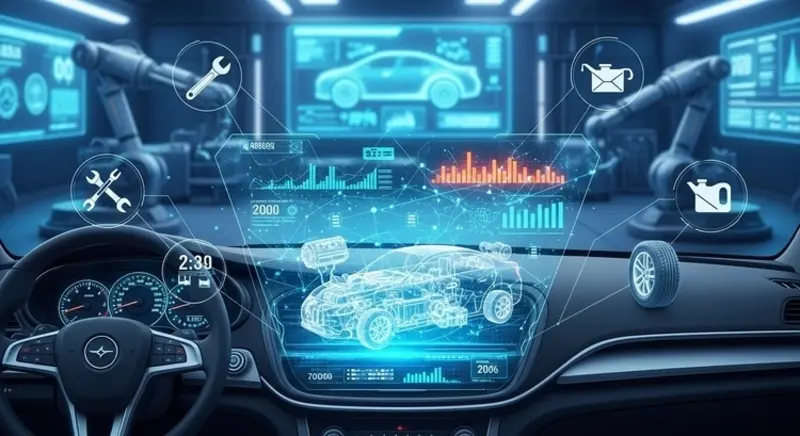
Data-driven maintenance changes this dynamic. Vehicles now track everything from engine temperature and oil quality to braking patterns and battery health. Instead of relying on fixed timelines, systems can assess real-world usage and determine when attention is genuinely required.
For drivers, this means fewer unnecessary visits to the garage and a more tailored approach to upkeep. A car used primarily for short urban journeys will have different needs from one regularly driven on motorways, and modern systems are increasingly capable of recognising that distinction.
Predictive Maintenance and Real-Time Diagnostics
At the heart of this shift is predictive maintenance — the ability to anticipate issues before they become serious problems. Sensors embedded throughout the vehicle continuously collect data, which is then analysed to identify patterns and anomalies.
If a component begins to behave outside its normal parameters, the system can alert the driver or even the manufacturer. In some cases, software updates can resolve issues remotely, eliminating the need for physical intervention.
This approach has clear advantages. Early detection reduces the risk of breakdowns, lowers repair costs, and extends the lifespan of components. It also enhances safety, as potential failures can be addressed before they pose a risk on the road.
Importantly, predictive maintenance is not limited to high-end vehicles. As technology becomes more accessible, these capabilities are filtering down into mainstream models, reshaping expectations across the market.
The Role of Connectivity
Connectivity is a crucial enabler of data-driven maintenance. Modern vehicles are increasingly linked to cloud-based platforms, allowing data to be transmitted, analysed, and acted upon in real time.
Manufacturers can monitor fleets of vehicles simultaneously, identifying common issues and refining their designs accordingly. For individual drivers, this connectivity translates into more informed ownership. Service reminders are no longer generic notifications but tailored recommendations based on actual vehicle condition.
Some systems even allow workshops to diagnose problems remotely before the car arrives, streamlining the repair process. This reduces downtime and ensures that the necessary parts and expertise are available in advance.
However, this level of connectivity also raises questions around data privacy and ownership. As vehicles generate more information, the boundaries between driver, manufacturer, and service provider become less clearly defined.
Electric Vehicles and Simplified Maintenance
The rise of electric vehicles (EVs) further accelerates the shift towards data-driven maintenance. With fewer moving parts than internal combustion engines, EVs inherently require less routine servicing. There are no oil changes, fewer fluids to monitor, and reduced mechanical complexity.
Yet this simplicity does not eliminate the need for maintenance; it changes its focus. Battery health, software performance, and thermal management become the primary concerns. These are areas where data analysis is particularly valuable.
Battery management systems, for example, continuously monitor charging patterns, temperature, and degradation. By analysing this data, vehicles can optimise performance and provide accurate insights into long-term health. For drivers, this reduces uncertainty around one of the most critical and expensive components of an electric car.
The Human Element in a Digital System
Despite the increasing role of algorithms, human expertise remains essential. Technicians must interpret data, diagnose complex issues, and carry out physical repairs. What is changing is the nature of their work.
Workshops are becoming more technologically advanced, with diagnostic tools that resemble those used in IT environments as much as traditional mechanical equipment. Training is evolving accordingly, with a greater emphasis on software and electronics.
For drivers, this shift may initially feel abstract. Maintenance becomes less visible, happening in the background rather than through tangible actions like replacing parts. Yet the benefits — improved reliability, reduced costs, and greater convenience — are increasingly evident.
Personalisation and the Broader Ownership Experience
As maintenance becomes more tailored, it forms part of a wider trend towards personalised vehicle ownership. Cars are no longer static products; they evolve over time, adapting to the habits and preferences of their drivers.
This sense of individuality extends beyond performance and maintenance into how vehicles are presented and perceived. From interior settings to exterior details, motorists are placing greater emphasis on creating a car that reflects their identity.
In this context, even subtle elements contribute to the overall experience. For those who value personalisation, details such as registration styling remain part of the broader picture. Companies like Number1Plates.com sit within this landscape, reflecting a continued interest in how vehicles are expressed as well as how they function.
Challenges and Considerations
While data-driven maintenance offers clear advantages, it is not without challenges. The reliance on software introduces new vulnerabilities, from system errors to cybersecurity risks. Ensuring that vehicles remain secure and reliable requires ongoing investment and vigilance.
There is also the question of accessibility. Not all drivers may be comfortable with the increasing complexity of modern systems, and disparities in digital literacy could affect how benefits are experienced.
Additionally, the long-term implications of software-dependent maintenance are still unfolding. Issues such as subscription-based features and the availability of updates over time may influence how vehicles are valued and maintained in the future.
Conclusion
The transition from scheduled servicing to data-driven maintenance represents a fundamental shift in automotive culture. It moves the focus from routine to relevance, from assumption to insight. By leveraging data, modern vehicles can deliver a more efficient, reliable, and personalised ownership experience.
This evolution is not as immediately visible as electrification or autonomous driving, but it is no less significant. It changes the relationship between driver and machine, turning maintenance into a continuous, intelligent process rather than a periodic obligation.
As algorithms take on a greater role, the future of car care will be defined not by what drivers remember to do, but by what their vehicles already understand.
