
How Many Beers Can You Have Before Driving?
Beer is one of the world’s oldest and most widely consumed alcoholic beverages, with an average of ~63% of the U.S. population consuming it. Drinking beer is to escape from whatever is running through one’s mind or simply enjoy those precious moments.
However, you might have heard already that one should not drive after having one or two beers. But we will find the right amount of beer that can slow your reaction time, blur your judgment, and eventually put you and others at risk of an accident.
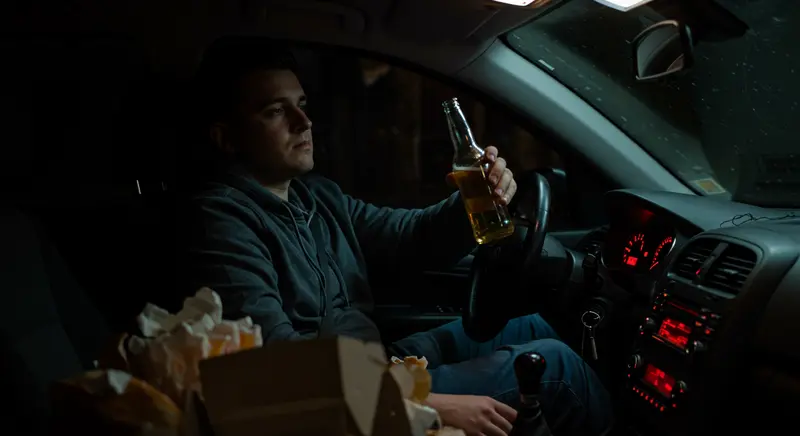
So, let’s find out how many beers you can actually have before it becomes illegal and unsafe to drive back home. We will break down the myth with you based on adequate scientific research and data.
What Is the Legal Alcohol Limit for Driving?
The U.S regulations are strict when it comes to drinking under the influence; only a small percentage of BAC is allowed. Each state, however, can have its limits, which they do. The authorities check drivers for their blood alcohol content, also abbreviated as “BAC”.
Most U.S. states have a 0.08% BAC per se limit, while Utah is the only state with much stricter regulations, considering 0.05% BAC a higher limit. In Utah, authorities can impose higher penalties if someone is found driving 0.16%+ BAC.
On the other hand, according to federal laws implemented in states, commercial drivers are prohibited from consuming any alcoholic beverage with a measured alcohol concentration while on duty.
| Number of Beers (5% ABV, 12 oz each) | Effect on Most People | Legal Risk (U.S. 0.08% BAC limit, Utah 0.05%) |
| 1 Beer | Mild relaxation, slower reaction time | Safe in most states, but risky in Utah if small-bodied |
| 2 Beers | Noticeable impairment in judgment and coordination | Often near/over Utah’s 0.05% BAC limit |
| 3 Beers | Clear signs of impairment; delayed reflexes | Many drivers are now at/over 0.08% BAC |
| 4 Beers | Significant loss of control, blurred judgment | Over the legal limit in nearly all states |
| 5+ Beers | Severe impairment, high accident risk | Well above all legal limits |
How Beer Translates Into Blood Alcohol Concentration (BAC)
Blood alcohol concentration basically defines the percentage of alcohol in the blood. In layman’s language, it indicates the volume of alcohol relative to the volume of blood. However, the alcohol intoxication can never be the same for everyone. It depends on weight, gender, food intake, and time.
BAC is the only key metric to determine alcohol intoxication in the human body and its relevant effects. For example, a standard beer raises BAC levels ranging from 0.02 to 0.03% g/dL in most adults.
In the same way, absorption and elimination are also subject to the person. But, most of the time, it takes 30–70 minutes to get intoxicated, and an average metabolic removal is about 0.015 BAC units/hour.
Factors That Affect How Alcohol Impacts You
Since beer is also an alcoholic beverage, it also intoxicates one after drinking any amount. However, there are certain factors that can affect the way your body consumes and reacts to alcohol. Here are the main factors that you should be aware of as a drinker:
- Impact of Body Weight: Most of the body weight is body water, which means a heavier person has more body water than a lighter person. A man weighing 160 pounds (approximately 72 kg) typically reaches a BAC of about 0.04 after two standard beers, and a 120-pound (approximately 54 kg) woman can get the same BAC with just one, says NHTSA.
- Gender Differences: According to the National Institute on Alcohol Abuse and Alcoholism, women are more likely to reach a higher BAC than men after the same number of beers because their bodies have ~10% less body water than men. Not only that, a female body also has much lower stomach alcohol dehydrogenase (ADH) activity.
- Metabolism and Tolerance: Based on CDC reports from 2022, most regular drinker may not feel “intoxicating effect” as opposed to someone who drinks occasionally, yet their BAC rate still rises. To put it another way, it means their driving ability and sense of judgement are still going to be impaired, no matter if they feel intoxicated or not.
- Type of Beer: The World Health Organization notes that most beers globally have an ABV (alcohol by volume) of 4% to 6%, whereas craft and specialty beers usually have ABVs as high as 8–12%. The Brewers Association’s 2013 report indicates that stronger beers will be faster in BAC than the standard ones.
How Many Beers Is Too Many to Drive Legally?
The standard one pint of 5% beer equals nearly 1.33 standard drinks, and two pints of beer translates to just around ~2.7 drinks, which is strong enough to exceed the legal limit to drive, particularly if you are living in Utah (where the legal limit is 0.05% BAC).
In much simpler words, if you had the three drinks, it would take you almost two hours to reach 0.08% BAC, which is subject to body size; stronger beer can reach that sooner. In short, drinking more than two pints can get you over the legal driving limit.
Why is the “One Beer Rule” Misleading?
Experts say the so-called one beer rule is the most absurd belief. Many research studies strongly show that alcohol intoxication depends on body weight, gender, type of beer, and many other factors.
Not only that, the standard ~5% ABV is not everywhere. Many beers are now packed with twice as much or even more alcohol. Combined with other carbonated drinks, it also speeds up the absorption, meaning “one beer” can raise much higher BAC spikes than others.
Craft Beer vs. Light Beer Comparison
Craft beer is produced using traditional methods. Their manufacturers are mostly local companies that prefer flavor over consistency and experiment with different ingredients. Light beer, on the other hand, is manufactured commercially for consistency and economical benefits in mind.
Light beers have a lower alcohol by volume percentage, which ranges from 3% to 4%, whereas craft beers have a higher ABV starting from 5% ABV and can have 8% ABV, or can even go notably higher.
Pint vs. Bottle vs. Can
A standard U.S. pint is equal to 16oz (433 mL), while a bottle has 12oz (355 mL). A can also has the same contents as the bottle, which is 12 oz (355 mL). Another important thing to note is that only a pint is larger than a standard bottle and can in the U.S.
How Long Should You Wait After Drinking Before Driving?
The average alcohol elimination rate is ~0.015 BAC per hour after having the last drink, which means if you had one beer, your body will need to take care of 0.08 BAC → ~0.065 after 1 hour and ~0.05 after ~2 hours.
How Police Test for Drunk Driving?
In the U.S., the police use breathalyzers to test drivers for alcohol intoxication, which is the most common roadside test. The device analyzes the breath as if alcohol were present in the blood and lungs equally.
Last year, more than 1.5 million drivers were arrested for driving under the influence of alcohol, and most of these arrests involved evidence collected from a breathalyzer test. The police can also opt for field sobriety tests, which are physical and cognitive tests performed at the roadside before a breathalyzer. The sobriety test includes:
- Horizontal Gaze Nystagmus: You will have an involuntary eye jerking at high BAC levels.
- Walk-and-Turn: You will be tested to see if you can balance and ability to follow instructions.
- One-Leg Stand: The most common test measures coordination and stability.
As per the 2017 reports of NHTSA, the horizontal gaze nystagmus has 77% accuracy in determining sobriety, while the walk-and-turn has an accuracy of 68%, and the one-leg stand has 65%. Still, when combined, accuracy can reach 82% in predicting BAC over 0.08%, which is the legal limit.
The Risks of Driving Even Below the Legal Limit
Even though you are driving below the legal drinking limit, there are still 0.02–0.05% chances of impairment, where you can have reduced visual tracking, divided attention, and coordination, as NHTSA suggests.
Both NHTSA and CDC reports combined say that even a 0.08% BAC can put you at risk of a car crash. Other evidence suggests that lowering the per se limit to 0.05% in Utah back in 2018 was associated with an 18% reduction in crash deaths per mile driven in the first year.
Bottom Line
The exact number of beers you should take before driving cannot be defined at all since the alcohol intoxication depends on age, weight, gender, metabolism, and the type of beer consumed. However, legally speaking, the U.S. drinking limit is 0.08% BAC in all states. But you can start to feel impairment from as low as 0.02 to 0.04% BAC, which can happen after just one beer.
