
How Punitive Damages Punish Dangerous Drivers
Some car crashes are just that—accidents. But others are the result of recklessness so extreme that calling it a mistake doesn’t quite do justice to the harm done. When a driver behaves with blatant disregard for the safety of others, the legal system may go a step further than merely covering a victim’s losses. It may impose punitive damages, a financial penalty designed not only to compensate the injured but to punish the wrongdoer and deter others from doing the same.
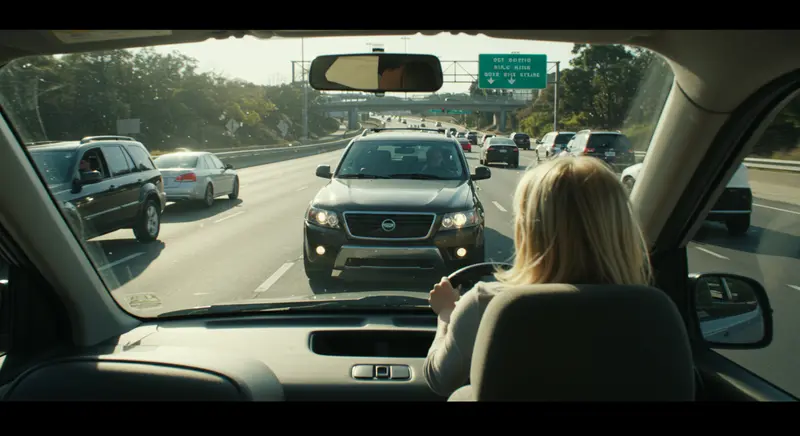
Punitive damages carry a powerful message: when you willfully endanger others on the road, there are consequences beyond insurance payouts and traffic citations. They act as a public rebuke of dangerous conduct, such as drunk driving, racing, or intentionally breaking traffic laws. For those harmed by such conduct, these damages offer a sense of justice that compensatory damages alone often cannot.
What Makes Punitive Damages Different?
Unlike compensatory damages, which are designed to reimburse victims for things like medical expenses, lost income, and emotional trauma, punitive damages focus squarely on the conduct of the defendant. They are awarded in cases where the defendant’s actions were not just negligent, but egregiously irresponsible, malicious, or intentional.
Punitive damages serve as both a punishment and a deterrent. They are meant to send a clear message that society will not tolerate certain behavior, especially when it involves putting innocent lives at risk. For this reason, they are usually awarded only in the most serious cases, and typically only when evidence shows that the defendant knew the risks and chose to ignore them anyway.
What Kind of Behavior Justifies Punitive Damages?
To qualify for punitive damages, a driver’s behavior must exceed ordinary carelessness. It must reflect gross negligence or intentional misconduct. Common examples that may meet this threshold include:
- Driving while highly intoxicated, especially with a prior history of DUI offenses
- Engaging in street racing or stunt driving on public roads
- Knowingly driving on a suspended license due to prior violations
- Fleeing the scene of an accident after causing injury
- Excessively speeding through school zones or pedestrian-heavy areas
- Ignoring mechanical defects and continuing to drive a hazardous vehicle
Each of these examples reflects more than a simple oversight—they reveal an attitude of disregard toward the safety of others, which is precisely what punitive damages are meant to address.
Proving Gross Negligence in Court
Punitive damages require a higher standard of proof than most claims. The injured party must show that the defendant acted with more than just poor judgment—they must demonstrate an awareness of danger and a decision to proceed regardless. This is where the experience of legal counsel becomes essential.
Evidence plays a central role. This might include police reports, toxicology results, prior driving infractions, witness testimony, dashcam or surveillance footage, or even social media posts that suggest intent or attitude. Attorneys often work with crash reconstruction experts or investigators to establish a pattern of behavior or prove that the driver consciously disregarded known risks.
How Punitive Damages Are Calculated
There is no universal formula for punitive damages. Courts evaluate several factors to determine an appropriate amount, including:
- The severity of the wrongdoing
- The harm inflicted on the victim
- The financial status of the defendant
- The amount of compensatory damages already awarded
- The need to deter similar conduct in the future
The ratio between punitive and compensatory damages must remain reasonable. While Texas law generally caps punitive damages at either twice the amount of economic damages plus non-economic damages (up to $750,000), or $200,000—whichever is greater—certain exceptions apply, especially when intentional harm is involved. Ultimately, the amount should reflect the seriousness of the misconduct and the need to make an impactful statement.
The Deterrent Effect on Public Safety
Punitive damages don’t just affect the individual who caused the crash—they ripple out into the community. When word spreads that reckless driving led to a six- or seven-figure judgment, it reinforces the idea that dangerous conduct behind the wheel won’t be tolerated. It forces people to think twice before speeding through intersections, driving drunk, or ignoring vehicle safety issues.
These damages also send a message to companies and employers in commercial driving industries. If they neglect to vet drivers properly or fail to enforce safety standards, they, too, could face punitive liability. The law, in this way, becomes a tool not just for justice, but for prevention.
Why Legal Strategy Matters
Pursuing punitive damages requires a highly focused legal approach. These claims are more likely to face resistance from insurance companies and defense attorneys, who will argue that the driver’s actions were careless, but not malicious. Overcoming this argument demands not only a strong evidentiary foundation but also persuasive storytelling that highlights the real human impact of the driver’s choices.
That’s why working with an experienced team like The Aguirre Law Firm can make all the difference. Their deep understanding of Texas personal injury law and trial strategy gives victims a powerful ally in their fight for full justice.
Real-World Scenarios Where Punitive Damages Apply
Punitive damages have been awarded in cases where drunk drivers caused fatal or life-altering injuries. Courts have also granted these damages in crashes involving excessive speeding, hit-and-run conduct, and drivers who ignored multiple safety violations. In one well-known case, a trucking company was held liable after knowingly allowing a fatigued driver to complete a long-haul shift that ended in a deadly crash.
These real-life examples show that punitive damages aren’t theoretical—they are a critical component of civil accountability in high-risk scenarios. They validate the suffering of victims and enforce a higher standard of conduct for everyone on the road.
When Justice Demands More Than Compensation
Compensatory damages can help rebuild a life, but punitive damages aim to stop the same harm from happening to someone else. They are rooted in the belief that civil law can do more than repair—it can correct, warn, and reform. Not every crash calls for them, but when someone knowingly puts others at risk, the justice system should have tools that go beyond the basics.
Punitive damages reflect society’s demand for responsibility. They allow victims to turn pain into purpose and ensure that the next reckless driver thinks twice before making a choice that could destroy lives.
