
How to Reset a Check Engine Light Without a Mechanic
Check engine is one of the most feared indicators on a car dashboard. To lots of drivers, it is a source of anxiety, immediately bringing images of expensive repairs, complicated diagnostics, and long wait times at the repair shop to mind. Often, however, the check engine light does not imply an imminent disastrous situation. It may be anything as simple as a loose gas cap or a minor sensor problem. Not only can learning to reset it yourself save you both time and money, but it also makes you a better-educated driver about your vehicle.
How to Reset a Check Engine Light
This article will discuss how reset a check engine light without a mechanic. Although it is vital to work on the cause that prompted the light to turn on, it is also handy to know how to reset a check engine light in case of small technical difficulties, when there is a brief error, or when you have done your own repairs.
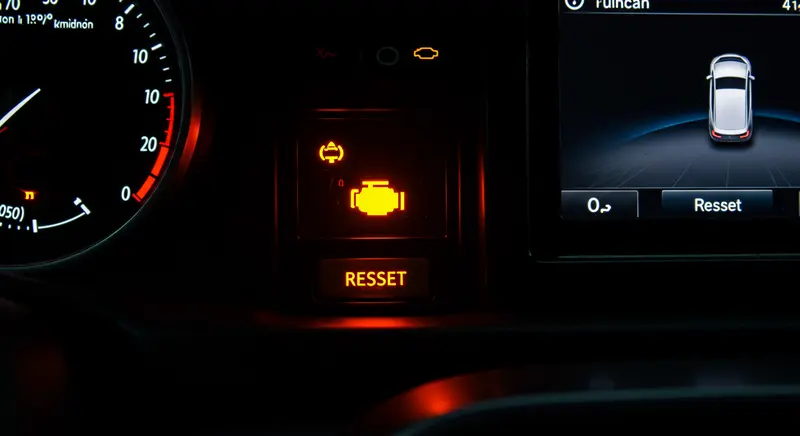
Why the Check Engine Light Is On?
It is also important to understand why the check engine light appears before one tries to reset the light. The latest cars are fitted with an onboard diagnostic system (OBD-II). This system keeps observing the engine, emissions, and other significant parts. A check engine light is switched on when an irregularity is found.
Some of the possible reasons are as follows:
- Damaged or loose gas cap
- False oxygen sensor
- Defective ignition coils or spark plugs
- Powertrain concerns (QE: Catalytic converter
- Soiled or in Santa Claus, failing airflow mass sensor
- Short-term electrical shortages
It is important to know the cause; this is because restoring the light may not be worthwhile, and repairs may cost more later or cause permanent damage.
1) Tightening or Changing a Gas Cap
A loose or broken gas cap is one of the easiest and least well-known reasons that a check engine light would come on. The gas cap maintains that the fuel vapors do not escape the fuel tank. When it is detached, broken, or not there anymore, the light comes on since the vehicle’s computation system detects a leak in the fuel system.
Steps:
- Shut your engine off
- Open the fuel door and take the gas cap out.
- Look at it visually to make sure there are no cracks, wear/damage.
- Re-tighten it when you hear a click.
- Run the engine once more and take it on the road a short distance.
The engine malfunction light may go off after the system rechecks and does not locate a leak in numerous circumstances.
2) Disconnecting the Battery
The other commonly used technique is removing the battery from the car. This cuts the power to the car’s electronic control unit ( ECU ) and resets the system.
Steps:
- Switch off your car and take the keys.
- Open the hood, and the battery is found.
- By using a wrench, disconnect the negative (black) terminal and then the positive (red) terminal.
- Leave the battery disconnected for at least 10 to 15 minutes and allow the ECU to reset.
- Reconnecting first with the positive, then the negative.
- Turn the car on and see whether the light has disappeared.
It is a speedy operation, but it can also reset other configurations, including radio presets, clock, and seat memories.
3) Using the OBD-II Scanner
An OBD-II scanner is an amazing tool to check the engine light. It is very easy to use and affordable. It is plugged into the OBD-II port near the car dashboard to help in reading errors and fix the engine light.
Steps:
- Switch your car off and find the OBD-II port (it is typically under the steering wheel).
- Insert the scanner in the port
- Turn the key in the ignition on, but do not start the engine.
- To read error codes, follow the instructions on the scanner.
- After the codes have been noted, choose the “Erase” or “Clear” option.
- Start the vehicle again to make sure that the light is out.
This is the preferred technique, as it not only restores the light but lets you know about the particular problem.
4) Letting the Light Reset
Sometimes, the turn on of the check engine light is caused by a temporary glitch, like a misfire or a small sensor error. In these events, the light can go off automatical after a few driving cycles.
Steps:
- Just keep on driving your car normally
- The ECU normally requires 3- 5 full driving cycles (accelerate, brake, drive) to pass without generating an error state to reset the light.
- In case the light goes out by itself, it is a minor problem.
It is a patient approach, but it seems to disable or even avoid the range of actionless interventions when the system can correct the mistake itself.
5) Residual Electricity Draining
Only removing the battery is not enough; it is possible to help by draining the remaining electric charge in the vehicle system.
Steps:
- Remove the battery as described above
- Wait and press the car horn or brake pedal of a car down, to bring down any residual energy, for 30 seconds.
- Wait 10 more minutes and then connect the battery again.
- Restart the vehicle and observe whether the light is cleared.
This way makes sure that the ECU is not setting anything in reserve memory.
6) On and Off ignition switching
This is a simple reset trick for some cases of temporary problems.
Steps:
- Insert your key in the ignition.
- Turn to the on position (but do not start the engine).
- Turn it on and wait a moment, about 1-2 seconds, then turn it off.
- Write this three times
- On the fourth try, put the engine on.
The light can then go off after this reset procedure in the case of a small problem.
7) Malfunctioning Parts Check And Replace
There are always technical tricks that work, but in some cases, it is only feasible to get the lights off by mending the situation. In case the scanner indicates a problem with the spark plugs, sensors, and coils, then changing these can effectively get rid of the problem forever.
Steps:
- Use an OBD-II scanner to diagnose failing components.
- Replacing the part in question on your own is optional as long as you do not feel concerned about breaking anything.
- Trust the system to go into the scanner using batteries.
This technique prevents the light not to bouncing back after the reset.
8) Mass Airflow Sensor Cleaning
A clogged mass airflow (MAF) sensor may cause the check engine light to illuminate. As a cleaning, it is an easy DIY process that has the ability to enhance the performance of your car.
Steps:
- Find the MAF sensor (in between the air filter and the throttle body).
- Unplug the electric connector
- Remove the sensor slowly
- Then, apply some Spray MAF cleaner on the sensor (should avoid touching the wires).
- Allow it to dry, and then reassemble it in place.
After being cleaned, the system can reset the light by itself in certain drives.
9) Resetting by removing Fuses
In some cars, there is the possibility of resetting the ECU by removing certain fuses.
Steps:
- Refer to your car’s manual to find the ECU or ECM fuse.
- To remove the fuse, use a fuse puller.
- Wait 10 to 15 minutes before reinserting.
- Start the car and then examine to see whether the light appears.
This is a less popular technique, but it has the possibility of working in some vehicles.
10) Conducting Routine Maintenance
Preventive maintenance eliminates recurring check engine lights. Perhaps you have a light indicating an oil problem when in fact, you have not been taking your car to get the oil changed, replace your air filter, or clean your fuel system, and this may be the cause of your light appearing.
Steps:
- Change to new spark plugs and filters.
- Clean or replace the oxygen sensor when its life is about to come to its end.
- Make sure to have oil and fluid changes as frequently as possible.
Drive the car normally after servicing the car- the ECU will switch off the light after some time.
Things to Keep in Mind
There are some things that you should consider while you are facing an engine light problem, as:
- Don’t overlook the warning: Although one can reset the check engine light on their own, doing so should be something that is on the back burner, seeing that the light is there for a reason. By cleaning it without fixing the actual problem, you will be concealing problems that may turn out costly to repair in the long run. Why the light remains on is always worth investigating before it’s reset.
- Drive Safely: Be particularly objective as to the way the light acts. A persistent check engine light usually indicates a low-level problem, but a check engine light that is on and off indicates a serious issue that may include an engine misfire. Failure to observe this may take a toll on important parts, such as the catalytic converter. Never attempt to reset without professional assistance. In case the light is flashing black on black, it is not recommended to pull over and seek help, because this is a sign that the light is just going to flash, and it is an indication that you should seek assistance.
- Carry a Scanner with you: Having a generic OBD-II scanner is an intelligent investment for the driver. These machines are inexpensive, user-friendly, and capable of scanning diagnostic trouble codes (DTCs) in a short period of time. Understanding the health of your car using one will be able to tell you how safe it is to reset the light or that a repair is mandatory.
Final Thoughts
When the check engine light is on, this does not necessarily mean that something serious is happening. Often, the problem is minor and does not require a mechanic to handle. By mastering these tricks, from closing the gas cap to utilizing an OBD-II scan tool, you become a confident owner, as well as save yourself the money you would have spent on a mechanic.
Note that the resetting of the light is not the whole war. Correction of the root cause of an issue will make your car continue to be reliable and drive safely on the road.
By educating yourself about these reset methods, you not only remove the mystery behind one of the dashboard lights that people fear the most, but also take a small step into becoming a more self-sufficient driver.
