
Jeep Grand Cherokee Years to Avoid – Quick Overview
Jeep is not just a name; it’s the very company where the word “jeep” got its recognition globally, turning this name into adventure, ruggedness, and freedom. Once, Jeep was owned solely by American Motors Corporation, which was later acquired by Chrysler and then finally by Stellantis.
In particular, the Jeep Grand Cherokee has a history of more than four decades, when the Jeep company was finally finding a successor for the legacy of its ever-successful Jeep Cherokee. Back in those days, the automobile industry was greatly tilting towards more modern unibody designs that could easily accommodate growing families. However, there are some Jeep Grand Cherokee years to avoid.
Jeep Grand Cherokee Years to Avoid
Here is a quick overview of Jeep Grand Cherokee years to avoid:
| Model Year | Key Problems | Known Recalls | Estimated Repair Costs (USD) | |
| 2005 | Transmission failure, gear slipping, wind noise, water leaks | No major recall for wind noise or transmission | $1,500 – $3,000 | |
| 2011 | HVAC actuator failure, brake booster corrosion, and steering leaks | Brake booster recall issued | $800 – $2,500 | |
| 2014 | Gear shifter malfunction, transmission shifting issues, alternator failure, brake booster corrosion | Gear shifter & alternator recall (P60/14V634000/T36), brake booster shield (T59) | $1,200 – $3,500 | |
The Jeep Grand Cherokee was always supposedly designed to be a better replacement for the long-serving Cherokee; instead, it was more of a premium model with a more powerful drivetrain, upscaled safety features, and more specifically, a large size. Undoubtedly, the Jeep Grand Cherokee was globally successful, yet it came with many issues. Some of the Jeep Grand Cherokee years to avoid are:
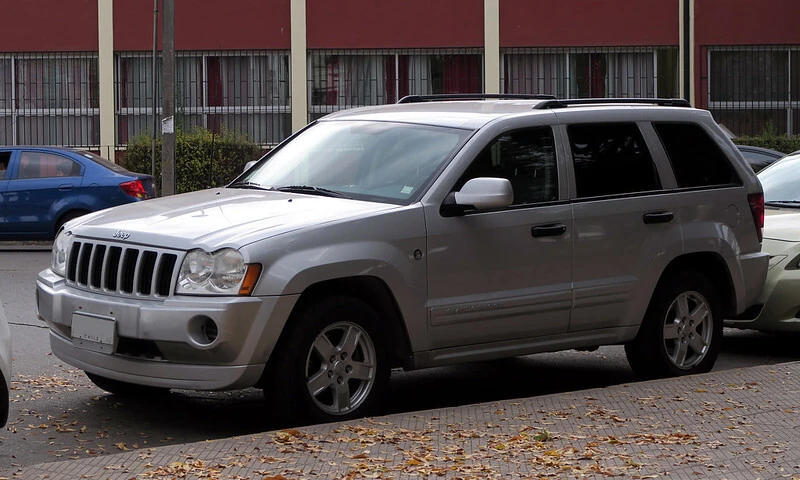
1. 2005 Jeep Grand Cherokee
The 2005 Jeep Grand Cherokee was the first model year (in the third generation) to have an independent front suspension instead of a solid front axle, which greatly improved the on-road comfort and handling. This particular generation was globally known for its reliability, except for the very first model years (such as 2005). But it’s one of the Jeep Grand Cherokee years to avoid; some of its common problems are:
Transmission Control Module Failure
Many owners of the 2005 Grand Cherokee have experienced and reported the worst failure of transmission failure in the middle of nowhere, even a user reported that he nearly missed a close call into an accident just because the transmission failed.
The failure was mainly associated with the transmission control module, which glitched (failed in some cases) and killed the engine power. Some owners, however, even replaced the entire module to avoid such an idiotic breakdown, which can cause them to meet a highway crash instantly. Before you make a deal, make sure this problem isn’t coming along.
Transmission Gear Slipping
Owners have shared their experiences on different forums about gear slipping in the 2005 Grand Cherokee. Out of two incidents of gear slipping reported, an owner reported that their entire transmission failed nearly 24,000 miles, and again after repair at 38,000 miles.
After an extensive look around, it came to the attention that poor clutch pack design was the root of all chaos, whose only solution is quite lengthy, expensive, and can recur at any point during travelling.
Wind Noise & Water Leaks
A bunch of owners have spoken up about the common wind noise issue with their 2005 Grand Cherokees, where they experienced wind tunnel-like noises even at speeds as slow as 40mph. It’s a typical rant among those who have early models of the third generation (particularly the 2005 model), and the cause was the wheel bearings.
Some other owners chimed in with a pretty similar issue where the water was leaking into the door area and near the glovebox. Everything went sideways because of poor-quality water seals and weather strips in these areas. The reason to avoid this model is that there are probably more chances of rusting in the coming years.
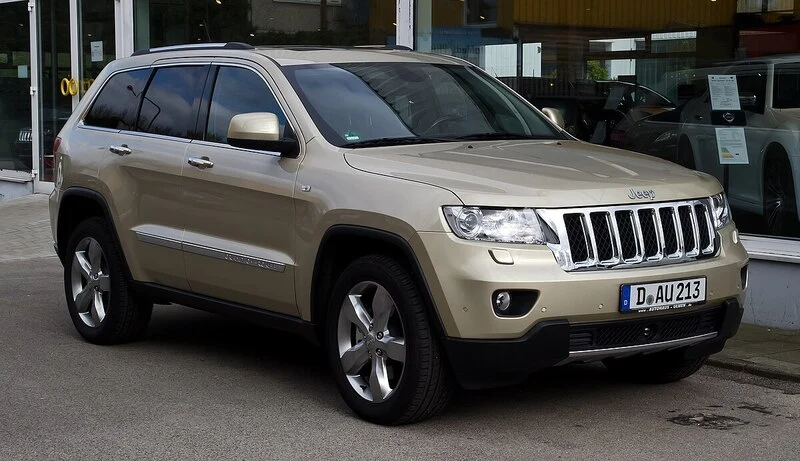
2. 2011 Jeep Grand Cherokee
The 2011 Jeep Grand Cherokee was completely evolved from the previous generation, which now has a fully independent suspension system based on a Mercedes-derived unibody platform. With many mechanical and cosmetic upgrades, the 4th generation was a game-changer until its problems started to pop up, such as:
HVAC Blend Door Actuator Failure
Many owners observed and claimed that there was even cabin temperature, meaning warm and cold air were blowing from vents simultaneously. To put it simply, climate control was not working perfectly, and even in some cases, there was no airflow in the footwell or defroster.
After a couple of owners reported their issues with fellow owners on forums, automobile folks turned heads and found that small electric motors (actuators) responsible for moving the blending doors had worn-out gears inside due to extreme heat or after repeated usage. Since such issues are not supposed to happen every now and then, it means they might happen again.
Brake Booster Corrosion & Stiff Pedal
Nearly 300 owners of the 2011 Grand Cherokee filed formal complaints to NHTSA about the braking issues, where Jeep issued a recall just to fulfill the formality. Before all this went down, owners shared their issues where they had to press the brake pedal much harder than normal to stop the vehicle. A few even reported complete brake failure.
The brake booster alone is held responsible for sabotaging the entire braking system, where water can enter the booster through the vacuum hose and cause rusting (or corrosion) of the booster diaphragm. As mentioned earlier, this is a known issue, and its recall did not make any difference. Before you make a deal, pop the hood to see if this little headache is waiting for you.
Steering Rack and Pinion Leaks
A fair share of owners reported on common forums about some fluid puddles under the vehicle, along with steering being loose, giving clunking noises, and eventually becoming hard at low speeds. It turns out to be leaking power oil, which causes all the mess.
But behind all this chaos is the rack and pinion assembly, which keeps your steering connected with the wheels, and its hydraulic seals were of poor quality, which would eventually wear out. Since fluid leaks out, metal-on-metal wears out the entire steering rack within no time. Better to think first, before making a deal on a 2011 model because it is one of the Jeep Grand Cherokee years to avoid.
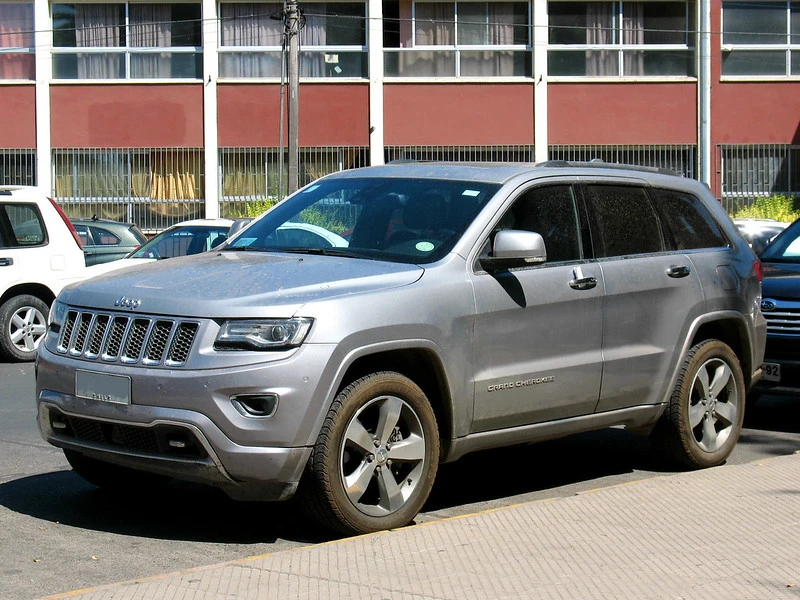
3. 2014 Jeep Grand Cherokee
The 2014 Jeep Grand Cherokee was revamped with the world’s famous and modern ZF 8-speed automatic (845RE for V6 & 8HP70 for V8), along with upgraded electro-hydraulic power steering, a completely redesigned 4WD system, and an upgraded Quadra-Lift air suspension controller. However, some of the common issues that missed their quality testing are:
Electronic Gear Shifter Malfunction (Rollaway Risk)
A large number of owners have reported near-death experiences with their 2014 Grand Cherokee, where the vehicle would just roll away even in reverse mode. Due to these shifter malfunctions, nearly 28 people have injured themselves, including broken ribs and fractured pelvises.
However, the root cause was nothing but the electronic shifter from ZF transmission, which does not have a physical stick that operates with the gear position. So, the owners believe their vehicle is in parking mode whilst it is still in reverse or neutral mode. Jeep recalled this model year to fix the problem by adding software, but do not expect a physical lever until the 2016 model.
Rough or Delayed Transmission Shifting
A whole bunch of owners of the 2014 Grand Cherokee have expressed their grief about the upgraded ZF 8-Speed automatic gearbox, which has the highest complaints ratio in the entire generation total of 71 complaints and nearly 22 reported for delay and jerky shifting.
The thing causing all the trouble is the “software control logic”, which is mainly responsible for engagement of the torque converter and smoother gear shifting. If not properly calibrated, it will cause banging while shifting, jerking, or delayed acceleration. However, the only solution could be replacing many reflashes for TCM, valve-body upgrades, and cold-weather fluid heaters replacements, which will still not guarantee that it will work perfectly.
Thousands of owners have reported a common issue with partial or even complete alternator failure, where some saw smoking from it, a few had short circuits, and even caught fire in the engine compartment. An owner was so frustrated that he/she reported that he/she was driving on the highway, when the check light came on, and then white smoke, the alternator was gone.
Fundamentally, the source of such embarrassing failure is thermal fatigue in alternator diodes, which was recalled (P60/14V634000/T36) for alternator replacement of the 2014 model Grand Cherokee. But only a few people reported the issue again even after the recall.
Brake Booster Corrosion & ESC Failures
What owners reported was completely unusual and does not happen quite frequently: brake booster corrosion. Yes, you heard it right. Many owners brought up the issues on forums that they had been hard braking, and upon checking, they found the booster corroded.
But pulling the strings in the background, it came to the attention that water droplets were getting in through the booster shields and causing the issues. The solution was recalls issued to have a T59 protective shield added for the brake booster.
Bottom Line
The Jeep Grand Cherokee is an excellent off-roading machine, which received many modern upgrades, yet some promising issues that can ruin one’s life if they unfortunately buy that model. The older models had more issues with transmission failures, gear slipping, water leaks, brake booster corrosion, faulty HVAC actuators, and leaking steering racks.
Yet Jeep is a highly reputable and trustworthy brand, but major reliability issues can happen anywhere, even Toyota has had many similar issues. However, for your peace of mind, you should simply avoid these models to get rid of the problems that come along with Jeep Grand Cherokee years to avoid.
