
Understanding Truck Accident Liability: Laws, Evidence, Insurance Structures, and Multi-Party Responsibility
You may still be unsure what happened, who is responsible, or what you are supposed to do next, yet insurance companies, employers, and legal teams may already be taking steps that affect your outcome. To protect your interests, it’s important to understand how liability is determined and what evidence can confirm your side of the story.
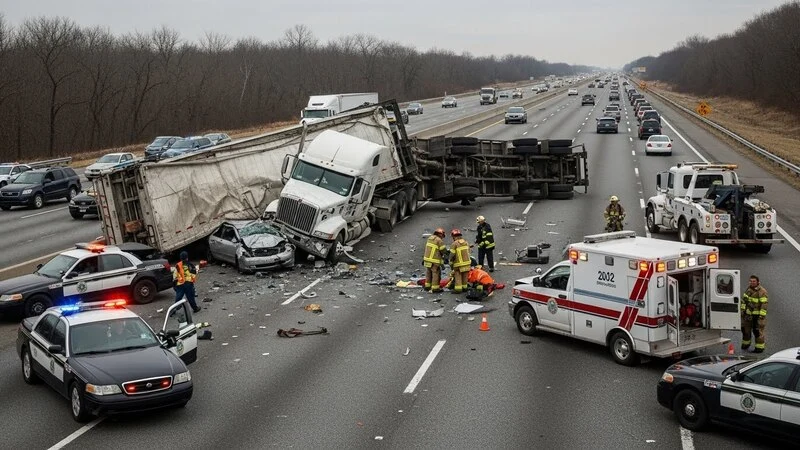
What Happens After a Truck Accident and Why Every Detail Gains Immediate Weight
A commercial truck collision rarely leaves anyone with a clear, step-by-step memory. People often remember sudden noise, metal vibration, emergency lights, short fragments of dialogue, or the feeling of being transported — not the exact sequence of events.
Medication, shock, and fear of long-term injury can also disrupt short-term memory and create hesitation about whether your own recollection is accurate.
During this same period, multiple systems begin documenting the event, and they do not pause until you feel ready to organize your thoughts. Speaking with truck accident lawyers at The Clark Law Office early in the process helps prevent gaps or unclear statements from becoming part of the official narrative.
Information recorded during the first hours and days does not form randomly. It gradually shapes how insurance departments, law enforcement, and legal teams may later interpret responsibility.
Documentation often begins before injured individuals fully understand what happened, for example:
- Police narratives and crash diagrams are prepared shortly after the scene is secured;
- Emergency department notes that record symptoms, pain levels, and the reported mechanism of injury;
- Intake data collected by insurance adjusters or corporate risk personnel;
- Digital timestamps and telematics pulled from truck systems and law-enforcement requests;
- Internal employer reports filed for commercial liability compliance.
Michigan follows a modified comparative fault structure, where compensation depends on verified facts and how they allocate responsibility among all involved parties. A small inconsistency, unclear statement, or premature assumption can influence that percentage once combined with digital records, medical documentation, and official reports.
Systems archive whatever is available at the moment, not what someone may later remember, and corrections made after the fact are rarely straightforward. Casual explanations can turn into long-term obstacles once they appear in a permanent file used for negotiations, recorded statements, depositions, or trial preparation.
Federal and State Rules That Shape Commercial Truck Responsibility
Commercial trucking is regulated at several levels through safety standards, training requirements, medical fitness records, equipment inspections, and limits on driving hours.
These rules exist to reduce risk during long-distance travel with heavy equipment and valuable or hazardous cargo. Federal requirements are backed by written logs, recorded data, and compliance checks, and they can be reviewed if a collision raises concerns about fatigue, mechanical issues, scheduling pressure, or policy violations.
When lawyers investigate a truck crash, they often request access to official operational records. These sources build factual grounding for liability decisions, not speculation or assumptions. Examples include:
- Black box engine data and sudden brake activity;
- Electronic logging device records with exact driving and rest periods;
- Maintenance and repair history from approved service centers;
- Dispatch instructions, route approvals, and internal communication;
- Cargo documentation showing weight, placement, and handling.
If evidence reveals that decisions increased risk, responsibility can extend beyond the person driving the vehicle to include company leadership, contractors, cargo handlers, or equipment manufacturers.
Multi-Party Responsibility and Hidden Contributing Factors
Many people initially assume the driver is the only responsible party. However, commercial transportation involves a chain of decisions, each of which can affect the outcome. A schedule coordinator may have issued a route with insufficient rest time.
A mechanic may have allowed a brake system to pass inspection shortly before the trip. A cargo company may have loaded freight unevenly, which created instability. A product manufacturer may have distributed a part known for sudden failure during long-range operation.
To avoid overlooking crucial factors, attorneys reconstruct not only the collision but also the environment that led to it. They examine documents that reveal decision influence rather than only physical control. These may include:
- Driver qualification and medical clearance records;
- Employee training standards and disciplinary history;
- Contracts defining who controlled timing and safety policies;
- Internal messages showing pressure, instructions, or ignored concerns.
Responsibility in such cases is not decided by surface-level appearances but by documented choices made before a key moment.
Insurance Structures and Why Communication Feels Complicated
Commercial insurance rarely operates through a single policy. Several layers may apply depending on employment status, cargo type, distance, subcontracting agreements, and corporate risk strategies.
This leads to contact from different representatives who may request personal statements, medical disclosures, device access, or written confirmation. Such communication may feel supportive, yet each message is recorded through a claims management system with financial objectives.
An injured person may face fatigue, medication side effects, or stress-driven confusion, which increases the risk of saying something that does not match medical records or timeline evidence.
Statements given early may later appear as official admissions and become difficult to challenge. This is one of the reasons people often seek legal assistance early — they want protection against misinterpretation while they focus on recovery rather than negotiation.
Evidence, Timing, and Why Legal Representation Helps Preserve the Full Story
Evidence in truck cases includes medical documentation and photographs, yet modern commercial vehicles also contain digital recorders that monitor engine status, gear changes, speed, steering activity, and brake force shortly before a crash.
Investigators may also review weather data, road condition records, nearby surveillance, and eyewitness accounts. Medical records matter not only for diagnosis but also for linking symptoms and functional limitations to the collision.
Attorneys familiar with trucking cases issue preservation notices to prevent deletion of digital and written records under standard retention timeframes. They coordinate with reconstruction experts, financial analysts, and physicians to connect physical injury with long-term consequences.
Many injured people describe the most challenging part of the process as the volume of requests, deadlines, and decisions during recovery. Legal support provides structure, safeguards evidence, and facilitates controlled communication.
