
Online vs Traditional ELDT Training: Which Is Better for You?
With the implementation of the Entry-Level Driver Training (ELDT) regulations by the FMCSA, aspiring commercial drivers must now complete a certified training program before obtaining a CDL. While the mandate ensures standardized learning, it also opens a major question for students:
Should I choose online or traditional ELDT training?
As technology reshapes how we learn, both online and in-person ELDT training have their strengths and weaknesses. If you’re an undecided student trying to make the right decision, this guide will walk you through a side-by-side comparison to help you choose the path that fits your goals, lifestyle, and learning style.
What Is Online ELDT Training?
Online ELDT training refers specifically to the theory portion of the Entry-Level Driver Training (ELDT) curriculum delivered via digital platforms. Students can complete required coursework—like hours-of-service rules, safe driving practices, vehicle inspection, and more—from the comfort of their home or on-the-go.
The structure typically includes:
- Pre-recorded video lessons
- Interactive quizzes and knowledge checks
- Self-paced modules
- Digital certificates submitted directly to FMCSA
Online training is often designed to be completed in a few hours or days, and it’s available 24/7 on most platforms.
What Is Traditional ELDT Training?
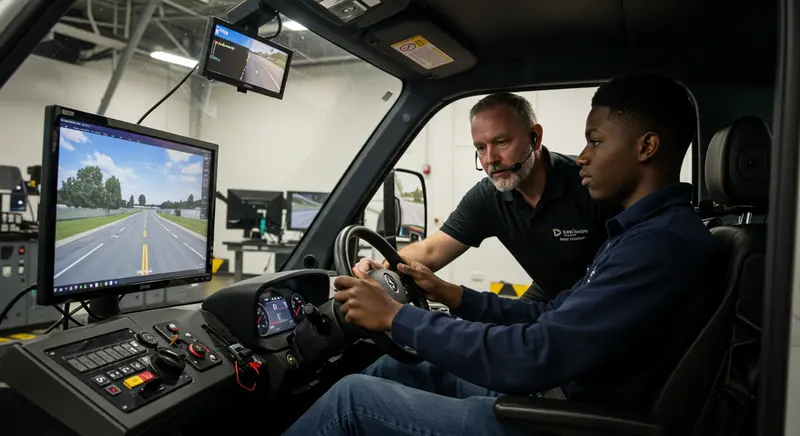
Traditional ELDT training takes place in brick-and-mortar classrooms, usually provided by trucking schools, community colleges, or employer-based programs. The theory instruction is conducted face-to-face by certified instructors, often alongside the behind-the-wheel (BTW) sessions.
Features of traditional training include:
- Structured schedules
- In-person lectures or group discussions
- Physical learning materials
- Real-time feedback and peer interaction
While in-person training often leads directly into BTW instruction, it requires fixed attendance and a local presence.
Side-by-Side Comparison
Here’s how online vs traditional ELDT training compare across key factors:
| Feature | Online ELDT | Traditional ELDT |
| Cost | Generally lower ($75–$150) | Higher due to classroom costs ($300+ for theory) |
| Schedule Flexibility | Complete at your pace, anytime | Fixed times; may conflict with jobs/family |
| Access | Available anywhere with internet | Location-limited; travel may be required |
| Instructor Interaction | Limited to chat or support emails | Real-time, face-to-face interaction |
| Success Rates | High for motivated, self-paced learners | High due to structured environment and accountability |
Who Should Choose Online ELDT?
Online ELDT training works best for individuals who:
- Are self-motivated and can follow through without constant reminders
- Have busy schedules due to work, family, or other commitments
- Live in remote or rural areas where training centers are not nearby
- Prefer to learn at their own pace, possibly faster than classroom settings
- Need a budget-friendly option without additional commuting or housing costs
Online training empowers learners who are digitally comfortable and value flexibility. It’s a solid option for students who want to get the theory part done quickly and efficiently before moving on to their hands-on BTW training.
Who Should Choose In-Person ELDT?
In-person ELDT training is ideal for students who:
- Learn better in structured environments and benefit from set routines
- Prefer face-to-face instruction and immediate feedback from instructors
- Value group discussions, teamwork, and the motivation of classroom dynamics
- Need extra help understanding complex topics like FMCSA rules or trip planning
- Are already enrolled in a full CDL school that offers an all-in-one solution
Students who thrive with personal guidance and in-person mentorship often gain more from traditional training, especially when paired with the behind-the-wheel component offered by the same provider.
Hybrid Approaches: Best of Both Worlds?
A growing number of ELDT providers now offer hybrid programs, combining the convenience of online theory with the depth of in-person behind-the-wheel instruction.
These options can provide:
- Online access to theory courses
- Scheduled in-person driving lessons
- Instructor support via phone or chat
- FMCSA compliance across both parts
This model suits students who want the flexibility of online learning but don’t want to compromise on hands-on experience. Some schools even allow you to start online and transfer to their physical location later for practical training.
Final Decision Checklist
Before enrolling, ask yourself the following questions:
- Do I need schedule flexibility or can I commit to fixed class times?
- Am I confident in learning on my own, or do I prefer personal interaction?
- Is there a training center nearby, or would traveling be difficult?
- What is my budget for the theory portion of ELDT training?
- Am I comfortable using online platforms for learning and tests?
- Do I plan to complete behind-the-wheel training through the same provider?
Your answers will point you in the direction that best suits your personal and professional needs.
Conclusion
There is no one-size-fits-all answer when it comes to choosing between online and traditional ELDT training. Each method offers distinct advantages, and the “better” option depends entirely on your learning style, schedule, location, and budget.
If you’re confident in managing your own study pace and need maximum flexibility, online training may be perfect for you. On the other hand, if you learn better through live instruction and need accountability, the classroom route might be your best bet.
Whichever path you choose, make sure the provider is FMCSA-approved and fits your long-term goal of earning a CDL and beginning a successful driving career. Don’t just follow the trend—choose the training method that helps you succeed.
