
What Really Caused the Princess Diana Car Accident? Full Breakdown
The Princess Diana car accident, which happened on the 31st of August 1997 involving her Mercedes Benz in the Pont de l’Alma tunnel in Paris, led to her death and has since been the subject of major analysis and conspiracy theories.
Determining the cause entails analyzing the factors that resulted in the occurrence of the accident, the driving actions that led to the crash, the actions of the paparazzi, and the conclusions drawn by investigative committees.
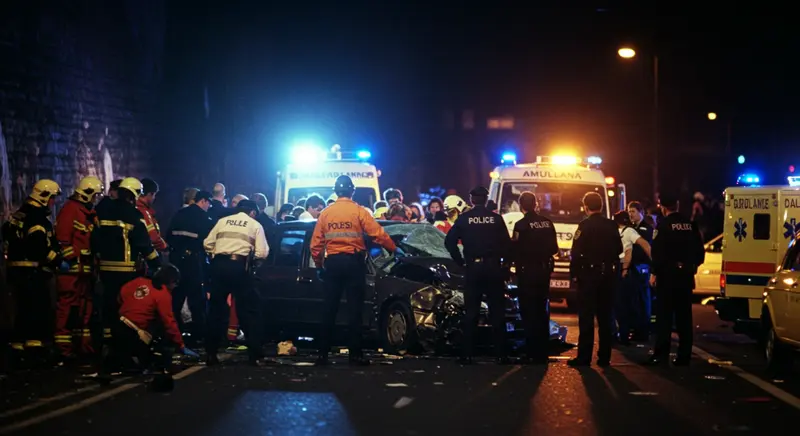
Events Preceding the Princess Diana Car Accident
The accident involved four occupants of Princess Diana’s vehicle; Princess Diana herself, her companion Dodi Fayed, their bodyguard Trevor Rees-Jones, and the driver of the vehicle Henri Paul; they were in a Mercedes-Benz S280 at the time of the tragedy. This was an effort to run away from photographers who had been trailing them from the Ritz Hotel in Paris. The couple was in a hurry and had intended to head back to Dodi’s apartment to avoid publicity.
The Role of the Driver
Henri Paul, who was the driver of the car, was one important figure that came out during the investigation.
- Alcohol Consumption: Toxicological analyses conducted after the autopsy confirmed that Henri Paul was intoxicated with blood alcohol concentration at least three times the legal limit set in France. Such a state of drunkenness would have rendered him incapable of driving in a safe manner and hence justified the offense.
- Speeding: The car was moving at a probable velocity of 105 kilometers per hour, 65 miles per hour, and in a region with a velocity limit of 50 kilometers per hour, 31 miles per hour at the time of the accident. This speed actually made it rather dangerous to maneuver the tunnel and thus he had to slow down.
- Medication: The autopsy revealed that Paul had been under the influence of prescription drugs before the accident, further complicating traffic safety.
Paparazzi Pursuit
Paparazzi’s behavior in this case is also accused of a great number of factors that led to the crash. The press, on bikes and in cars, followed Diana and her companions as soon as they left the hotel; this pressure influenced the driver to increase his speed so he could escape them. This only added pressure and recklessness to the situation, as it is believed that Henri Paul was being too anxious.
Investigations and Findings
Two major investigations were conducted to determine the causes of the accident: an investigation led by the French Judicial police and another known as Operation Paget by the British police.
French Judicial Investigation
The French investigation was completed in 1999 and found that Henri Paul was responsible for the accident because he was under the influence of alcohol and driving at a very high speed. The paparazzi faced trial on charges of killing but were acquitted since it was hard to link them with the accident directly.
Operation Paget
In 2004, following concerns arising from various conspiracy theories, the British Metropolitan Police launched Operation Paget to deal with the issue resulting from the crash. The report which was compiled in 2006, supported the findings of the French investigation and concluded that the crash was an unfortunate incident which was caused by Henri Paul’s drunk driving and the paparazzi chasing him. The investigation also considered a lot of conspiracy theories by giving reasonable explanations and ruling out strategies citing non-existent evidence of foul play.
Potential Risk Factors and Safety Issues
Several other factors and safety concerns were noted during the investigations:
- Seat Belts: The only exception was Trevor Rees-Jones, one of the occupants of the automobile who did not have any seat belt on. Many people out there were convinced that wearing a seat belt could have increased the probability of their survival.
- Road Conditions: It also suggested that the entrance to the Pont de l’Alma tunnel was tricky, with a bend and a slope which could suggest that speed might have been an issue and the car in question lost control.
- Media Pressure: Not only was the persistence of the paparazzi a factor contributing to the immediate risk, but it also pointed out the constant press intrusion into Diana’s life, which was just as much a threat to her personal sphere.
Summary
Many factors contributed to the tragic Princess Diana car accident, and these include the intoxicated driving, carelessness in speeding, and the reckless behavior exhibited by the photographers.
Other inquiries confirmed the fact that this crash was simply an unfortunate accident and not an act of conspiracy. It also highlighted that fast car chase is a major risk that individuals deserve their space and that measures such as wearing seat belts should be encouraged on the roads.
