
Why Speeding Accidents Lead to More Severe Injuries
The modern transportation network is built upon the premise of efficiency and the rapid movement of people and goods across vast distances. Speed limits are meticulously calculated by engineers to balance the need for travel velocity with the fundamental requirements of human safety. These signs are not mere suggestions but are critical boundaries designed to protect every person sharing the public pavement today.
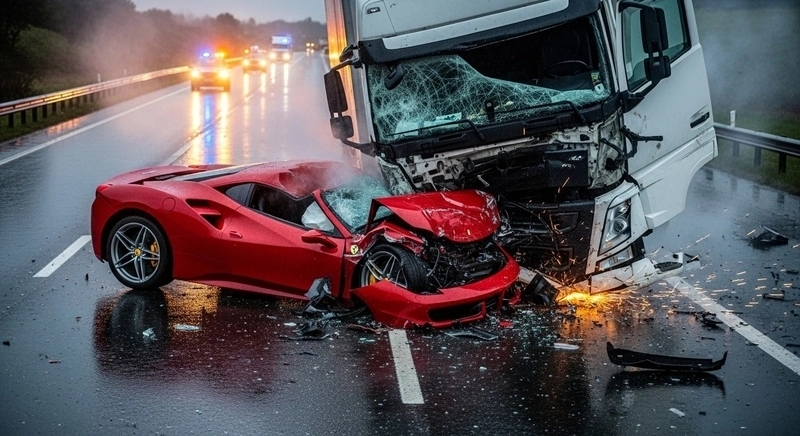
When a driver chooses to exceed these posted limits, they are effectively bypassing the safety margins built into the road’s design. The relationship between velocity and danger is not linear; even a small increase in speed can lead to a disproportionate surge in the risk of a collision. This behavior ignores the physical limits of both the vehicle’s machinery and the human body’s ability to withstand sudden trauma.
Increased velocity transforms a manageable traffic error into a catastrophic event that can change a person’s life in a matter of seconds. High-speed collisions magnify the total force of an impact, leading to much more profound structural damage and physical harm for the occupants. Understanding the physics of motion is essential for recognizing why speeding accidents remain one of the most persistent and deadly threats to public health.
Reduced Reaction Time
The ability to avoid a collision depends almost entirely on the amount of time a driver has to identify a hazard and take corrective action. At higher speeds, the distance a vehicle travels in the single second it takes for a brain to process information increases dramatically. This lag means that a driver has much less room to brake or swerve before an impact occurs.
When a car is moving at seventy miles per hour, it covers over one hundred feet every second, leaving almost no margin for unexpected events. A driver who is speeding may not even have the chance to move their foot to the brake pedal before they strike an obstacle. This lack of reaction time turns a simple near-miss into a violent and unavoidable traffic incident.
Furthermore, the higher the speed, the more difficult it becomes for a driver to maintain a clear awareness of their immediate surroundings. Peripheral vision begins to narrow as velocity increases, making it harder to spot a pedestrian or a vehicle entering from the side. Reduced reaction time is a primary factor that elevates the danger of every high-speed journey today.
Greater Impact Forces
The severity of an injury in a crash is determined by the total amount of kinetic energy that must be absorbed by the vehicle. According to the laws of physics, this energy increases with the square of the vehicle’s speed, meaning doubling the velocity quadruples the force. This exponential growth in power is what causes the most devastating structural failures during a collision in the city.
Standard safety features, such as airbags and crumple zones, are designed to manage energy within specific, tested speed parameters. When a vehicle exceeds these limits, the safety systems can become overwhelmed and fail to provide the protection they were intended to offer. The interior of the car can be crushed, leaving the occupants with no survival space during the impact.
The massive transfer of energy during a high-speed strike also causes profound damage to the human body’s internal organs and skeletal structure. Even if a person is wearing a seatbelt, the sheer force of the deceleration can cause life-threatening internal bleeding or traumatic brain injuries. Greater impact forces are the reason why high-speed crashes result in such high levels of permanent disability.
Loss of Vehicle Control
Maintaining control over a multi-ton vehicle requires a constant balance of friction between the tires and the surface of the road. As speed increases, the downward force holding the car to the pavement can be compromised by small bumps or changes in the grade. This loss of grip makes it much easier for a driver to lose control during a routine maneuver.
Sudden swerving at high speeds is particularly dangerous because it can trigger a violent weight shift that leads to a rollover incident. The centrifugal force exerted during a sharp turn can overcome the stability of the vehicle, pulling it off the road and into the air. Once a car begins to tumble, the chance of a fatal outcome for everyone increases exponentially.
High velocity also makes it much harder for a driver to recover from a simple lane departure or a soft shoulder. A small steering correction that would be harmless at lower speeds can cause a vehicle to fishtail uncontrollably when traveling too fast. Loss of vehicle control is a terrifying reality that highlights the physical dangers of ignoring the posted safety limits.
Higher Likelihood of Fatal Injuries
Statistical data from decades of traffic reports consistently shows a direct correlation between travel speed and the probability of a fatality. As the velocity of an impact climbs, the human body’s ability to survive the resulting trauma drops toward zero with startling speed. There is a physical threshold beyond which medical intervention simply cannot overcome the extent of the total damage.
For pedestrians and cyclists, the risk of a fatal outcome is even more pronounced because they lack the protection of a metal frame. A person struck by a car moving at forty miles per hour has a significantly lower chance of survival than someone hit at twenty. The increase in speed turns a painful injury into a tragic loss of life for the family.
The force of a high-speed crash often leads to secondary impacts, such as being thrown from the vehicle or hitting a stationary object. These subsequent collisions add more trauma to a body that has already been weakened by the initial and violent deceleration of the car. The higher likelihood of fatal injuries is the ultimate and most sobering reason to follow the law.
Conclusion
Summarizing the impact of velocity on road safety reveals that speeding is a choice that places everyone in the community at risk. The magnification of physical force and the reduction in reaction time create a landscape where tragedy is almost inevitable during a crash. Safety depends on every driver respecting the boundaries established by professional engineers for the common good.
By acknowledging the physics of motion and the limits of automotive technology, we can better understand the true cost of a hurry. Taking an extra few minutes to reach a destination is a small price to pay for the security of yourself and others. Responsibility behind the wheel is a fundamental requirement for a functioning and healthy society in the modern world.
Ultimately, the goal is to foster a culture where the safety of human life is prioritized over the speed of the commute. By holding ourselves and others accountable for their driving habits, we can reduce the frequency of these devastating and avoidable events. Staying within the speed limit is the most effective way to ensure that every journey ends safely for everyone.
