
Balancing Safety and Compliance: THC Testing for Commercial CDL Drivers
Driving a truck on America’s roads is not just work; it is an enormous responsibility. Commercial drivers with a Commercial Driver’s License (CDL) are faced on a daily basis with stringent Department of Transportation (DOT) regulations, one of which is drug testing. Among those, THC testing targeting the active component of marijuana is particularly distinctive in its complexity and ramifications. A positive result can destroy a career, jeopardize safety, and inflict monetary harm. As a unit steeped in the mechanics of this line of work, we understand how vital it is to always stay ahead. In this article, we’re discussing how THC testing impacts safety and compliance, the issues that create problems, and the strategies that keep drivers safe in the game.
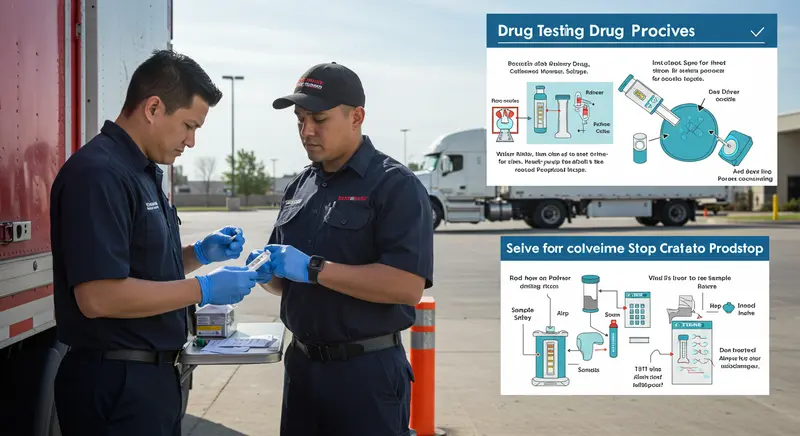
THC Testing as a Safety Pillar
The Federal Motor Carrier Safety Administration (FMCSA) mandates testing when a driver is pre-employment, random, post-accident, or suspected of drug use. THC is a priority because even low levels of it can indicate potential risk. A positive test leads to automatic suspension, participation in the Substance Abuse Professional (SAP) program, and possible loss of license.
Safety here is of utmost concern, not just for drivers but even for carrier companies. An accident with a THC-positive driver can lead to tragedies and multimillion-dollar judgments. That is why THC urine test strips allow drivers to confirm their clean status in advance, minimizing risk to themselves and others.
The Hidden Traps of THC Detection
THC is not a mere drug on the DOT list of drugs. With a single or multiple uses, its metabolites, such as carboxy-THC, will be in the body for up to 35 and even more days, respectively. This introduces some peculiar complexities, especially to the drivers under the influence of CBD. Even though CBD is legal when it has a less than 0.3 percent concentration of THC, the variability of quality control implies that some have a greater amount of THC than indicated.
Main weaknesses of THC testing:
- Labeling issues with CBD products: Misleading labels may conceal excessive THC levels, leading to unexpected positives;
- Slow excretion: A single use of marijuana can yield a positive result weeks later;
- Metabolite emphasis: The tests are not detecting active intoxication but rather monitoring remote exposure to THC.
These conditions make testing more difficult. A Nevada driver, for example, lost his job after ingesting a CBD syrup he described as “safe.” While the state of THC testing is evolving, with Washington state weighing legislation limiting punishment for positive tests in the absence of proof of impairment, DOT federal standards are strict, and CDL drivers must comply.
New devices such as THC breathalyzers would one day be able to measure current impairment, but still have their flaws. Drivers will have to continue to be dependent on well-established methods, like Exploro suggests, until something better comes along.
The Ripple Effect on Drivers and Companies
A quality THC test creates a ripple effect affecting everyone, from the driver to his employer. For the driver, it could mean loss of income, reputation, and even their license. The average salary for a CDL driver is estimated at around $70,000 in the U.S., and suspension for a few months will set a driver back $10,000-$20,000. The SAP program adds another $2,000-$5,000 in expenses on top of legal fees that can cost up to $3,000.
| Safety aspect | Impact | Mitigation with testing |
| Driver alertness | Positive tests may indicate past use, not impairment | Regular self-testing ensures compliance |
| Public safety | Reduces the risk of accidents linked to drug use | Early detection prevents risky driving |
| Company liability | Avoids lawsuits and fines | Proactive testing demonstrates due diligence |
| Regulatory compliance | Ensures adherence to DOT standards | Home tests align with federal thresholds |
These figures show how testing influences safety and holds drivers in the pale of the law. For instance, a crash involving a test-failed driver can result in multimillion-dollar lawsuits. Violating FMCSA regulations can draw fines of up to $13,000 per violation, while repeated violations can result in license suspension. If a hypothetical Oregon driver consumed CBD gummies to de-stress and was suspended for three months, that alone would cost him $15,000 in lost wages, $4,000 for the SAP program, and reputational harm, as a record in the Drug and Alcohol Clearinghouse makes him less desirable to employers.
Empowering Drivers with Exploro’s Solution
Exploro products like the Highly Sensitive At-Home Marijuana Drug Test Kit, which are reassuring and empowerment-providing devices for drivers. They are DOT-approved with a 50 ng/mL cutoff, and they give accurate results in just 5 minutes. They are easy to use, and their privacy allows drivers to test themselves discreetly.
How Exploro excels:
- High accuracy: Compliant with federal standards, testing THC metabolites at 50 ng/mL;
- Simplicity: Simple-to-follow directions and clear “C” and “T” lines for rapid reading of results;
- Affordability: A 15-strip pack makes testing cost-effective and habitual.
Self-testing on a regular basis protects drivers from shocks at official testing, preserving careers and peace of mind. However, in order to actually balance safety and compliance effectively, drivers and companies need to take proactive steps:
- Awareness and education: Drivers must be informed of the risks involved in CBD and THC, and businesses must hold training like the Exploro guides held by Dr. Matthew Nuesse;
- Part of clear policies: Employers must enforce rules that prevent the use of THC products, even when legal;
- Home testing: Use of THC urine test strips on a regular basis allows drivers to monitor their levels.
- These practices not only reduce positive-test risk but also improve safety culture. Companies that invest in education and testing demonstrate accountability, which can shield them from legal issues.
Final Thoughts: Driving with Confidence
For CDL drivers, THC testing is not only necessary but also a career- and safety-saving measure. A positive test can destroy a career, but with the right equipment and strategies, that does not have to happen. That’s why we urge drivers to add at-home testing to their routine. Not only does it protect against surprise dangers, but it also leaves them feeling more secure behind the wheel. Start testing yourself today with Exploro and take charge of your career.
