
Top Reasons Your Toyota Check Engine Light Is On (And How to Fix It)
The check engine light (CEL) on your Toyota is an alert that your car’s onboard computer (ECU) is that it is performing functions that are not considered normal operations. It illuminates this light whenever it identifies a form of malfunction, mechanical, electrical, or even a malfunction related to emissions.
Although it may tell you something minor, such as a loose gas cap, it can also indicate serious problems in the engine itself, misfires, or failure of the catalytic converter.
The CEL will remain steady (not an emergency, but soon it should be fixed) or blink (panic; cease to drive no later than now). Since this light has quite a significant meaning, knowing the meaning of this light and being fast enough to act can leave you relieved of costly repairs and safe on your drives.
Toyota Check Engine Light
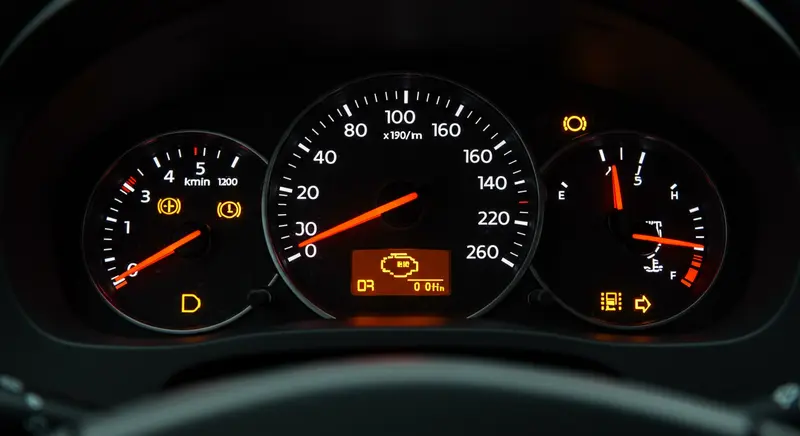
Key Signs to Watch:
- Solid Light: Medium problem (e.g., sensor fault, lose cap)
- Flashing Light: Urgent (e.g., misfire, damage to catalytic converter)
- Read the trouble code (DTC): Read by putting in use an OBD-II scanning tool
- Don’t ignore: Even though the car feels fine, do not ignore it
10 Reasons To Check the Engine Light
The Toyota check engine light is a built-in warning system, especially designed to inform you of potential issues before they become serious. Here we are listing some reasons your Toyota check engine light is on and how you can fix it:
1. Loose or Damaged Gas Cap
A loose or faulty gas cap may not be a major issue, but it is one of the most likely causes of the check engine light (CEL) to turn on in your Toyota. The evaporative emissions system of your car (EVAP) is based on a system that is sealed system. When the gas cap is not closed tightly or when it is worn out, the fumes in the fuel tank might leak, thus activating the CEL as the vehicle senses a possibility of a leak. Incidentally, this is also one of the simplest and economical problems to repair.
- After filling up, CEL will come on a short time afterwards
- With (or without) evaporation/fuel odor
To fix this issue turn tighten the gas cap until you hear a few clicks. And take a 20 to 40-mile drive. The ECU will perform a self-diagnosis and reset the CEL in the event that the problem has been solved. The CEL should turn off after doing the following: Check or change the cap.
2. Defective Oxygen (O2) Sensor
Oxygen sensors contained in your exhaust read the amount of oxygen therein to assist your engine in keeping the correct fuel-to-air ratio. Failure may result in bad readings, which will either result in bad idling, fuel gas consumption, or increased emissions.
You may observe such codes as P0135, P0150, or P0133. The failed sensor usually retails at $150-$300, and the CEL can be cleared manually (usually involves connection of transfer tube), or would just clear on its own after supplying power to the vehicle.
3. Failing Catalytic Converter
The catalytic converter minimizes pollutant gases in the exhaust of your car. When it gets clogged or is even dead, usually caused by unburned misfires, it may affect the fuel efficiency and the slow acceleration, and emit a rotten egg-like smell.
Check engine light, such as P0420 or P0430, can come up. It should be completely diagnosed and fixed, which may cost between 800 and 2500. Another reason not to drive with this fault is that this may further harm your engine.
4. Damaged Spark Plugs or Ignition Coil Packs
Ignition coils and spark plugs play an essential role in starting the fuel-air mixture in every cylinder. With time, they become eroded and lead to misfires, rough starts, and jagged acceleration.
Typical codes such as P0301 to P0306 will be shown depending on the affected cylinder. Spark plugs tend to sell at around 50-100 dollars, and replaceable coils are more expensive. Changing in intervals according to the prescription of Toyota can prevent the engine and improve its performance.
5. Dirty or Defective Mass Air Flow (MAF) Sensor
The MAF sensor helps regulate the quantity of air entering your engine to enable your engine to have complete combustion. When it is filthy or worn, it may result in poor fuel consumption or lagging and even stalling.
Such codes as P0101-P0103 are likely to indicate this problem. You may seek to clean it with MAF cleaner, though the need for replacement might be required ($200-300). Do not utilise non-MAF and water-based cleaners since they may destroy the sensor entirely.
6. Vacuum Leaks/ EVAP System Problems
The vacuum and EVAP systems that control the emission and vapor pressure of your Toyota are part of the Toyota. The rough idle, whistling sound, or smell of fuel may be the cause of a vacuum leak, which happens due to cracked hoses or a purge valve malfunction. Such codes as P0442, P0455, or P0456 might be activated. You will need to check and replace damaged parts (between 50 to 300). To detect minute concealed leaks, mechanics can conduct a smoke test.
7. Aftermarket Accessories or More Bad Mods
Making installations that fit the aftermarket systems, such as alarms, remote start applications, or lighting with LED lights, might sound harmless, but they interfere with the electronic systems and sensors of your car. This mostly leads to the light on the check engine turning on, electrical malfunctions, or several diagnostic codes.
When it happens, you need to follow an installation, remove the aftermarket device, and observe the system. Never install non-Toyota accessories with the involvement of non-professionals, as the final result might be surprising electronic interference.
8. Charging system or weak battery problems
A voltage surge caused by a poor battery or alternator will also result in error signals confusing the car sensors, which will, in most cases, result in a CEL. You can also experience low lights or difficulty in starting the car. It is possible to see codes associated with voltage or sensor failure.
You may check the battery and alternator at an auto parts store. Check the alternator and replace it with a new one when needed. The price range of a faulty battery is 100-200 dollars, and alternators are 400-600 dollars.
9. Faulty Engine Sensors
Things such as the crankshaft or camshaft position sensors are required by the engine timing and performance (of the engine). Otherwise, your car will stall or easily start, or will lose throttle.
Most of the codes, like P0335 or P0340, are usually associated with a sensor breakdown. These are parts that can be replaced at a price of about 150USD to 400USD and can be recalibrated. There may be severe engine performance issues or a breakdown in case of neglecting bad sensors.
10. Administrative Liability
There are cases when it has nothing to do with a mechanical problem, and a Toyota check Engine Light may appear. Faulty shaking of the oil filler cap after taking the vehicle due for service or use of old emissions documents may provoke the CEL.
There can be no apparent symptoms or trouble codes in such instances. The problem can be solved by just re-capping or checking your inspection records. These are a few and simple things one should always check after getting a service done, or filling the tank.
Conclusion
The Toyota check engine light is a diagnostic, and different people might not refer to it as a disaster. It is as minor as the loose gas cap to a more expensive repair like the replacement of the catalytic converter. To solve those problems requires: easy code scanner reading, shots based on symptoms, suggested repairs, and light resetting.
The simplest thing is preventive measures, which include maintaining your schedules, cleaning your sensors, not utilizing risky mods, and ensuring the health of your electrical system to limit ignition of the light in the first place.
As a DIY enthusiast or as a person seeking the services of a professional, it is always important to have an insight into these typical triggers and how they are repaired, as this further guarantees the reliability, efficiency, and general safety of your Toyota on the road.
