
Secure Storage on the Go: Trailer and Canopy Fabrication
If your setup involves hauling gear from job to job—or heading off-road with everything but the kitchen sink—then storage becomes less of a luxury and more of a necessity. Trailers and canopies aren’t just about having more space. They’re about protecting what matters, organising it properly, and making sure your gear’s where you need it, when you need it.
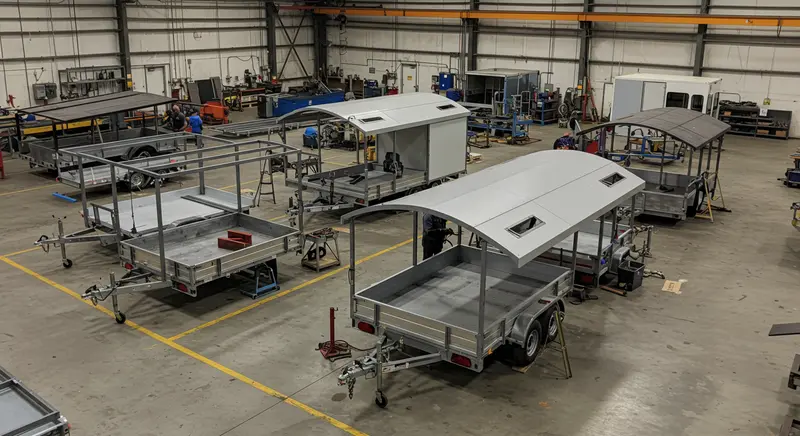
Why Secure Storage Is Worth Getting Right
Whether you’re a tradesperson, a weekend adventurer, or running a mobile setup, security and accessibility are the pillars of functional trailer and canopy design. Tools, recovery gear, camping supplies—all of it needs to be protected from theft, weather, and damage during transit.
The better your storage system is thought out, the less time you’ll waste hunting for gear or dealing with broken components. That starts with good design and only works long term if it’s built to last.
Choosing Between Trailer and Canopy Builds
The choice between a trailer and a canopy often comes down to your work and travel style. Trailers are great for modular setups—you can unhitch when not needed, and swap configurations based on the task. Canopies, on the other hand, offer a more integrated approach, especially for those who want storage always on hand.
Canopies have the added advantage of keeping your load more balanced over the axle and often feature more secure mounting systems. For off-road work or remote touring, that can be a game-changer in stability.
Material Matters: Steel vs Aluminium
When it comes to fabrication, materials play a major role in performance. Steel is strong and solid, but heavy. It works well in static or low-movement builds but can add unwanted weight to mobile rigs—especially if you’re juggling payload limits or trying to keep things lean for better fuel economy.
Aluminium steps in as a solid alternative. It’s lighter, won’t rust, and still offers enough strength for most builds, especially when reinforced at stress points. With proper design and quality welding, aluminium builds hold up remarkably well under harsh conditions.
Modular Layouts for Real-World Use
One of the best things about custom storage is tailoring it to your needs. Want full-length drawers for tools? Easy. Need vertical racks for shovels, poles, or fishing rods? No problem. Many setups also include space for fridges, batteries, and even plumbing—turning your canopy into a mobile workstation or base camp.
Good layouts don’t just focus on what fits—they focus on how quickly and comfortably you can get to what you need. And the difference shows when you’re working against the clock or setting up in the rain.
Weatherproofing and Dust Sealing
Australian conditions are notoriously hard on gear. Between coastal humidity, red dust, and sudden downpours, your storage setup needs to offer serious protection. Canopies and trailers should be sealed tightly—preferably with automotive-grade rubber seals and properly installed dust vents or positive pressure systems.
Well-sealed compartments not only keep out dust and water but also help regulate temperature inside the build—an important factor if you’re storing electronics, power tools, or sensitive supplies.
Tough Skin: Aluminium Checker Plate for Durability
It’s not all about what’s inside. The outer shell of your trailer or canopy also needs to take a beating—stones on outback tracks, mud from unsealed roads, and the general wear of worksite use. That’s where aluminium checker plate comes into its own.
Lightweight yet strong, it adds an extra layer of durability and visual edge. It handles abrasion well, doesn’t rust, and is easy to wash down at the end of the day. You’ll often find it used for outer cladding, kick panels, and roof skins—anywhere that takes regular impact or faces the elements directly.
Custom Fabrication vs Off-the-Shelf Options
There are plenty of ready-made canopy and trailer options on the market, and for some users, they’re enough. But when your storage needs are specific—or you’re tired of compromises—custom fabrication starts making a lot more sense.
With custom builds, you get full control: compartment sizes, access points, electrical systems, material finishes, and overall dimensions that match your vehicle and lifestyle. It’s not always the cheapest route, but in the long run, it often works out to be the most efficient and satisfying.
Final Thoughts: Built for the Long Haul
Good storage doesn’t just make your life easier—it can extend the lifespan of your tools, increase the value of your vehicle, and reduce daily frustrations that eat away at your time. And when you’re relying on your trailer or canopy in the middle of nowhere, knowing it’s built to withstand the road ahead is worth every cent.
If you’re planning a build, think about how you work and travel—not just what looks good. That way, you’ll end up with a storage system that fits seamlessly into your day and holds up for years to come.
