
What is a CVT Transmission? Understanding the Basics, Benefits, and Drawbacks
Continuously Variable Transmissions (CVTs) have established themselves as a progressively popular transmission system that complements both traditional automatics and manuals as alternative systems. The CVT enables smooth momentum control through its distinctive design to provide drivers with an exceptional and continuous acceleration experience.
This article will explain What is a CVT Transmission, how it differs from conventional automatic transmissions, and the inner workings of CVTs. The history, advantages, and obstacles with limitations of these systems will be examined.
People who commute daily or enjoy high-performance cars, or those interested in automotive systems will discover whether CVTs suit their needs as they continue reading.
What is a CVT Transmission?
The Continuously Variable Transmission (CVT) enables automatic gear ratio shifts ranging between an unlimited quantity of proper ratios. User-friendly pulley-chain technology assists the CVT in intensively adjusting transmission ratios through infinite ratios while eliminating traditional shift shock that occurs in multiple-gear automatic transmissions like 6-speed and 8-speed models.
The core component in a CVT automatically modifies the drive ratio to maintain the engine power at its peak performance level. A CVT system enables engine operations at the best possible RPM(Revolutions Per Minute) throughout all driving conditions.
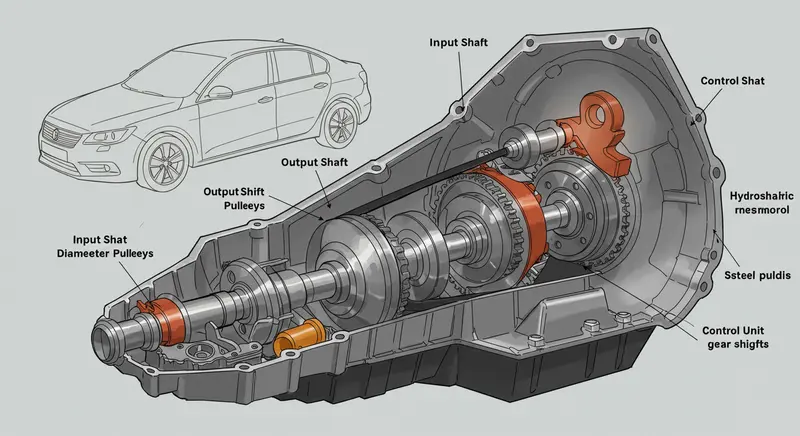
A smoother ride, in addition to improved fuel efficiency, becomes possible when this transmission technology is used, particularly during city driving conditions.
The gear-changing mechanism inside such transmissions creates an ongoing acceleration process that produces an effect known as an “infinite” transmission system. The straightforward design of CVTs dominates the automotive market across compact vehicles in addition to hybrid cars and larger models.
How CVT Technology is Different from Traditional Automatic Transmissions
Automatic transmissions with traditional designs can shift through their set gears with help from hydraulic systems, leading to abrupt power interruptions and gear shift detection. The CVT technology uses a pulley-belt system, which enables continuous variations of ratio transmission therefore delivering precise and smooth acceleration without gear shift jerkiness.
This continuous adjustment enables the engine to run at peak efficiency, enhancing fuel economy. While CVTs simplify mechanical design by reducing parts, they may struggle with high torque and heavy loads.
Overall, CVTs provide a distinct driving experience compared to traditional automatics’ rigid, stepped nature. They are truly ideal for everyday use and fuel-saving performance.
How Does a CVT Transmission Work?
The main functional principle of CVT transmission operates through its unique pulley design. The CVT transmission contains major components that perform specific functions, as explained below.
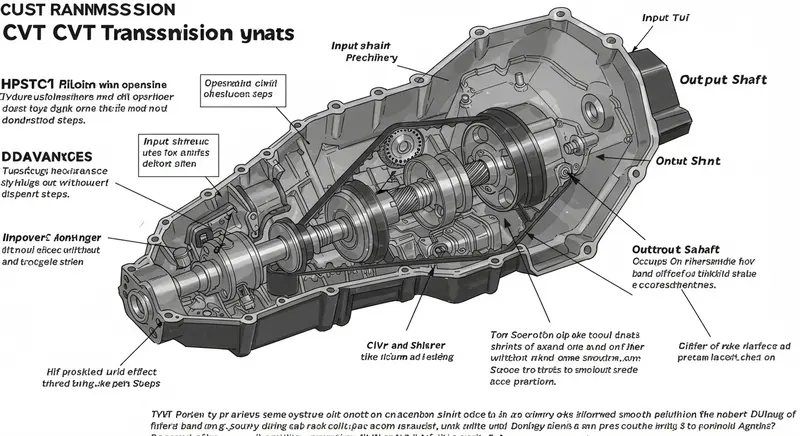
- Primary (Drive) Pulley and Secondary (Driven) Pulley: A CVT contains two main elements which are the primary (Drive) Pulley and the secondary (Driven) Pulley. These pulleys connect by a belt or chain. The primary pulley gets connected to the engine to form a system with the secondary pulley which remains connected to the drive wheels.
- Variable-Diameter Pulleys: Variable-diameter pulleys divide into two conical sections that technicians can make closer or more distant from one another through mechanical manipulation. The diameter effect of the pulley changes through its movements.
- The Belt or Chain: These two pulleys are connected by a running belt or chain. The variation of pulley diameters modifies the belt’s position which results in a conversion of gear ratio by eliminating distinct gear usage.
Your foot pressing the accelerator activates the power transfer to the primary pulley by the engine. The pulley system adjusts its diameters through which the belt achieves smooth movement across the cones.
When this adjustment happens it modifies the relation between engine speed and wheel speed. The system modifies its current gear ratio through a different mechanism that raises engine rotational speed to give the vehicle more power during acceleration. During steady cruising, the CVT system operates to reduce engine speed RPM and optimize fuel efficiency.
Because of its automatic gear ratio adjustment system, the CVT achieves the description of “infinite” possible gear ratios. The power delivery system operates to find the proper efficiency-power delivery equilibrium that benefits drivers performing in urban settings with their stop-start driving.
History and Evolution of CVT Transmissions
CVT transmissions originated during the late 19th century as industrial and agricultural equipment despite their inefficient and bulky nature. Modern CVTs started their appearance in passenger cars in the late 20th century because of developments in materials and computer technology.
Japanese automakers dedicated the 1980s and 1990s to improving their transmission design by enhancing fuel efficiency and ride smoothness. CVTs receive better technical development, which helps engineers link these systems safely to modern automobile technology.
Modern vehicles with hybrid and electric powertrains use CVTs because car manufacturers continuously develop innovative solutions to increase automotive performance and fuel efficiency.
Advantages of a CVT Transmission
CVTs provide advantages that make them attractive to different types of drivers. These important advantages may be observed:
- Improved Fuel Efficiency: Endurance increases when the engine operates at its most effective speed because CVTs manage gear shifts efficiently. The system performs best during city driving when drivers need to adjust speed often.
- Smooth Driving Experience: Your speed changes happen so gently you will hardly detect them during acceleration. The system provides steady engine response, which eases traffic stops and starts to produce a smoother journey.
- Simplicity of Design: CVTs have fewer components and lighter designs because they contain fewer automatic transmission parts. The flow of parts needed for production reduces expenses while helping engineers mightily perform routine services.
- Enhanced Performance at Low Speeds: Many CVTs help motors deliver better efficiency when vehicles operate in urban traffic. The transmission system maintains ideal performance, which makes the vehicle respond better to driving demands.
Challenges and Disadvantages of CVT Transmissions
CVTs provide various advantages but come with certain performance drawbacks. The system has several main weak points that users need to consider.
- Driving Feel: When accelerating, some drivers detect that the engine raises in speed, but the car moves more slowly. A traditional transmission provides more actionable reactions than a CVT system when driving.
- Noise Levels: The vehicles with CVT transmission sometimes emit engine noises when accelerating. This may become a disadvantage to drivers who want a more peaceful driving experience, but it affects some drivers differently.
- Durability in High-Performance Scenarios: CVTs perform better with standard driving needs but cannot handle continuous heavy-duty situations efficiently. They have difficulty handling massive torque needs in tough vehicles, which leads to quicker part damage or failure in hard situations.
- Cost of Repairs: Although CVTs have simple construction, they have expensive repairs because their specialized components need unique technologies for replacement.
- Limited Towing Capability: The towing capacities of vehicles using CVTs stand lower than those relying on traditional automatic transmissions. Heavier loads will be harder to tow because the transmission design has drawbacks.
Who Should Consider a CVT Transmission?
Your transmission selection depends on what you normally do when driving. CVTs show their advantages most, in particular driving scenarios and customer profiles. We will analyze what types of drivers find the CVT helpful and when to pick another transmission type.
Best Fit for Commuters and City Drivers
For daily commuters, particularly those driving in urban environments, a CVT offers several distinct advantages:
- Efficiency in Stop-and-Go Traffic: Modern transmission designs of CVTs work better with different traffic situations which saves fuel.
- Smooth and Comfortable Ride: No shifting shocks improve driving comfort, which leads to less driver fatigue for long journeys.
- Lower Emissions: People who wish to decrease environmental emissions can achieve better results with CVT fuel efficiency.
The transmission delivers the most efficiency and cruising comfort for people who mainly drive city streets and local roads.
When to Avoid a CVT: High-Performance and Heavy-Duty Needs
A CVT works effectively in city driving and light situations, but it shows weaknesses when facing these challenges:
- You Drive a High-Performance Vehicle: Car fanatics seeking sporty driving will dislike the unusual engine reaction and the absence manual gears in high-performance vehicles.
- You Need Towing or Heavy-Duty Capabilities: Vehicles that need heavy-duty capabilities, including trucks and performance SUVs, usually work better with conventional automatic transmissions made to endure such stresses. For example, suppose you’re in the market for an SUV without a CVT. The models in such cases might deliver exceptional performance alongside heavy-duty ability, which matches traditional transmissions.
- Your Driving Style Demands a More Involved Experience: A manual transmission or conventional automatic provides specific driver feedback, which some motorists find hard to replace with the smooth, abstract nature of CVTs.
CVT vs. Other Transmission Types: Which Transmission is Right for You?
Your choice between CVT transmission, traditional automated gears or manual requires comparing the advantages and drawbacks of each system according to your driving habits.
CVT vs. Traditional Automatic Transmissions
- Fuel Efficiency: The engine of a CVT maintains optimal power output by automatic adjustment, which leads to better fuel efficiency, especially during urban driving. Traditional automatic transmissions maintain fixed gear ratios even when modern advancements have brought improvements. This reduces their efficiency while operating the engine.
- Smoothness: CVTs deliver continuous acceleration without any abruptness because of their distinctive feature. The shifting process of traditional automatics consists of moving through discrete gear ratios that could potentially create distracting shifts which some drivers dislike.
- Performance Characteristics: Today’s automatic transmission systems, which focus on high-performance operations, demonstrate better torque handling ability than a large number of continuously variable transmissions. Related vehicles need traditional automatic transmissions because they handle better performance along with towing duties.
- Driving Experience: Drivers who enjoy traditional automatic shifting prefer its dynamic feedback patterns because of a better driving experience. Some drivers may not develop the same level of excitement because a continuous automatic transmission may lack their preferred feeling of jockeying gears.
CVT vs. Manual Transmissions
- Ease of Use: CVTs function automatically thus removing the requirement for drivers to shift gears or operate clutches. The CVT automatic transmission attracts drivers involved in congested traffic conditions in addition to those who seek an unchallenging driving experience.
- Efficiency: CVTs provide continuous efficient operation by continuously adjusting the transmission automatically despite offering better fuel savings than manual transmissions that need driver-operated gear selection.
- Driver Engagement: A vehicle equipped with a manual transmission enables drivers to directly control the shifting process. Drivers who like to experience control through manual shifting will most likely feel that CVTs lack the personality of manual transmissions.
- Learning Curve: New drivers find learning easier when using CVTs since they eliminate both clutch control and gear-shifting requirements during the training period.
A CVT system should be your transmission choice when you require maximum convenience with high efficiency along with smooth driving operation. A driver who desires hands-on control and better performance would opt for either a traditional automatic or manual transmission system instead of a CVT.
Which Cars Use CVT Transmissions?
Continuous Variable Transmissions experience growing adoption by manufacturers because they help vehicles meet the rising regulatory fuel efficiency and emissions standards.
Popular Brands and Models Featuring CVTs
Leading automotive companies across the industry now implement CVT technology because it provides both efficiency alongside smooth driving characteristics. Some notable examples include:
- Nissan: Since Nissan stands out as a leader in CVT technology development, the brand has equipped its Altima and Sentra variants with these transmissions.
- Honda: Honda implements CVTs across multiple automobiles including Civic alongside CR-V to provide their clients superior fuel efficiency while promoting a smooth driving feel.
- Subaru: Subaru implements all-wheel drive systems and practical characteristics by installing CVTs in the Impreza and Crosstrek models.
- Toyota: Toyota makes the best use of gasoline and electrical power through e-CVT control systems for their hybrid vehicles.
The Growing Trend of CVTs in Hybrid and Electric Cars
Green technology and fuel-efficient vehicle development activities prompted the creation of e-CVT systems, which unite electric motors with traditional CVT technology.
- E-CVT Technology: E-CVT Technology includes planetary gears and electric motor controls in addition to belts and pulleys to control hybrid systems without any interruptions.
- Enhanced Efficiency: Hybrid vehicles use e-CVT technology to improve the connection between the engine and electric motor, thus enabling efficient transitions that enhance total fuel efficiency.
- Broader Adoption: More automakers are adopting CVT-based systems because the increasing market need for environment-friendly driving experiences compels them to retain vehicle maneuverability.
The Future of CVT Transmissions
The progress of CVT technology remains optimistic because manufacturers work on refining design while working to eliminate limitations from current implementations.
Modern research in materials engineering combined with electronic system advancement enables future CVTs to manage substantial torque levels while offering enhanced drive smoothness.
The increasing market need for fuel-efficient green vehicles creates improved prospects for CVTs in hybrid and electric car technology.
Manufacturing companies work on creating hybrid transmission technology platforms by integrating CVT technology features with conventional transmission capabilities to deliver effective driving across multiple operating conditions.
Conclusion: Is a CVT Transmission Right for You?
Transmission choice depends primarily on how you drive your vehicle along with your performance standards. As a driver who prioritizes uninterrupted acceleration with enhanced efficiency and hands-free driving, a CVT transmission is an ideal vehicle choice, especially for urban driving.
You should choose a transmission with gear shifts for their tactile feedback because you need specific transmission performance requirements. Traditional automatics along with manuals, should be explored if the CVT system doesn’t meet your requirements.
Your transmission selection depends on weighty factors because you need to choose a transmission that works optimally with your driving style and requirements.
