
Where Are Hyundai Made? Global Hyundai Factory Locations Explained
Hyundai is considered to be one of the most famous car manufacturers in the world. It gained popularity due to the high-quality and cheap car production. Many people want to know where are Hyundai made. In this article, you will get to know where Hyundais are made and the distribution of Hyundai’s production units.
Where Are Hyundai Made and Why It Matters to Buyers
Korea is the prime manufacturer of Hyundai; however, Hyundai manufacturing plants are strategically located in North America, Europe, Asia, and even Latin America, to meet the rising number of Hyundai stocks as well as to make sure that they appeal to local needs and requirements.
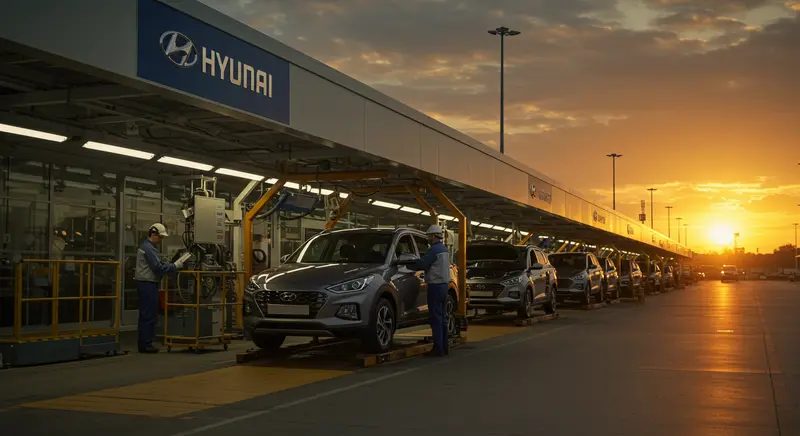
Hyundai Universal Fabrication System
Hyundai was founded in South Korea, and its production capacity has gone way beyond the motherland. The brand has its plants across countries, making it a world leader in the automotive field. Hyundai now has an elaborate network of production plants that are aimed at producing its vehicles and engines effectively. Let’s have a closer look at the origin of Hyundai car manufacturing and the importance of such global production.
Hyundai’s Global Manufacturing Facilities
Here is the table showing Hyundai’s global manufacturing facilities:
| Facility Name | Location | Annual Production Capacity | Primary Models Produced |
| Ulsan Plant | South Korea | 1.3 million vehicles | Sonata, Elantra, Santa Fe, Ioniq 5, Kona, Tucson, and more |
| Alabama Plant | Montgomery, Alabama, USA | 400,000 vehicles | Sonata, Elantra, Santa Fe, Santa Cruz |
| Nosovice Plant | Czech Republic | 300,000 vehicles | i30, Tucson, Kona |
| Brazil Plant | Sao Paulo, Brazil | 220,000 vehicles | HB20, Creta |
| India Plant | Irungattukottai, India | 630,000 vehicles | Creta, i20, Verna |
| China Plant | Shunyi District, China | 1.5 million vehicles | Lingxiang, BT01 |
| Turkey Plant | Izmit, Turkey | 1 million vehicles | Commercial vehicles |
South Korea: The centre of Where are Hyundai made?
The Ulsan Plant in South Korea becomes the largest and most popular manufacturing facility of the company. Covering an area of more than 1,200 acres, it can be taken as the world’s largest integrated automobile manufacturing site, and its capacity to provide nearly 1.3 million cars per year is impressive. It has been the duty of the Ulsan Plant to manufacture various popular Hyundai models, including the Hyundai Sonata, Hyundai Elantra, Hyundai Santa Fe, and many newer models, including the Ioniq 5.
Aside from the Ulsan complex, Hyundai has built two other large plants within South Korea: Ansan and Jeonju. Asan Plant is fully concentrated on sedan production, such as Sonata and Grandeur, and Jeonju Plant specialized in the production of business and commercial vehicles.
Hyundai’s Manufacturing Footprint in the United States
In the American market, Hyundai has an excellent innovative manufacturing plant in Montgomery, Alabama. The Hyundai Motor Manufacturing Alabama (HMMA) plant opened in 2005 and manufactured several of Hyundai Motor Corporation’s most popular models, including the Hyundai Sonata, Elantra, Santa Fe, and the Santa Cruz.
The plant in the U.S. is very crucial in responding to the rising popularity of Hyundai vehicles in North America.
Hyundai Models Produced in the U.S.
Here is the list of Hyundai’s models produced in the US.
| Model | Manufacturing Location | Vehicle Type |
| Hyundai Sonata | Montgomery, Alabama, USA | Sedan |
| Hyundai Elantra | Montgomery, Alabama, USA | Sedan |
| Hyundai Santa Fe | Montgomery, Alabama, USA | SUV |
| Hyundai Tucson | Montgomery, Alabama, USA | SUV |
| Hyundai Santa Cruz | Montgomery, Alabama, USA | Sport Adventure Vehicle |
The Growing Hyundai in Europe
Hyundai has realized the demand of the European market, and it has also extended its manufacturing base to Europe, where are Hyundais made. This company has a manufacturing process based in Nosovice, Czech Republic, where it manufactures such models as Hyundai i30, Tucson, and Kona. The plant is used in assembling the 300,000 vehicles per year and plays a very important towards the provision of the European market with vehicles that are customized according to the interests of the locals.
There are also Hyundai plants in Turkey as well as Russia. The Turkish plant is producing commercial vehicles at Izmit, and the Russian plant is delivering Solaris, which is a popular vehicle in the Russian market, at Sestroretsk.
Expanding Operations in Asia and Beyond
Besides South Korea, Hyundai has established very important production facilities in other Asian countries of Asia. Hyundai, as an example, in India has its plant in the state of Tamil Nadu, Irungattukottai, which manufactures cars such as Creta, i20, and Verna. The factory can make 630,000 vehicles every year, and it is one of the most significant processes of the brand located outside South Korea.
The second plant in Hyundai Cikarang is also located in Indonesia, where the manufacturing commenced in 2022. This facility is dedicated to the manufacturing of electric vehicles (EVs) such as the Ioniq 5, which is in line with the international strategy of the company to diversify its models to include electric vehicles.
Hyundai in Latin America: Regional-Based Market Strategy
In 2012, Hyundai opened a plant at Piracicaba in Brazil in order to produce its goods for the Latin American market. This plant, which has an annual production capacity of 180,000 units the produces models such as the HB20 and the Creta. It will appeal specifically to the needs and habits of Latin American consumers, and therefore, it forms a great deal of the strategy of Hyundai in its market.
The Significance of Chinese Plants of Hyundai
China has emerged as one of the biggest automobile markets in the world, and Hyundai has made massive investments in the area. The firm has a number of production plants in China with a key production arm in Shunyi District. The Chinese assembly lines of Hyundai assemble such models as BT01 and Lingxiang that are meant to suit the Chinese market. All in all, Hyundai has five factories in China with a cumulative capacity of 1.5 million vehicles a year.
How to Find Out Where Your Hyundai Was Made
It is very easy to determine where your car was produced by Hyundai. All Hyundai cars have a Vehicle Identification Number (VIN) that contains more information about the origin of the car. The initial symbol in the VIN is the country of origin. In case the first letter of the VIN is a K, it is a South Korean-made vehicle, whereas the first letter of 5 implies it was manufactured in the United States.
In case you want to know more, you may also refer to the auto manufacturer label that you find on the frame of the door on the driver’s side. Through this label, it will inform you of the specific place where the vehicle has been built.
Reasons Why Hyundai has Several Manufacturing Plants Across the Globe
There are several advantages that the multiple production facilities situated in various areas have for Hyundai:
- Serve the Locals: The location of the plants of Hyundai’s plants is strategically located, serving local markets with the assurance that the vehicles are designed to suit the preferences and laws of the local consumers.
- Cut Down the Cost of Shipping: In the production process, Hyundai manufactures cars in areas where they will be sold, and thus, there is less expenditure on transportation. It means that it can be priced lower, and it can also be delivered very quickly.
- Support Local Companies: Firms in Hyundai develop jobs and encourage the growth of economies in the areas where the firms are located. As such, a U.S. plant in Montgomery has generated thousands of jobs and is important to the local economy.
- Limit Environmental Impact: Hyundai may lessen the impact on its carbon footprint by having production plants near the market, and hence less transport-related emissions.
- Global Expertise: The international manufacturing system of Hyundai enables the company to unite various engineering skills, innovations, and technologies across the globe.
Standard Vehicle Manufacturing Plants Around the World
Here is the overview table showing Hyundai’s manufacturing plants in the world:
| Region | Primary Hyundai Plant(s) | Focus Area | Annual Production Capacity |
| North America | Montgomery, Alabama, USA | Sedans, SUVs, Sport Adventure Vehicles | 400,000+ vehicles |
| South Korea | Ulsan, Asan, Jeonju | All models (including sedans, SUVs, commercial vehicles) | 1.3 million+ vehicles |
| Europe | Nosovice, Czech Republic | European market models | 300,000+ vehicles |
| Asia | Irungattukottai, India | Subcompact, compact cars, SUVs | 630,000+ vehicles |
| Latin America | Piracicaba, Brazil | Latin American market models | 220,000 vehicles |
Conclusion
The presence of a global manufacturing network in Hyundai is an indication of the quality, adaptation to the local markets, and the sustainable nature of the company. Having established factories in South Korea, the U.S., Europe, Asia, and Latin America, Hyundai can manufacture cars that would meet the exotic needs of each of these markets and still sell its cars with the high level of quality that it maintains. Whether a Hyundai is manufactured in South Korea or the U.S., or any other region, all the high quality requirements will be addressed by the manufacturing network of the brand.
