
Who Is at Fault in an Arizona Car Accident? A Guide to Liability
After a car accident, one of the first questions people ask is who pays. The answer depends almost entirely on which state the accident happened in and what system that state uses to assign responsibility. If you are dealing with an accident in Arizona, the answer starts with understanding one foundational fact about how the state handles fault.
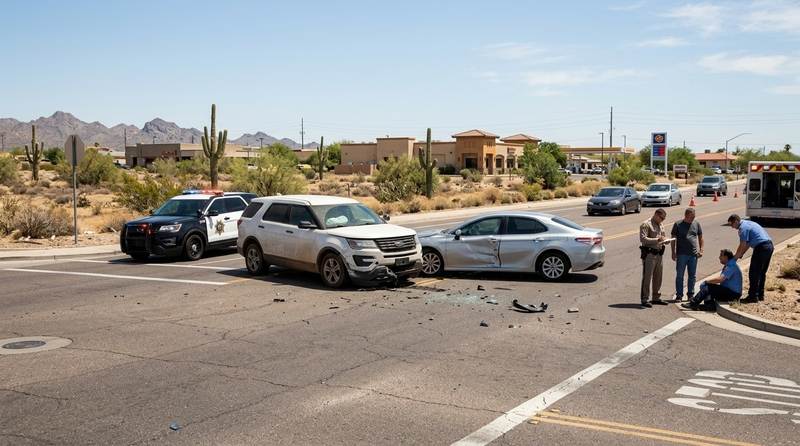
Arizona is not a no-fault state. It operates under an at-fault system, which means the driver responsible for causing the crash is legally and financially responsible for the damages that result. That single distinction shapes everything about how a claim works, from who you file with to what you can recover.
At-Fault vs. No-Fault: What the Difference Actually Means
The distinction matters practically, not just legally. In no-fault states, every driver carries personal injury protection insurance, and after an accident, each driver turns to their own policy first, regardless of who caused the crash. Recovery is faster in theory, but non-economic damages like pain and suffering are typically off the table unless injuries meet a specific threshold.
Arizona works differently. Because the state follows a fault-based tort system, the driver who caused the accident is the one whose insurance pays. If another driver ran a red light and hit you, you file a claim with their liability insurance, not your own. You are not required to absorb your own losses while waiting to pursue a separate action. The fault determination is the starting point for everything that follows, which is why understanding Arizona’s car accident liability laws is essential before engaging with any insurance company after a crash.
How Fault Is Established
Saying the at-fault driver is responsible is the easy part. Proving it is where claims are won or lost. Arizona uses a negligence standard, which means four elements must be established:
- Duty of care: Every driver on Arizona roads has a legal obligation to operate their vehicle safely and follow traffic laws. This duty is not in dispute in most cases.
- Breach: The at-fault driver violated that duty through some negligent act, whether speeding, running a stop sign, distracted driving, following too closely, or failing to yield.
- Causation: The breach directly caused the accident. A driver who was speeding but whose speed had nothing to do with the actual collision has not necessarily met the causation requirement.
- Damages: The accident produced actual harm, whether physical injury, property damage, or both.
Evidence used to establish these elements includes police reports, photographs of the scene and vehicles, traffic camera footage, dashcam recordings, witness statements, accident reconstruction analysis, and medical records that connect injuries to the crash. The strength of the evidence on each element determines the strength of the claim.
Arizona’s Pure Comparative Fault Rule
Real-world accidents are rarely clean. Both drivers may have made mistakes. One driver ran a red light; the other was going 15 miles over the speed limit. One driver pulled out without looking; the other had a taillight out. When shared fault is involved, Arizona’s pure comparative negligence rule governs how damages are distributed.
Under pure comparative fault, each party is assigned a percentage of responsibility for the accident. The injured party’s compensation is then reduced by their own percentage of fault. There is no cutoff threshold. Even if a driver is found 80% at fault can still recover 20% of their damages. This is more plaintiff-friendly than most states, which use a modified comparative fault rule that bars recovery once a plaintiff’s fault reaches 50% or 51%.
In practice, this means insurance companies and defense attorneys actively work to push fault percentages toward the claimant. Every point of fault assigned to you is a dollar amount they do not have to pay. Documented evidence from the scene, prompt medical attention, and a consistent account of what happened are the tools that counter those arguments.
What You Can Recover in an At-Fault Claim
Because Arizona is an at-fault state, injured parties can pursue both economic and non-economic damages directly from the responsible driver’s insurer. This is a significant advantage over no-fault states, where non-economic recovery is restricted.
Economic damages include:
- Medical expenses, current and future
- Lost wages and loss of future earning capacity
- Property damage, including vehicle repair or replacement
- Out-of-pocket costs directly related to the accident
Non-economic damages include:
- Pain and suffering
- Emotional distress
- Loss of enjoyment of life
- Loss of consortium, where applicable
Arizona does not cap non-economic damages in most personal injury cases, which means the recovery can reflect the actual impact of the injury on a person’s life rather than an arbitrary ceiling.
Arizona’s Minimum Insurance Requirements and Why They Fall Short
Arizona requires all drivers to carry minimum liability coverage. As of July 1, 2020, those minimums are $25,000 for bodily injury per person, $50,000 per accident involving multiple people, and $15,000 for property damage. These amounts are intended to ensure that at-fault drivers have something to cover the people they harm.
In serious accidents, those limits are often inadequate. A single hospitalization can exceed $25,000 before rehabilitation, follow-up care, or lost income is factored in. When the at-fault driver’s policy limits are exhausted before damages are fully covered, the injured party has limited options: pursue the driver personally, which requires them to have assets worth pursuing, or turn to their own uninsured and underinsured motorist coverage.
Uninsured motorist coverage is not required in Arizona, but it is one of the most valuable additions a driver can make to their own policy. Arizona’s uninsured driver rate is estimated at nearly 12%, and many more drivers carry only minimum coverage. UM and UIM coverage fills the gap when the at-fault driver’s policy is not enough.
When Multiple Parties Are at Fault
Not every accident involves two drivers and a clear line of blame. Some of the most complex liability situations involve multiple vehicles, third-party actors, or entities beyond the drivers themselves.
Scenarios where liability extends beyond the other driver include:
- Employer liability: If the at-fault driver was operating a company vehicle or driving for work purposes at the time of the crash, their employer may be liable under the respondeat superior doctrine.
- Government liability: If a road defect, missing signage, or poorly designed intersection contributed to the accident, the government entity responsible for that road may carry partial liability. Government claims in Arizona require filing a notice of claim within 180 days, a deadline that is much shorter than the standard two-year statute of limitations.
- Product liability: If a vehicle defect, tire failure, or brake malfunction caused or worsened the crash, the manufacturer or parts supplier may be a liable party.
- Dram shop liability: Arizona law allows injured parties to pursue a claim against a bar or restaurant that served alcohol to a visibly intoxicated driver who then caused an accident.
Identifying all potentially liable parties matters because it determines the total insurance coverage available. Settling quickly against one party without investigating whether others are also liable can leave significant compensation on the table.
The Two-Year Window and Why It Matters
Arizona’s statute of limitations for personal injury claims is two years from the date of the accident. Filing after that deadline effectively forfeits the right to recover, regardless of how strong the underlying case is. There are limited exceptions, but they are narrow and fact-specific.
Two years sounds like enough time, but it moves faster than most injured people expect. Medical treatment takes months. The full extent of injuries is not always clear in the early weeks. By the time a person feels settled enough to think about their legal options, a significant portion of that window may be gone. And the evidence that supports a strong claim, witness recollections, surveillance footage, and physical evidence at the scene, degrades with time.
The at-fault driver’s insurance company begins working its side of the claim immediately after the crash. Matching that preparation requires starting early, not waiting until the deadline is visible on the horizon.
