
How Liability Is Determined in Bicycle and Car Collisions
Collisions between bicycles and cars often lead to complex legal disputes. Determining who is at fault isn’t always straightforward. A cyclist may be injured after a driver makes a right turn without checking their blind spot, or a driver may be caught off guard when a cyclist runs a stop sign. Each scenario involves a unique mix of contributing factors, and liability depends on how closely each party followed the rules of the road.
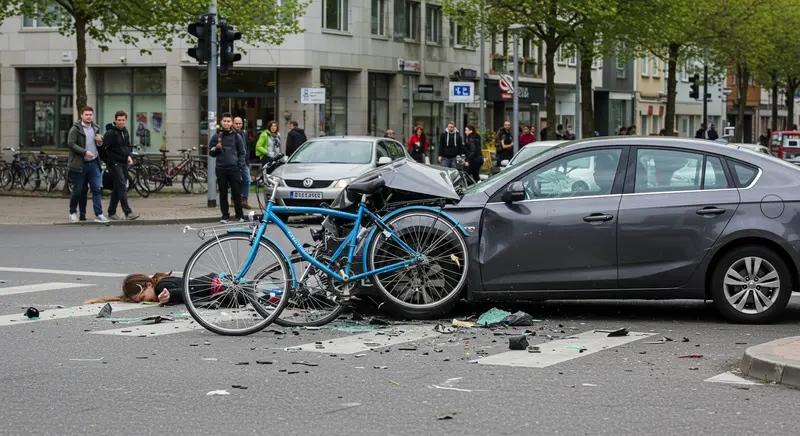
In many cases, these incidents occur in areas where traffic is dense and space is limited. Narrow streets, distracted driving, limited visibility, and the growing number of cyclists all increase the risk of collision. Understanding how liability is assessed in these situations can help both cyclists and motorists protect their rights after an accident.
The Legal Basics of Fault in Accidents
Liability in a bicycle-car collision is typically based on negligence, specifically, whether one or both parties failed to exercise reasonable care under the circumstances. The rules that apply to motorists also apply to cyclists: both are expected to obey traffic signals, signal their turns, and yield when required. When an accident occurs, investigators look at whether either party breached these duties.
States follow different models for assigning fault. In comparative negligence states, each party may be assigned a percentage of fault. A cyclist who failed to use a bike lane properly, for instance, might be deemed partially responsible even if a distracted driver caused the crash. In contributory negligence states, even a small degree of fault on the cyclist’s part may prevent them from recovering damages.
Police reports, eyewitness statements, and physical evidence from the scene all influence how liability is assessed. These factors are crucial not only for insurance purposes but also for legal claims that may arise after the incident.
Common Causes of Bicycle and Car Collisions
Accidents between cyclists and motorists often result from a breakdown in awareness, timing, or adherence to traffic rules. One common cause is a driver turning right across a bike lane without checking for cyclists approaching from behind. Another is dooring—when a driver opens a car door into the path of a moving bicycle, often with no warning.
Cyclists, too, can contribute to unsafe conditions. Riding against traffic, failing to stop at red lights or stop signs, and weaving unpredictably between lanes can all create scenarios where collisions become difficult to avoid. In many cases, these behaviors stem from shared road spaces not being clearly marked or enforced.
According to the National Highway Traffic Safety Administration (NHTSA), the majority of fatal bicycle crashes happen in urban settings, often at non-intersection locations. These accidents frequently involve issues with visibility, distraction, or failure to yield—responsibilities that apply equally to drivers and cyclists.
How Liability Is Determined in Practice
Once a bicycle and vehicle accident occurs, determining liability requires a close review of the circumstances. Insurance adjusters, attorneys, and, in some cases, the courts rely on a combination of physical evidence and legal standards to establish fault.
Police reports often serve as the starting point. These documents may include diagrams of the scene, citations issued, and initial statements from those involved. Witness accounts add another layer, especially when the accounts are consistent and unbiased. In recent years, video footage—from dash cams, traffic cameras, or nearby businesses—has played a growing role in clarifying how the collision occurred.
Local traffic laws and ordinances are also critical. A driver making a left turn must yield to oncoming traffic, including bicycles traveling straight through an intersection. Similarly, a cyclist who runs a stop sign may be held liable if that action directly leads to a crash. Liability hinges not just on the act of impact but on the sequence of decisions that led to it.
The process becomes more complex in states that apply comparative negligence rules. In those cases, both parties may share responsibility to varying degrees, and any compensation awarded can be reduced based on that proportion of fault.
Case in Point – Urban Accidents and Shared Responsibility
Densely populated cities often present unique challenges for cyclists and drivers alike. Heavy traffic, narrow lanes, and limited visibility all contribute to a higher risk of collisions. In these environments, determining fault can be particularly difficult, as both parties may have made decisions that contributed to the outcome.
Take, for example, the rise in bicycle accidents in Chicago, where infrastructure improvements have not always kept pace with increased cycling activity. Drivers unfamiliar with designated bike lanes or distracted by crowded intersections may fail to yield or misjudge a cyclist’s speed. At the same time, cyclists maneuvering through gridlocked traffic may take risks, such as weaving between vehicles or riding close to the curb, that increase their vulnerability.
In many of these cases, liability is not placed entirely on one side. Investigators and legal professionals often find that fault is shared, whether due to a moment of inattention, a missed signal, or a misunderstanding of local traffic rules. The presence of shared responsibility complicates claims and underscores the need for detailed evidence when disputes arise.
Why Legal Guidance Is Critical
For those involved in a bicycle and vehicle collision, the aftermath can be overwhelming. Beyond the physical injuries, victims often face medical bills, missed work, and disputes with insurance companies. When fault is unclear or contested, having legal support becomes essential.
An attorney can examine the evidence, interpret applicable traffic laws, and communicate with insurers on a client’s behalf. In cases involving shared liability, they can help ensure that fault is apportioned fairly and that a victim’s rights are protected throughout the claims process.
Many people are unaware that even partial fault does not necessarily bar compensation. In jurisdictions that apply comparative negligence, a cyclist or driver who is found partially at fault may still recover damages, though the amount could be reduced proportionally. For cyclists, understanding the process of filing a bicycle accident claim can provide clarity on what to expect after liability is assessed and help with preparing the strongest case possible.
In situations where injuries are serious or long-term, legal representation offers clarity in a system that can otherwise be difficult to interpret. A skilled advocate ensures that the facts are accurately presented and that the final outcome reflects the true nature of the incident.
Conclusion
Determining liability in a bicycle and car collision is rarely simple. Each incident involves a specific set of facts, influenced by the behavior of both the cyclist and the driver. While traffic laws offer guidance, the realities of the road often blur the lines of responsibility.
Accurate fault assessment relies on evidence, context, and a clear understanding of legal principles. Whether you’re a cyclist recovering from injuries or a driver facing an insurance claim, knowing how liability is evaluated can make a significant difference in the outcome. Taking the right steps early—documenting the scene, seeking medical attention, and consulting with legal counsel—can help protect your interests and lead to a fair resolution.
