
Distracted Driving: The Leading Cause of Car Accidents
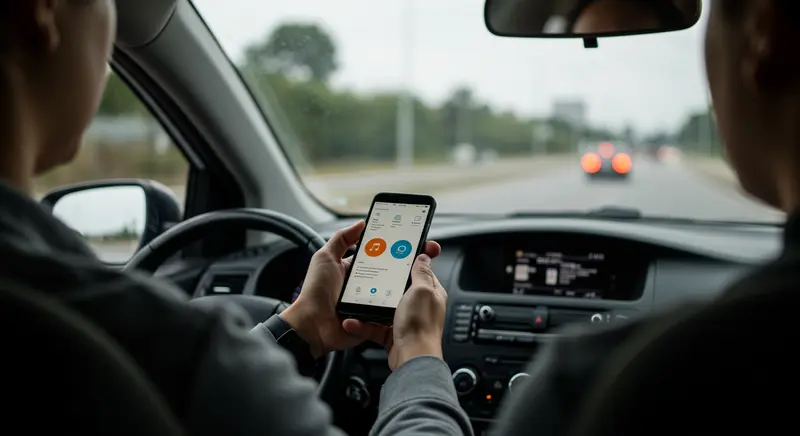
In an era where multitasking is celebrated as a virtue, the unintended consequence is that multitasking can be downright dangerous. Particularly if you are driving at the same time. Today’s vehicles have transformed into a mobile command centers with touchscreens, voice-activated controls, and even Wi-Fi. While these technological advancements enhance convenience, they also invite distraction. Distracted driving is a leading cause of car crashes.
Briskman Briskman & Greenberg, a renowned car accident injury law firm, underscores the urgency of addressing distracted driving. “We see firsthand the devastating impact these accidents have on lives. Strengthening laws and enhancing public awareness must go hand in hand to reduce the frequency of these preventable tragedies.”
The Ubiquity of Distraction
Stopped at a traffic light? You might see drivers checking their notifications, sending a text, or scrolling through social media feeds. In 2019 3,142 lives were lost on US roadways according to the National Highway Traffic Safety Administration (NHTSA).
The NHTSA also recently released its early estimates of traffic deaths for 2024. Their estimated projection is that 39,345 died on the road in crashes. While this represents a decrease of approximately 3.8 percent compared to 40,901 fatalities in 2023, it is still the first time since 2020 that the number of deaths fell below 40,000.
This number scratches the surface of the issue of distracted driving. For every fatality, numerous non-fatal accidents result in injuries, property damage, deaths, and increased insurance premiums.
Distractions stem from three primary sources: manual, visual, and cognitive. Texting, a perfect storm of all three, diverts eyes, hands, and a driver’s mind away from the task of driving. But distraction is not limited to texting alone; eating, adjusting the stereo, or even engaging in deep conversation can divert attention from the road.
Technology: Friend or Foe?
Unfortunately, technology has a dual role as a facilitator and a mitigator of distraction. Infotainment systems provide hands-free control, yet their complexity inadvertently requires more attention than the manual controls they replaced. A study by the AAA Foundation for Traffic Safety revealed that certain voice-activated systems could still pose a cognitive distraction for up to 27 seconds after use.
Car manufacturers argue that such systems are an attempt to keep up with consumer demand. Drivers expect their cars to seamlessly integrate with their digital lives, yet this expectation leads to a paradoxical situation where safer driving technology becomes a distraction itself.
Legal Repercussions and Advocacy
Legislation has been slow to keep pace with the rapid evolution of technology. While all US states have some form of distracted driving law, the penalties and enforcement vary widely. Texting while driving is banned in 48 states and the District of Columbia, yet hands-free laws are only in effect in 24 states.
In a bid to combat distracted driving, some states have introduced innovative solutions. For instance, New York’s “Textalyzer” initiative, aimed at allowing law enforcement to determine if a driver was using their phone prior to a crash, reflects an aggressive stance toward deterrence.
A Cultural Shift
Laws and technology are pivotal, but they cannot eradicate distracted driving. A fundamental cultural shift is necessary where society collectively values focused driving as much as, if not more than, productivity. Campaigns such as “It Can Wait” initiated by major telecommunications companies emphasize the importance of delayed gratification in the digital age. The message is clear: no text is worth a life.
Education plays a crucial role in this cultural shift. Driving schools and public service campaigns are emphasizing the perils of distraction, particularly among young drivers who are more inclined to use technology while driving. Parents, too, bear the responsibility of modeling attentive driving habits, as their behavior often sets the standard for younger generations.
The Way Forward
While the landscape of driving continues to evolve with the advent of autonomous vehicles, the human factor remains a critical consideration. Until the day arrives when cars can truly drive themselves, the onus remains on drivers to prioritize safety over convenience.
Emerging technologies offer promising avenues to reduce distraction. Advanced driver-assistance systems (ADAS) provide alerts for lane departure and collision risks, acting as a second set of eyes. Moreover, developments in machine learning and artificial intelligence hold the potential for even more sophisticated monitoring systems that predict and prevent distracted driving behaviors.
The conversation around distracted driving is more pertinent now than ever. As we navigate the road ahead, it is imperative to balance the allure of connectivity with the fundamental goal of reaching our destinations safely. It is not merely a matter of technology or law but a collective commitment to valuing human life over digital engagement.
