
Waymo Self-Driving Car: How It Works, Features & Future of Autonomous Driving
Waymo self-driving car is the world’s first-ever self-driving car ride-hailing service without any safety drivers — who started their services in limited cities in the U.S. Although, there were many anecdotal talks related to safety features of Waymo’s self-driving cars, which turned out to be safer than conventional cars with drivers.
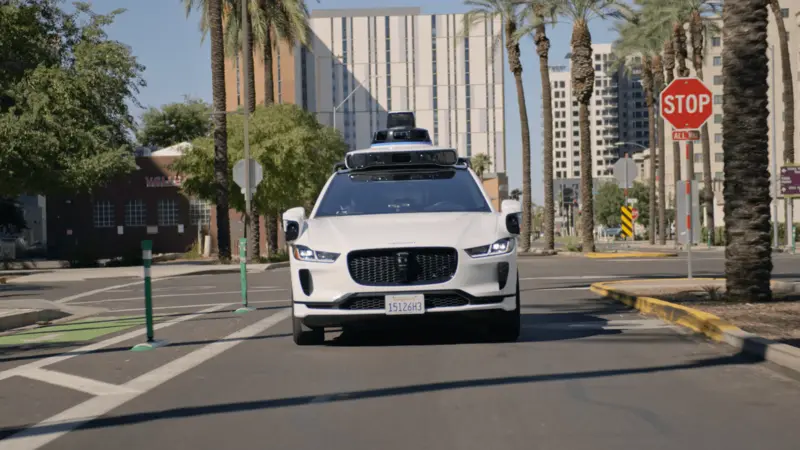
The company is the first to develop its own autonomous driving vehicles with advanced sensors and software to navigate through road obstacles, driving at optimal speed, detecting traffic lights and following the general public safety laws.
Waymo Self-Driving Car
The current Waymo self-driving car is an electric Jaguar I-Pace SUV — each equipped with 29 high-definition cameras, six RADAR sensors, and four LiDAR sensors, where the car computer can analyze its surroundings from a comprehensive 360-degree view. That’s not it, we will dive even deeper to understand its self-driving technology:
What Makes Waymo Different from Other Autonomous Vehicles?
Waymo came out as the pilot project of Google’s development team, which was later acquired by another company, which currently operates. Since Google engineers are globally known for their remarkable technical skills. Waymo must be ahead of its competitors.
Waymo self-driving car has its own road perception system, which distinguishes itself from the industry. This comprehensive road-sensing system comprises many LiDAR, RADAR sensors and cameras.
Their road-sensing system follows a unique multi-modal approach, which is unlike most of its competitors such as Tesla which is currently and solely relying on cameras. Whereas, Waymo has achieved Level 4 autonomy, and is operating with full zeal.
However, Waymo self-driving cars are operating in designated areas only without any human intervention, while many competitors require driver oversight to hold the steering wheel or be their brake in emergency situations.
The Role of AI and Machine Learning in Waymo’s Driving System
According to The Swiss Re report, autonomous driving systems have reduced 88% of claims to property damage and 92% reduction in severe body injuries. From 2021 to 2024, there were only 696 accidents reported to NHTSA, thanks to its advanced artificial intelligence system.
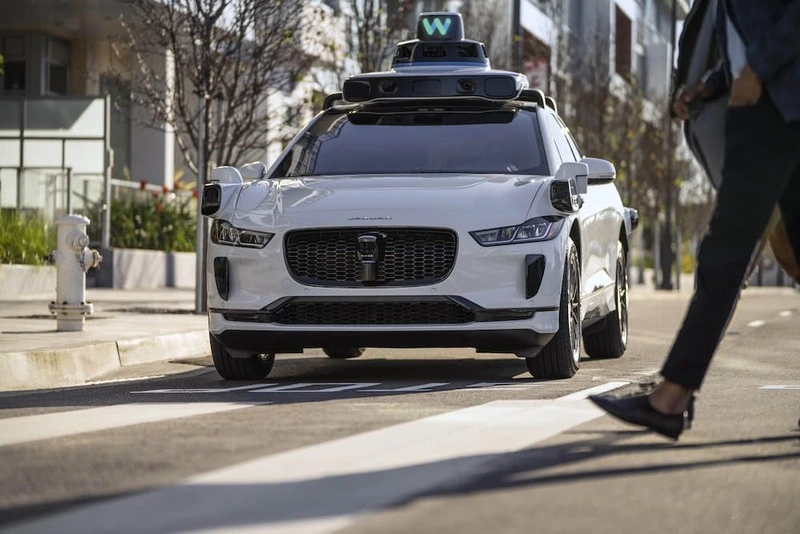
Waymo’s self-driving system works on the principles of artificial intelligence (AI) and machine learning (ML) to comprehend complex sensor data and make the most accurate decisions based on its real-time perception. That’s not only it, the artificial intelligence also helps the system in maneuvering judgments and avoiding various obstacles on the road such as pedestrians, cyclists, vehicles, and construction zones.
Their driving system actively follows driving laws and responds appropriately to traffic signals, where machine learning plays a significant role. Machine learning gives data to Waymo’s driving system to predict the behavior of other drivers on the road, and make informed decisions.
Sensors and Cameras: How Waymo Navigates the Roads?
Waymo, with its effective machine learning models, was able to achieve great reliability and safe navigation in its road sensing system — where cameras and sensors were key players. The combination of class-1 laser sensors ‘four LiDAR’ which are safe to use as per FDA regulations.
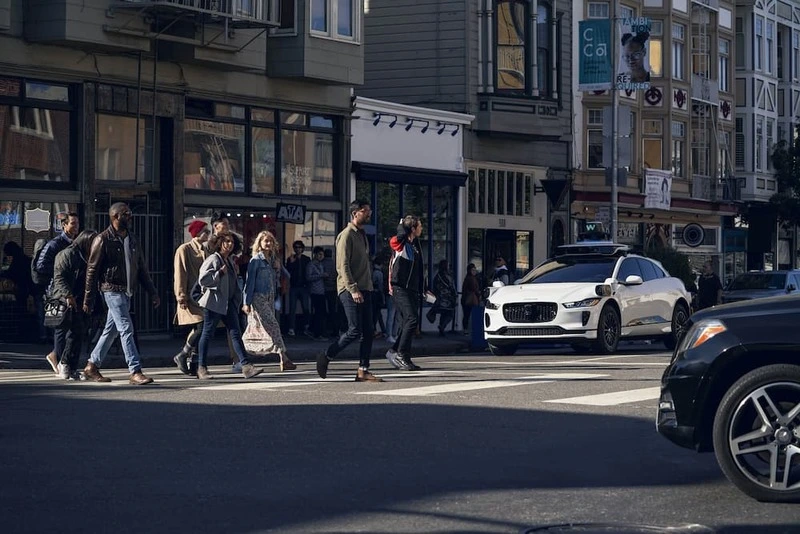
Although, intricate technical details are not open to the public yet. However, Waymo experts were confident to confirm that their Waymo Driver ‘autonomous driving system’ has 4 LiDAR sensors along with 13 cameras all working together to create a very detailed 3D map of the surroundings.
Where LiDAR sensors on each vehicle, send millions of laser pulses in every direction. And when those lasers reflect back, the system calculates the time taken and with the help of cameras, it creates a 360-degree view of its surroundings and identifies objects like pedestrians and stop signs, even from distances greater than 500 meters.
Waymo’s Self-Driving Car Services & Availability
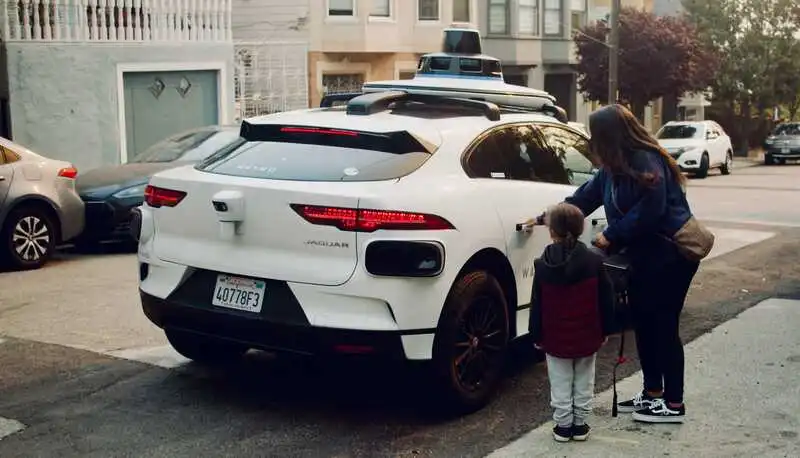
Where can you ride a Waymo autonomous car? Initially, Waymo started its autonomous ride-hailing services in certain pilot cities to see the customer response and market demand for its incredibly wholesome service. So for now, they are currently operating in selected U.S. cities such as Phoenix (only a 315-square-mile area), San Francisco (San Francisco and Daly City), Los Angeles (From Santa Monica to Downtown), and only in Austin.
How to Book a Waymo Ride: Step-by-Step Guide
If you are new to Waymo and want to book a Waymo ride, follow these steps:
1. Download the Waymo One App:
- For iOS devices, access the App Store and search for “Waymo One”.
- For Android devices, open the Google Play Store and search for “Waymo One”.
- Install the app on your smartphone.
2. Create an Account:
- Open the Waymo One app.
- Follow the on-screen prompts to register, providing necessary personal information.
3. Set Pickup and Drop-off Locations:
- Enter your current location as the pickup point.
- Specify your desired destination.
4. Request a Ride:
- Review the estimated fare and wait time displayed.
- Confirm your ride request.
5. Meet Your Vehicle:
- The app will provide the vehicle’s details and estimated arrival time.
- Proceed to the designated pickup spot to board your Waymo vehicle.
Waymo’s Expansion Plans for More Cities
After the success and strong public response in multiple cities, Waymo has now planned to expand its autonomous riding services in multiple U.S. cities. However, Waymo has already expanded its service to a 27-mile radius of the San Francisco Bay Area — which now includes Palo Alto, Mountain View, Los Altos, and a section of Sunnyvale.
Besides that, Waymo has successfully secured a driving permit from San Francisco City County to map the roads of the inner city and those going to San Francisco International Airport. This is one step forward by which the company will later offer passenger services to and from the airport.
In addition to that, Waymo has planned to expand its service to ten new cities, for which they will initiate testing in the coming days starting with Las Vegas, San Diego and many more cities yet to be announced.
Safety, Performance & Challenges of Waymo Cars
The safety, performance, and challenges of Waymo cars have been briefed in the below section:
How Safe Are Waymo Self-Driving Cars?
Waymo has not only demonstrated but proved itself a safe driver-less ride service — compared to counterpart human drivers. According to reports, in 22 million rider-only miles, people experienced 84% fewer airbag deployment crashes, 73% fewer injury-causing crashes, and 48% fewer police-reported crashes.
A study says that 3.8 million miles in rider-only mode reported zero bodily injury claims, against a human driver baseline of 1.11 claims per million miles. Not only that, over 7.14 million miles, Waymo’s vehicles had an 80% reduction in injury-reported crashes compared to conventional human driver rides.
Challenges & Limitations of Autonomous Driving Technology
As of now, there are no known limitations of autonomous driving technology or systems involved in it. However, in the future, there can be issues with sensor reliability, data processing demands, and environmental adaptability. For instance, sensors or cameras (such as LiDAR) can get damaged by harsh weather conditions or equipment failure.
These sensors require high-bandwidth, low-latency processing systems to generate massive data, and let systems make real-time decision-making. As we all know autonomous driving needs to understand complex, dynamic environments, including unpredictable human behaviors and diverse traffic scenarios.
However, the increasing traffic and implementation of these technologies in more rushy cities can bring possible issues that are crucial for the safe and efficient integration of autonomous vehicles into existing transportation networks.
Conclusion – Will Waymo Seld Driving Car Lead the Industry?
Waymo has been a pioneer in autonomous driving which is now a subsidiary of Alphabet after its inception as Google’s self-driving car project. In 2025, Waymo is leading the commercial self-driving ride-hailing services in the U.S. just like Baidu, Pony.ai, and WeRide are leading in China.
Recently, Waymo is securing permits to map roadways in different cities whereas Tesla is not coming slow, and has received a limited permit in California for employee transport with still additional approvals pending approval to offer public autonomous ride-hailing services. As of now, we can conclude that Waymo is leading the industry in the future.
FAQs:
In layman’s language, Waymo’s autonomous vehicles simply use multiple sensors and LiDAR camera and radar systems that use advanced machine learning algorithms, to perceive their surroundings and navigate roads safely.
Waymo fully takes responsibility for its safety and is completely safe to ride. With the aim to reduce traffic injuries and fatalities, Waymo carefully manages risk as they scale operations and focus on safety and responsibility.
Waymo is currently operating its autonomous ride-hailing services in several U.S. cities, including Phoenix, San Francisco, Los Angeles, and parts of Silicon Valley such as Mountain View, Palo Alto, Los Altos, and Sunnyvale.
Waymo’s autonomous vehicles are intelligently designed to take you safely even through unpredictable traffic situations by taking advantage of their most advanced sensor suite and machine learning algorithms to detect and respond to dynamic road conditions in real time.
