
BMW X5 Years to Avoid: 2007, 2014, 2019 & 2021 Models With Major Issues
BMW is one of the world’s most reputable and luxurious automanufacturing companies, with nearly 45 distinct models in production, ranging from sedans to coupes, SUVS to convertibles, performance to fully electric models.
BMW has been tough on competitors with its newer, more reliable models than ever before. However, certain BMW X5 years to avoid are not as reliable as their brothers. If you are a family man or planning long trips, you might have considered buying a BMW X5. BMW X5 makes sense in every way; it has nearly perfect dimensions as a daily runner and a vacation car. For enthusiasts who want to personalize their vehicle beyond the factory spec, a modified BMW x5 with upgraded suspension, wheels, or performance tuning can transform the driving experience considerably. Like any other top competitor, such as Mercedes-Benz GLE or Audi Q7, you can take enough bags and camping stuff with you.
However, there have been some specific model years that you should avoid buying, or if you have already bought them, you can look for specific issues they might have. Some of the models’ years and their known faults are:
BMW X5 Years to Avoid – Quick Overview
Here is the quick overview of the BMW X5 years to avoid:
| Model Year | Generation | Common Issues |
| 2007 | E70 | Transmission failure, oil leaks, transfer case failure, suspension wear |
| 2014 | F15 | Timing chain issues, valve cover leaks, water intrusion, and air suspension sag |
| 2019 | G05 | Transmission jerks, coolant leaks, fuel pump recall, air suspension faults |
| 2021 | G05 (Hybrid intro) | Harman Kardon amp failure, sunroof motor issues, and remote update errors |
1. 2007 BMW X5 (E70 Generation)
The E70 generation came into the limelight in late 2006 (as a 2007 model) by replacing the long-serving F15 generation, which offered great features at the time. The production of E70 has landed the company two miles ahead of where they planned; its success was tremendous.
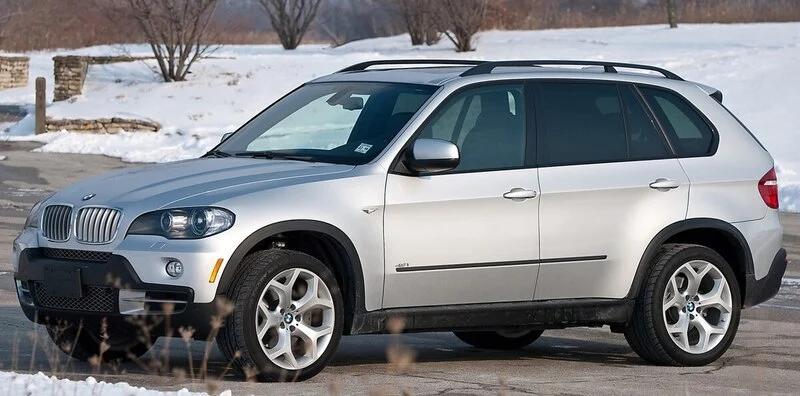
The 2007 BMW X5 was larger than its previous generation and had more active safety features, the newest (at that time) iDrive, and better handling. However, over the years, problems started to arise, such as:
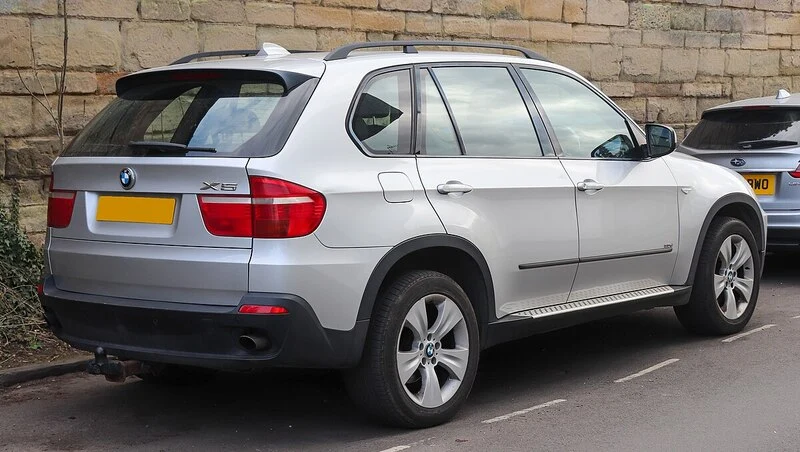
Transmission Failure
- In 2007, the BMW X5 came with two different engines, a 3.0L I6 and a 4.8L V8 gasoline engine. Both of these had a 6-speed automatic (ZF 6HP) transmission. The gearbox started to have gear-shifting issues, whose main reason was failing solenoids or a lack of oil changes. Therefore, if you already have one, remember to replace its transmission oil regularly.
Oil Leakages
- Both engines of the BMW X5 2007 had rubber gaskets instead of metal (like most automakers), and were prone to cracking due to engine heating and the rubber ageing factor. The poor gasket designs caused oil leakages from valve covers, oil filter, and even oil pan gaskets. If you see any oil leakages, replace gaskets immediately to avoid oil burning and visible leaks.
Transfer Case Failure (xDrive Models)
- The BMW X5 2007, among BMW X5 years to avoid with xDrive models, has a common problem of transfer case failure, which controls the all-wheel drive system. The car might start jerking or binding, particularly when turning. The main reason is worn-out actuator gear wear in the transfer case motor (which is a plastic component that strips over time).
Suspension & Uneven Tire Wear
- The BMW X5 2007 has the common issues of a bouncy ride, uneven tire wear, and knocking noises coming from the front and rear suspension, mainly due to worn thrust arm bushings, control arms, and ball joints. In 3-row models, it can even lead to air suspension failure. So, better to replace these components regularly to keep everything intact.
2. 2014 BMW X5 (Early F15 Models)
BMW X5 (F15) was the third generation, the successor to the seven-year-old F50 generation. The third-generation BMW X5 was lighter but with better aerodynamics, and its drag coefficient improved to 0.31 Cd, which is exceptional for a vehicle of its size.

The 2013 BMW X5 was and is still practical for families, with a reduced body weight and better fuel efficiency. This generation had an 8-speed ZF automatic for better and smoother shifting. However, there are still known faults with this specific model year, such as:
Timing Chain and Valve Cover Issues
- The 2014 BMW X5 had known issues with its timing chain and oil leakages, which are mainly due to high operating temperatures and not enough engine oil lubrication for the timing chain. If you are buying this specific model, immediately get the timing chain and valve cover gaskets along with pouring some LL-01 approved synthetic oil every 5,000–7,000 miles.
Water Leakage into Interior
- The 2014 BMW X5 has a water leakage issue where water was getting into the rear interior. The water mainly leaks near the sunroof drains or the tailgate seals. Improperly sealed panels or blocked drain lines are the leading causes. If you are getting one, as a precaution, apply silicone sealant to the leaking point (which is the rear tailgate and body seams).
Air Suspension Failures
- BMWs are globally known for their smoothest and most comfortable ride quality, which is mainly due to the air suspension system, which eliminates all humps and bumps. However, the 2014 model had rear-end sagging or uneven ride height issues. The main reason for this suspension failure could be ageing air struts, compressor wear, or failed height sensors. It is better to replace leaking air struts or the air suspension compressor if it becomes noisy or slow to lift.
3. 2019 BMW X5 (G05 – First Model Year)
The newer generation of BMW X5 is designed on the CLAR modular platform, which is not only lighter in weight but stiffer as well. The fourth generation of BMW X5 is still very successful and is far better than all its previous generations.
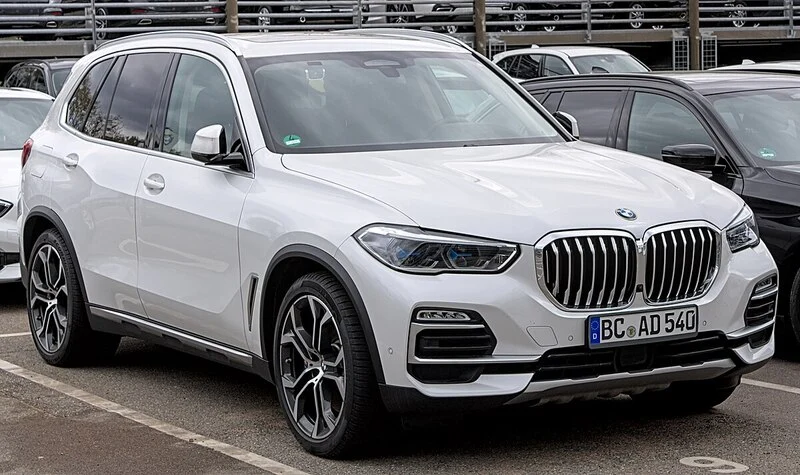
Specifically, the 2019 BMW X5 has two engine options: a 3.0L B58 inline-6 and a 4.4L N63 twin-turbo V8 petrol. Both are great engines so far. However, it’s still one of the BMW X5 years to avoid because mechanical issues were still reported, such as:
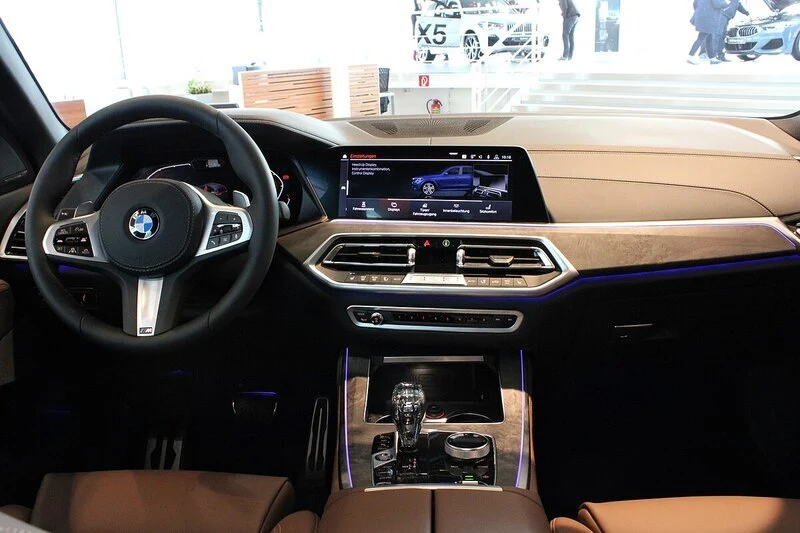
Transmission Jerks & Delayed Shifting
- For the past two generations, the 2019 BMW X5 has had a common transmission problem: rough shifting or delayed shifting in some cases. The ZF transmissions are incredibly reliable if they are taken care of.
- You should always get its oil replaced regularly, or better yet, earlier. In most cases, the ZF 8HP51 transmission can only have delayed shifting or jerks due to software issues or adaptive learning of shift points. Additionally, valve body wear can be another reason, but when looking at a hundred thousand miles on the ODO.
Air Suspension Failures
- The current generation of BMW X5 has adaptive air suspension as an optional upgrade.. There’s no doubt that air suspension makes the X5 softer in ride quality and better at handling. However, one of the most common problems with BMW X5s is their air suspension.
- Many owners reported light vibration when braking at higher speeds and uneven ride height. One common reason for such an air suspension issue could be wheel alignment, worn control arm bushings, or sensors. You should test-drive it before buying it.
Fuel Pump Leakage
- In 2019, BMW recalled the 2019 X5 xDrive50i for the replacement of high high-pressure fuel pump issue, which was highlighted by NHTSA Campaign ID 19V513000, where the fuel pump flange was not properly welded and could potentially leak, which can cause a fire risk in the engine compartment. If you have the X5 or are potentially buying, you should see the cracks on the fuel pump.
Engine Coolant Leaks
- The 2019 BMW X5 has an engine coolant leakage issue, visible under the engine bay. It’s important to note that BMW X5s with a 3.0L inline-6 and a 4.4L twin-turbo V8 engine had this common issue.
- One of the most sensible reasons behind such stupid coolant leakages is either weak coolant hoses or water pump failures. However, in rare cases, improper sealing at coolant expansion tanks can be the culprit.
4. 2021 BMW X5 (G05)
The 2021 BMW X5 shares the same modular platform as the 2019 models and has the same engine configurations. However, the only difference is the introduction of the xDrive45e plug-in hybrid (PHEV), which comes with a 3.0L turbo gasoline engine. Additionally, it is powered by an electric motor for improved fuel economy and performance.

Though the BMW X5 is highly reliable, certain external factors can compromise its reliability and dependability. For example, water leakage can burn out any electrical component, for which the component shouldn’t be held responsible. Here are some commonly known faults:
Harman Kardon System Amplifier Failures
- The newer BMW X5s have a Harman Kardon surround sound system, but many owners reported amplifier failures. These failures were either a sudden loss of audio from speakers or static, distortion, or crackling sounds before complete failure.
Problem with Sunroof Shade Motor
- The 2021 BMW X5 has a wonderful panoramic sunroof, but many owners reported that the sunroof shade (only the fabric sunshade) was stuck or slow-moving. A few also reported grinding noises or complete motor failure.
Remote Software Updates Fail or Corrupt ECU Modules
- The 2021 BMW X5 has modern technology everywhere around it. The G05 generation has a remote software upgrade system that is completely dependent on stable cellular connectivity and sufficient battery charge.
- Many X5 owners have reported the failed software update issue, which caused their vehicle to go into a “limp mode” or have certain features disabled. Another known fault is corrupted control modules. The solution to these problems is seeing dealership technicians who can use BMW ISTA tools to re-flash the affected ECUs and restore operations.
Conclusion
BMW is one of the world’s leading auto manufacturers, but some of the BMW X5 years to avoid were not as reliable as the company’s reputation. We all know that the BMW X5 has been a very reliable vehicle. However, many problems were reported, and BMW recalled many of them. You can simply avoid the problem model years and go for models with fewer problems.
