
What a Car Accident Lawyer Does in the First 72 Hours of a Case
The first three days after a car accident involve a mix of medical appointments, repair logistics, and insurer outreach that most claimants navigate without legal guidance. Surveillance footage gets overwritten on short cycles, vehicles are moved or repaired, and adjusters begin requesting statements before injuries have been fully assessed. During this window, lawyers focus on securing existing evidence to strengthen the claim.
Claims arising from crashes in St. Louis fall under Missouri’s pure comparative fault standard, which allows recovery even when a claimant is partly at fault but reduces the award by that percentage. During the first 72 hours, a St. Louis car accident lawyer can send preservation letters and identify coverage across the vehicles and parties involved. The decisions made early often determine which evidence remains accessible and which arguments the defense can later raise.
Initial Consultation
During the consultation, a lawyer usually asks about the incident, resulting injuries, vehicle damage, road conditions, weather, and any calls from insurers. They may also verify details such as the crash site, the responding agency, the names of witnesses, and whether photos, video, or repair estimates already exist. This information helps them create a timeline of events.
Preserving Evidence
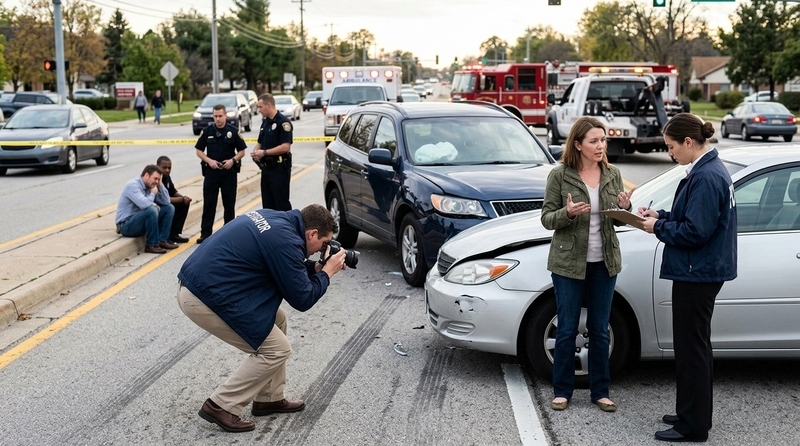
Physical proof can be lost or altered quickly, sometimes before the injured person leaves urgent care. Lawyers send requests to ensure that businesses retain surveillance footage, towing companies hold storage records, and vehicle owners preserve onboard data. Speed matters here because many recording systems overwrite files periodically. Prompt collection can also capture skid marks, broken glass, fluid stains, and roadway debris before weather or cleanup crews erase them.
Reviewing the Police File
A lawyer reviews diagrams, witness names, insurance entries, officers’ observations, and any citation issued at the scene. Any errors can affect later discussions about fault. A close reading may reveal that a passenger was not accounted for, a lane description was incorrect, or there are other details that need clarification.
Managing Insurance Calls
Insurance adjusters often contact victims soon after the incident. Legal counsel can handle these communications to ensure that victims do not make rushed statements or casual remarks that later appear inconsistent. Lawyers also identify every policy that could apply, including liability, medical payments, and uninsured coverage.
Tracking Medical Care
A claim needs a clear medical record that links the collision with the injuries. Lawyers gather emergency records, discharge instructions, imaging referrals, prescribed medications, and physicians’ notes. They also encourage clients to follow up and track their symptoms. Consistent treatment helps document swelling, restricted movement, headaches, sleep disruption, nerve symptoms, and other problems that may worsen over time.
Building the Timeline
A lawyer organizes photos, phone logs, tow slips, visits to healthcare professionals, repair invoices, and missed work into one working record. That timeline can expose gaps or contradictions before another party uses them. It also gives attending doctors and expert witnesses a stable factual outline of the case.
Checking for More Defendants
Some accidents may involve multiple responsible parties. A lawyer looks at vehicle ownership, employer use, delivery activity, road maintenance, and possible mechanical failure. This review can broaden the scope of the case and determine whether another party contributed to the incident. Early investigation helps because company logs, service records, and dispatch data may become more difficult to obtain later.
Calculating Early Losses
Lawyers calculate early losses by adding up ambulance fees, emergency treatment, follow-up visits, wage loss, transportation costs, and property damage. They also note pain levels, reduced mobility, interrupted sleep, and limits on daily function. Careful early accounting is essential to avoid a settlement that does not account for all losses.
Setting the Strategy
By the third day, lawyers often have enough information to create a workable legal plan, which may include following up with witnesses, obtaining medical records, taking photographs of the scene, notifying insurers, and sending requests to preserve missing evidence. Settlement talks may wait until the impact of the injury is clearer. A steady approach keeps the claim organized while leaving room for new diagnoses, fresh proof, or disputed liability.
Conclusion
A car accident lawyer uses the first 72 hours to preserve evidence, limit communication with insurers, trace medical care, and understand the facts. These early choices can affect fault findings, injury valuation, and payment discussions. When the initial response is both careful and prompt, the claim begins with a more solid foundation.
