
How Dashcams & Phone Data Affect Car Accident Outcomes
Technology has transformed the way car accidents are investigated, and two of the most significant tools in modern cases are dashcams and phone data. Together, these pieces of evidence can help determine fault, influence insurance claims, and even affect legal proceedings.
Dashcam footage can clarify events when drivers present conflicting accounts, while phone records may prove that someone was texting, calling, or using an app at the time of impact. However, the use of this evidence isn’t always straightforward.
There are legal considerations regarding admissibility, privacy concerns about phone data, and state laws that affect how this information can be used. This article explores how dashcams and phone data impact car accident outcomes and what drivers should know about these technologies.
The Role of Dashcams in Car Accident Cases
A dashcam (dashboard camera) is a small video camera mounted inside a vehicle to continuously record the road ahead — and sometimes the interior or rear of the car. These devices range from basic models that record onto memory cards to advanced, cloud-connected versions that upload footage automatically.
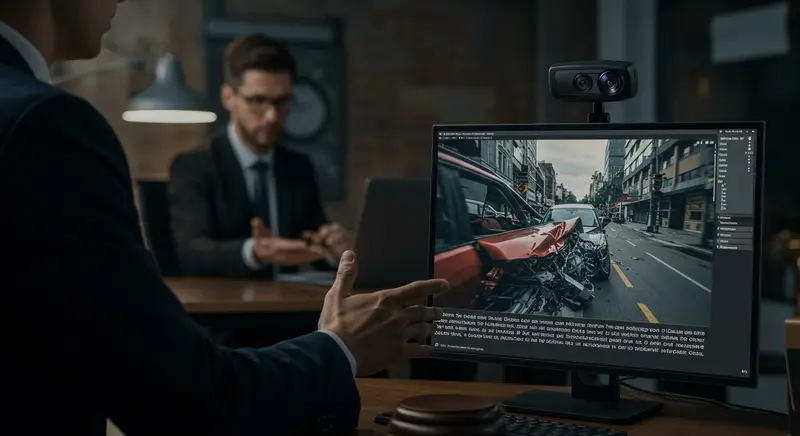
Dashcam footage can provide unbiased, real-time evidence in car accident cases. Overall, it can influence car accident outcomes through the following uses:
- Determining Fault: Video footage can show whether a driver ran a red light, made an illegal turn, or was tailgating before a crash.
- Defending Against False Claims: If another driver falsely accuses someone of causing an accident, dashcam footage can provide a clear record of events.
- Preventing Insurance Fraud: Dashcams can expose staged accidents, where scammers deliberately cause crashes to file fraudulent claims.
How Phone Data Can Be Used in Car Accident Cases
Phone data can be invaluable when determining fault in a car accident case because most people keep their phones on them throughout the day. (Note that 29 states have banned handheld phone use, and 49 have banned texting specifically.)
When investigating a car accident, authorities and insurance companies may look at the following:
- Call Logs: To determine if a driver was on a call at the time of impact.
- Text Messages: To check if a driver was sending or reading texts just before the crash.
- GPS Data: To confirm speed, location, and whether a driver made sudden stops or lane changes.
- App Usage Records: To see if a driver was using social media, streaming, or navigation apps.
Phone data is often used to prove distracted driving, one of the leading causes of car accidents. For instance, if phone records show a driver was texting or using an app at the time of impact, they could be found at fault. Phone data can also either back up or contradict witness statements and clarify the speed and movements of vehicles before an accident.
Comparing Dashcam and Phone Data as Evidence
Both dashcam footage and phone data can be powerful forms of evidence in car accident cases, according to an Allentown car accident lawyer. Dashcams provide visual proof of how an accident happened, while phone data offers insight into a driver’s behavior before the crash. In many cases, these two forms of evidence work together to create a clearer picture of liability.
Dashcam footage is particularly useful when there are conflicting accounts of an accident. If two drivers blame each other for running a red light, a video recording can establish what actually happened. Phone data, on the other hand, is often key in distracted driving cases, where a driver’s actions in the moments before the crash are under scrutiny.
However, there are also limitations. Dashcams only capture what is in their field of view, meaning they might miss events happening outside the camera’s range. Phone data, while revealing, does not always provide direct proof that a driver was looking at their screen. For instance, a driver may have their phone on but place it in the passenger seat or center console.
Because of these limitations, accident investigators often rely on both types of evidence (along with witness statements, police reports, and forensic analysis) to determine fault.
Legal and Insurance Implications of Dashcam and Phone Data
The use of dashcam and phone data in accident claims can significantly impact legal and insurance outcomes. Many insurance companies accept dashcam footage as supporting evidence when determining fault, and in some cases, having clear video proof can speed up claim processing. Some insurers even offer discounts for drivers who use dashcams, as they can deter fraud and promote safer driving habits.
Phone data plays a different role in insurance investigations. If an insurer suspects that a driver was distracted at the time of an accident, they may request phone records to verify their claim.
However, drivers are not always required to provide this information unless law enforcement is involved. Refusing to share phone data may not necessarily hurt a claim, but if the other party’s legal team suspects it might be needed for the investigation, they might submit a subpoena.
In legal proceedings, both types of evidence can be introduced in court, but their admissibility depends on various factors, including state laws, privacy regulations, and the way the evidence was obtained.
Some states have strict data privacy laws that require a warrant to access phone records, while others may impose restrictions on recording conversations with a dashcam. Understanding these legal nuances is important for drivers who are relying on technology-based evidence.
What Drivers Should Know About Protecting Themselves
Being proactive about dashcam use and phone habits can make a difference when it comes to protecting yourself after an accident. Installing a dashcam with high-quality video resolution and a wide-angle lens ensures that the footage is clear and useful in case of a dispute.
When it comes to phone use, avoiding distractions while driving is the best way to prevent legal and insurance complications. Even if you aren’t actively texting, having your phone in hand or interacting with an app can still be considered distracted driving in many states.
You should also be mindful of your rights regarding evidence. While dashcam footage is generally under the control of the vehicle’s owner, phone data access often requires legal processes. Before agreeing to share phone records with an insurance company, you may want to consult an attorney to understand your rights and obligations.
The Bottom Line
Dashcams and phone data play a key role in modern car accident investigations by providing valuable evidence that can clarify faults and influence legal outcomes. While dashcam footage offers visual proof of how an accident occurred, phone data can reveal whether distracted driving played a part.
Understanding how these technologies are used — along with the legal and privacy considerations involved — can help drivers protect their rights after a crash. By proactively using dashcams and practicing safe phone habits, drivers can strengthen their claims and navigate accident disputes more effectively.
