
How to File a Police Report in Kansas City After a Crash
According to the Missouri State Highway Patrol, one person is injured or killed in a traffic crash every 8.4 minutes in the state. When it happens to you, the aftermath can feel chaotic and overwhelming. With constant news reports of crashes on Kansas City highways, it’s a common fear for local drivers. You’re suddenly dealing with vehicle damage, potential injuries, and a cascade of questions about what to do next to protect yourself.
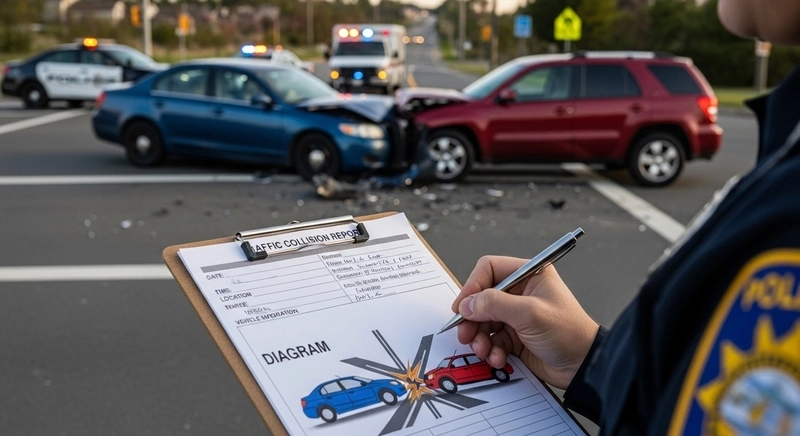
This guide removes the guesswork. We will walk you through the exact steps for filing a police report in Kansas City, Missouri—a critical document that serves as the foundation for your insurance claim and financial recovery.
Why a Police Report is Non-Negotiable After a KC Crash
The Official Foundation for Your Insurance Claim
A police report is the primary, objective piece of evidence that insurance companies use to determine fault. The financial stakes are high; the economic cost of car accidents in Missouri was $36.5 billion in 2024, factoring in medical care, lost wages, and property damage. Without this official document, you are often left in a “he said, she said” situation, which can make it incredibly difficult to prove your side of the story and receive fair compensation from an insurer.
Capturing Critical Evidence in the Moment
When an officer responds to an accident, they document key details that are nearly impossible to gather accurately after the fact. This includes driver and witness statements, vehicle positions, road conditions, weather, and any traffic citations issued. As recent events like the crash involving a Kansas City officer show, an immediate and official response is required to document a scene properly. This impartial record from a law enforcement professional provides a credible, third-party account of the incident.
| Feature | On-Scene Police Report | Filing a Report Later |
| Officer’s Observations | Yes, provides an unbiased third-party account of the scene. | No, relies solely on your memory. |
| Immediate Witness Statements | Yes, witnesses are identified and statements are recorded. | Unlikely, witnesses may be gone or unwilling to talk later. |
| Official Fault Determination | Yes, the officer may issue citations or note contributing factors. | No, fault becomes much harder to prove. |
| Scene Diagram & Photos | Often included, showing vehicle positions and damage. | No, you must rely on your own photos, which may be disputed. |
Step-by-Step: How to File Your Report in Kansas City, MO
Option 1: On-Scene Reporting (The Gold Standard)
The most effective method is to have police respond directly to the scene of the accident. You should call 911 immediately after any crash that involves an injury, significant property damage, or if the other driver is uncooperative or appears to be under the influence. With injury-causing accidents occurring regularly in the area, getting emergency services on-site is crucial for both safety and documentation.
When the Kansas City Police Department (KCPD) officer arrives, they will secure the scene, speak with all parties, and create an official report. You will be given a report number, which is absolutely essential for all follow-up actions with your insurance company and legal representatives.
Option 2: Filing a Report After the Accident
Sometimes, an on-scene report is not possible. This can happen in cases of a minor fender-bender where police do not respond or if you discover damage from a hit-and-run later. In these situations, you must take the initiative to file a report with the KCPD after the fact. Follow these steps carefully to ensure your report is filed correctly.
- Gather All Your Information: Before you begin, collect everything you have: the other driver’s name, address, license, and insurance information; photos of the scene and damage; the date, time, and specific location of the crash; and contact information for any witnesses.
- Determine if You Can File Online: KCPD allows online reporting for certain non-injury accidents, such as minor property damage or hit-and-runs with no suspect information. You should visit the official KCPD online reporting website to see if your incident qualifies for this convenient option.
- Go to a KCPD Station: If your accident doesn’t qualify for online reporting or you prefer to speak with an officer, you must go in person to a KCPD Patrol Division Station. You will need to bring all your information and fill out a report detailing the incident.
- Request a Copy of the Report: Once filed, the report will be processed. You can typically request a copy online or from the KCPD Records Section after a few business days have passed. You will need your report number to make the request.
Using Your Police Report to Build Your Case
Reviewing Your Report for Accuracy
It is critical to obtain a copy of the final police report and read it carefully. You must look for any factual errors in names, dates, vehicle descriptions, or the narrative of how the accident occurred. If you find a mistake, you should contact the KCPD Records Section or the reporting officer to request an amendment. An inaccurate report can severely damage your insurance claim by providing the insurance company with a reason to dispute liability or the extent of your damages.
Navigating the Insurance Claim with Expert Guidance
A police report is a powerful tool, but it is only the first step in a long process. Insurance companies often try to minimize payouts, even when the report clearly indicates the other driver was at fault. They may dispute the severity of your injuries or the details of the crash to protect their bottom line.
This is when the support of a skilled legal team proves essential. The Kansas City car accident lawyers at Northland Injury Law specialize in helping victims navigate the complex process that follows a crash. They understand how to use the official police report as a foundation, but they don’t stop there. Their team conducts thorough investigations to gather additional evidence—like securing traffic camera footage or interviewing reluctant witnesses—that can strengthen your claim far beyond the initial report.
They know the tactics insurance adjusters use and can handle all communications, ensuring you are not pressured into accepting an unfair offer. For anyone unsure about what to do in a Kansas City car accident, consulting with a firm like Northland Injury Law can make the difference between a denied claim and receiving the full compensation you deserve for your medical bills, lost wages, and suffering.
From Report to Recovery: Taking Control After Your Accident
Filing a police report is your official record of the accident and is the cornerstone of a successful insurance claim. Filing it promptly and correctly in Kansas City is a straightforward process if you follow the right steps. This single document gives you a factual basis to stand on when dealing with insurance companies and other parties involved.
Filing a police report is your first, most powerful move to protect yourself after a crash. By following this guide, you are taking a crucial step to regain control and build the foundation for your physical and financial recovery.
