
How to Report a Vehicle Accident?
Last year in the US, 6.14 million vehicle accidents were reported; out of which 94% of all crashes were associated with human error. However, there is the possibility that any of our readers might get into a minor or major accident, since occurrences of accidents are increasing with every passing year, but they do not know how to report a vehicle accident.
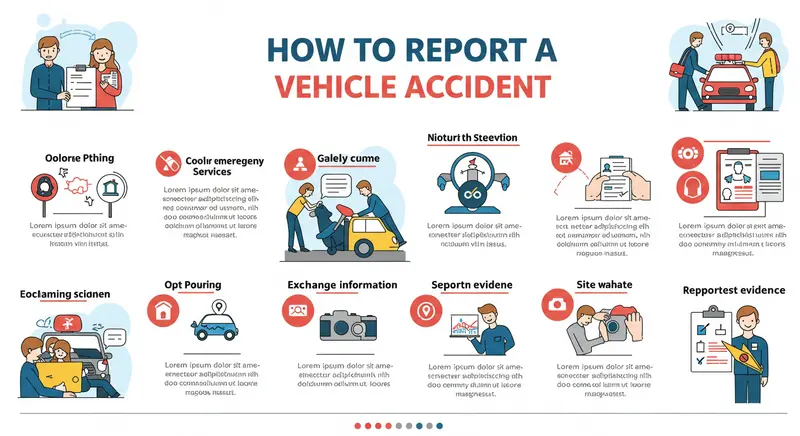
You should know what steps to take; these can be reporting the authorities, looking for personal damage, parking your car aside from the road, and much more. In this article, we will comprehensively discuss everything you should be aware of in case of an accident.
5 Steps for How to Report a Vehicle Accident
Even if the accident is minor, you might lose your nerves and start to react aggressively. In such cases, you first need to calm down and have control over your emotions. That’s not it, you should immediately follow these steps if you are unaware of how to report a vehicle accident:
1. Move to a safe location:
You have to see if your vehicle is still working and should park it aside, preferably on the road shoulder, to move it out of the traffic as soon as possible to avoid any further accidents.
2. Turning on Hazard Lights:
You should immediately turn on hazard lights, so others can know that you have run into an accident.
3. Check everyone:
As you have already parked your vehicle aside, quickly assess if you or any passengers have any visible injuries or any signs of bleeding. Do the same for others who might have crashed into you.
4. Call the authorities:
You should call 911 right away to report the car accident, and their police officer will write up an accident report for you, which can later support your insurance claim.
5. Avoid admitting:
You should never apologize or admit any fault (even to show courtesy) because such statements might be used in court proceedings against you. Just focus on safety and well-being.
Why Exchange Contact Information with the Other Party
According to the reports of NAIC, 70% of the drivers either are not fully aware even if they need to ask for information or what information to ask for. But why is such information so important when you know the details of the car and its number?
More than 50 states legally require to provision of essential information when reporting a car accident. From either side, incomplete information can fall under hit-and-run offences, and can have penalties up to $5000 or even 1 year of prison, which varies across states and the intensity of the accident.
In case the next party might not be willing to share their details (if it was their fault), you still need to be calm and avoid arguing (or blaming) them, which might be used against in the legal proceedings.
Even the smallest emotional apologies can bite off more than you can chew, which means your words can be translated as an admission of guilt. Therefore, you should always remain calm and composed about how to report a vehicle accident.
If the other party is reluctant to share their information, call the police and report the refusal immediately. Instead, and meanwhile, you can note their license plate number and vehicle details.
What Details should you collect?
However, if the next person is willing to share their details, you should focus more on the key details to collect. These are vital for both insurance claims and police reporting. Some of the essentials are:
- Full name and contact info
- Driver’s license number
- License plate number
- Insurance provider and policy number
- Vehicle details (such as make, model, year, and colour)
- Location (like how many miles on the highway or nearby landmarks) and time of the accident
Gather Evidence and Notify Your Insurance Company
According to JD Power research, 43% of insurance claims experience delays due to either incomplete or inaccurate accident information. Therefore, you should immediately report the accident to the authorities and your insurance company.
The insurance claims are informed timely manner and with proper evidence, resolving 3x times faster than a phone-call claim only. Another study tells that 67% of auto insurance customers who file their claims with digital evidence have faster resolution times than phone-only claims.
Document the Scene with Photos, Notes, and Witness Details
Therefore, you should always take photographs of the vehicle damage from different angles. But that’s not enough; you can make your case stronger by capturing skid marks, traffic signs, license plates, weather conditions, and road hazards.
If you are only claiming vehicle insurance, then photographs will be more than enough for a claim. However, if you are claiming health insurance as well, then it’s far better to document visible injuries.
In addition to that, also make notes of minor details such as time, date, and exact location (GPS coordinates). You can make sure to have contact information and even written or audio notes of the eyewitness (if any).
Last but not least, if you are smart enough to have a dashcam installed, things will fall into your bucket, immediately preserve the video, and save it elsewhere. Because dashcam videos can help you prove your innocence in court.
As per experts, one of the top three reasons for claim denials is the delay in informing the company, and the second one is the proper information. Another research, tells that on average, 1 in 8 drivers in the US is uninsured. Therefore, you know why it is important to immediately notify the insurance provider with information on the accident spot.
Bottom Line
No one would ever love to get into a car accident or want their loved ones to get into one. But life is super unpredictable, and being prepared can make a huge difference in it. You should know how to be calm, composed, and sensibly collect the essential information from the accident scene.
At the end, you need to immediately report that incident directly to the authorities and the insurance company. To make your case stronger, you also need to have pictorial evidence that will not only protect your legal rights but also fast-track your insurance claim process. We would never wish for you to get into any accident ever, but safety comes first, and it was our moral responsibility to keep you informed to avoid, and always drive cautiously. Now, we feel that you know how to report a vehicle accident if you encounter one.
