
Why Does My Car Makes Noise When Turning? Diagnosis & Solutions
The drive must be easy, silent, and comfortable. However, did you ever think that, when you turned your steering wheel, you heard not a sound, but some grinding, clicking, or squealing noises?
A car that honks during a turn is not only irritable, but it is also a kind of pre-warning that something has gone wrong with your car. Neglecting such sounds may lead to expensive repairs, unsafe rides, and uncomfortable rides.
Car Makes Noise When Turning The Steering Wheel
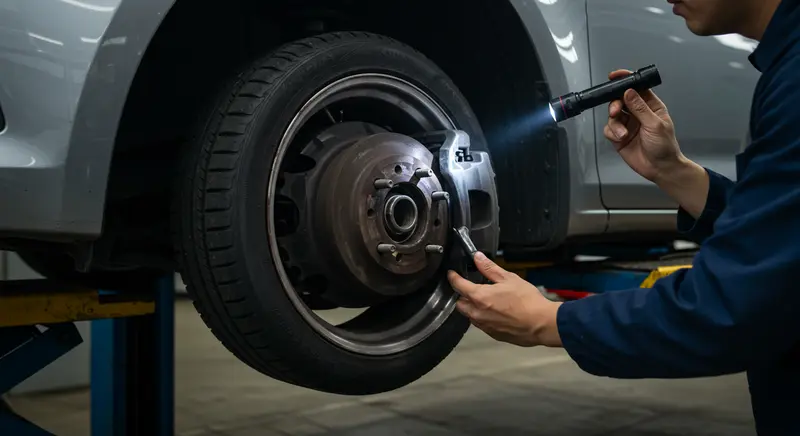
Today, in this article, we are going to see the most common reasons a car makes noise when turning, how to discover the problem, and what you can do to correct the problem before it gets out of hand.
Importance of a Smooth Turn to Safe Driving
A vehicle turnover can be easy to achieve, yet behind the scenes, various parts are in unison to make the process easy. Controlled and safe turns are a result of the power steering system, suspension, drivetrain, and brakes.
A failure or wear and tear of one of these parts can be manifested by difficulty steering, vibrations, or unusual sounds. That clicking or grinding sound is the beginning to tell you that something is not working well in your car. Your timely action will not endanger your own safety or the lives of other occupants of the car.
Ordinary Reasons of Noise during Turning
Let us dissect the probable causes of why your automobile may be making noise while turning:
1) Worn-Out CV Joints
Constant velocity (CV) joints are the components of the drivetrain that enable transmission of power from the transmission to the wheels. The CV joints may also wear out as a result of old age, the absence of lubrication, or damaged protective boots. Signs of CV Joint problems:
- Tilting or popping effects in turns.
- Screeching sounds that are aggravated by acceleration.
- Perceivable vibrations at higher speeds.
- A failed CV joint may render your vehicle undrivable if it is neglected.
2) Bad Wheel Bearings
Wheel bearings decrease friction between the wheel hub and the axle, and therefore, wheels can freely rotate. Once worn out, they produce resistance and abnormal sounds. Failing wheel bearings symptoms:
- The sound appears as a grinding or a rumbling noise which increases in volume with the speed.
- Noise that increases when turning in a direction.
- In extreme situations, unsteady wheels or lopsided tires.
Wheel bearings should not be worn out because they may lead to the seizing of the wheel during driving.
3) Power Steering Issues
The power steering system help you in turning the wheel with less effort. You will hear a lot of whining, squealing, or grinding in case of any problem. There are some possible causes:
- Red or dripping power steering oil.
- Failing power steering pump.
- Worn steering rack or hoses.
The warning signs include
- Turning with noise, particularly at low speed.
- Stiff or jerky steering.
- Noticeable fluid bluish-undertone leakage beneath the car.
4) Brake System Problems
The brake system does not just stop your car; it is also involved in safe turning. Brake components can damage or wear out, which can result in a grind or squeal when turning.
Brake-Related Noises:
- Braking because of worn-out brake pads.
- Rotor or glazed padding squeak.
- Clunking in case of loose calipers or hardware.
The brake is an important safety tool, and therefore any anomalous noise must be investigated at once.
5) Suspension and Steering Components
Your suspension receives shocks and rigidifies your car, and steering parts give you accurate control. Noise can be generated by worn or damaged parts. Common culprits:
- Worn ball joints.
- Damaged control arms.
- Failing struts or shocks.
Problem in suspension and steering component cause discomfort, poor handling and unsafe driving. Its symptoms includes:
- Turning, Clunking, or grinding.
- Bumpy, unstable ride.
- Lopsided wear of tires as a result of misalignment.
How to Diagnose the Noise?
You must diagnose the cause of the problem before you can repair it. Determine the place of the noise and the manner in which the noise takes place will enable to reduce the source and unnecessary repairs.
Listen Closely
The initial measure is just to listen attentively when there is a noise. Indicate whether or not it occurs during right turns, left turns, or both. By listening to the sound type, you can be guided in the correct direction by either grinding, clicking, or squealing and so being specific about the type of sound you hear can help.
Perform a Visual Inspection
A fast visual inspection beneath the car may show valuable indications. Search the area around the steering or brakes, the inside of the CV boots that may be torn around the axles, or unusual patterns of tire wear. A possibility of the problem being brake-related can be justified even by a single look at the pads and rotors.
Recreate the Sound Safely
You can replicate the noise by taking your car to a safe place and turning the steering wheel all the way to the left and right. It becomes easy to remember precisely when the sound comes on to relate the noise to the component that may be going faulty. This will provide you with a more concrete picture, and then consult a professional.
Solutions to Fix Noise While Turning
After knowing what is producing the sound, the second thing to do is to repair it. Others are easy to fix, and others are highly professional and have to be fixed by a professional to maintain the safety and performance of your vehicle.
Replacing CV Joints or Axles
When the CV joints are drained, it normally requires a permanent solution, and this is through replacement. Since the CV joints play a central role in the transmission of power to the wheels, professional repair of the CV joints is guaranteed to maintain long-term safety and performance.
Troubleshooting- Repairing or Replacing Wheel Bearings
Wheel bearings are damaged by grinding noises that must be replaced with new bearings. This is not normally a DIY job since it is a fine job and requires specialized equipment. After replacement, the grinding must vanish, and the maneuvering of the vehicle would be more stable.
Repair of Power Steering System
The noise can, in other cases, be due to the power steering system. Leaking fluid or low fluid may be easily addressed by refilling, although when the pump or steering rack is defective, it should be repaired or replaced by a professional. Replacing the system will have the steering flow smoothly and without difficulty.
Brake System Maintenance
If the problem is related to brakes, it is possible to fix the problem by replacing the thin brake pads by resurfacing the rotors, or repairing the calipers. Quickly fixing brake noises is not only a way of regaining sanity but also of making certain that you are safe behind the steering wheel.
Suspension Repairs
Worn struts, ball joints, or control arms are frequently replaced to solve the problem of suspension. A wheel alignment should be done to ensure good handling and the life of tires after repairs. Early solutions to issues with the suspension ensure that no further damage is caused and that the ride is comfortable and stable.
Conclusion
A car that produces noise during a turn is not a small inconvenience; rather, it is a warning that something significant is being worn out or broken. CV joints, wheel bearings, brakes, and suspension parts are several components could be the cause. The trick is that the noise should be noticed at the initial stages and addressed before it becomes a big repair.
By listening to your car, doing regular maintenance, and getting professional assistance where needed, you will be able to guarantee safe, comfortable, and quiet driving in the future years.
FAQ: Car Makes Noise When Turning
Yes, cold weather may stiffen part or thicken fluid, which produces temporary sounds.
It generally indicates that the issue at hand is on that particular side such as a bad CV joint or wheel bearing.
Absolutely. Worn or underinflated tires are also uneven and therefore will produce squealing or humming sound when turning. This problem can be resolved by tire rotation or replacement.
Yes, it can cause squeaks and imbalanced pressure on tires and suspension because of poor alignment.
Immediately you can- any delays will convert any small problem into an expensive repair.
