
How Vehicle Color May Influence the Risk of a Car Accident
Buying a car is usually exciting. We compare safety ratings, check out features like airbags, lane assist, and automatic braking, and look up crash test videos on YouTube. We care about staying safe on the road, and most of us do our best to buy cars that can protect us in case something goes wrong. But here’s the funny thing: even though we worry so much about the car’s safety features, we hardly ever think twice about its color.
Most people pick a color based on looks or personality. Red if you want something bold. Black if you want something sleek. White, if you are fine with washing it all the time. That’s usually the extent of the thought process. But what if I told you that the color of your car could literally change how likely you are to get into a crash? Sounds a bit out there, but several studies say it’s true.
In fact, certain car colors are statistically more likely to be involved in traffic collisions than others. This means that something as simple as choosing silver over white could impact your odds on the road. Studies show that the risk of a car accident can actually increase or decrease depending on what color your vehicle is painted.
Why a Car’s Color Is an Important Factor
Visibility is the primary reason why we have to attach importance to a car’s color. Colors like black, gray, and even some shades of blue and red can make a car harder to see.
A black car at night, for example, can disappear into the darkness. Especially when people drive without their high beams on, or in bad weather, black cars kind of melt into the background. That makes it harder for other drivers to judge distance, speed, or even notice the vehicle at all.
Even during the day, colors like gray and silver can blend with the pavement or surroundings. How often do you see a silver car parked next to a gray building and not even notice it until you’re right beside it?
Lighter or brighter colors, on the other hand, reflect more light and create more contrast with the environment. A white or yellow car basically announces itself. That higher visibility gives other drivers more time to react, especially when traffic is tight or during quick decisions, like changing lanes or making turns.
The Most Dangerous Car Colors
Here are the colors associated with the most risk and, more importantly, why.
Grey and Silver Cars
- Not far behind black are grey and silver vehicles. Grey cars are associated with an 11% higher accident risk compared to white ones.
- Silver isn’t much better at 10%. It’s again about how they blend into road surfaces and cloudy weather. Some studies suggest silver might be safer than we think, but results are mixed.
Black Cars
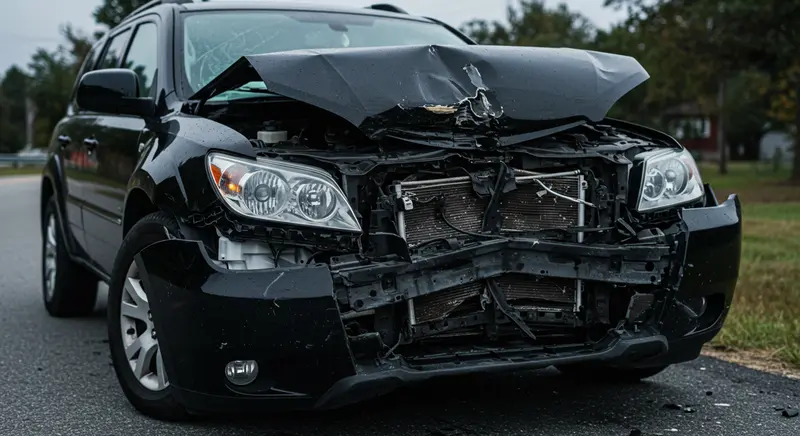
- Black cars top the list for the worst visibility, especially at night. You’re 12% more likely to be in an accident driving a black car compared to a white one. And some studies even say the crash risk can shoot up to 47% at night. That’s nearly half as likely again, just because of how hard it is to see.
- Black cars absorb more light, so they’re not just invisible in the dark; they can also vanish into your peripheral vision even in daylight.
Red Cars
- Red feels like it should be safe because it’s bright. However, red shows up in so many parts of the road environment: stop signs, brake lights, traffic signals. This can cause red cars to camouflage unintentionally.
- Also, red is often linked with sporty cars, and that may invite faster driving. Red vehicles have about a 7% increased risk compared to the safest options.
Blue Cars
- Blue cars, especially in darker shades, are harder to notice against a blue sky or shaded roads. They show a 7% higher accident risk than the safest colors. Lighter blue shades tend to be slightly better, but not by a wide margin.
Green Cars
- Green vehicles have the lowest added risk of the danger colors, but still more than white. Green’s a common color in nature, which means your green car might not pop out as much as you’d expect.
Safest Car Colors
These colors are more visible in all lighting conditions, which helps other drivers see you more clearly.
- White: White vehicles are the benchmark for safety. They’re 12% less likely to get into an accident compared to black cars. White stands out in almost every environment, day or night, rain or shine. It reflects light well and doesn’t blend into road conditions.
- Yellow: Surprisingly, yellow might be even safer than white, depending on the study. School buses and taxis are yellow for a reason. Yellow is bright, stands out in fog, and rarely matches the environment. This makes yellow vehicles super easy to notice, and that’s exactly what you want on the road.
- Orange: Orange cars are a bit rare, but they rank pretty high on the safety scale. Orange doesn’t show up often in nature or urban landscapes, so it grabs attention. Like yellow, it’s hard to miss.
- Gold: Gold falls into the same category as orange and yellow: high visibility, low accident rates. Not super common, but a smart option if safety’s your top concern.
