
8 Important Records That Can Help a Car Accident Claim
Car accident claims don’t get decided in courtrooms as often as people think. Most of them get decided in document exchanges between attorneys and insurance adjusters, and the side with better records almost always comes out ahead.
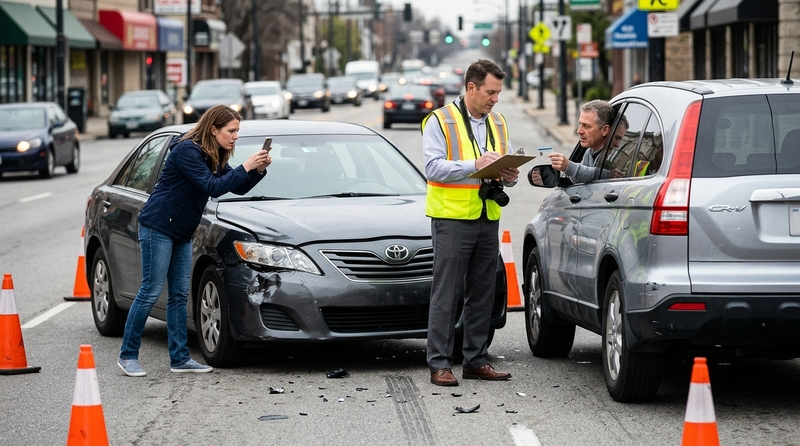
Salt Lake City’s roads tell this story constantly. During peak hours at the I-15 interchange near downtown, the SR-201 corridor, and 7200 South, serious accidents happen in this city every day, and the claims that follow vary wildly in outcome. Not always because the injuries were different. Often, because the documentation was. A car accident lawyer in Salt Lake City that residents turn to, who handles these claims locally, knows exactly what adjusters look for and exactly what they use to justify paying less. The records below are what close those gaps.
1) The Police Report
Everything starts here. The responding officer’s observations, the parties involved, preliminary fault notes, and witness contact information all live in this document.
- Errors in police reports are more common than people expect. Names, vehicle details, and fault assessments get recorded incorrectly.
- You’re entitled to a copy. In Salt Lake County, it comes from the Utah Highway Patrol or the local municipal department, depending on jurisdiction.
- Review it carefully. Inaccuracies that go unchallenged become part of the official record.
2) Medical Records From Every Provider
Every single provider. Not just the ER. Follow-ups, specialists, physical therapy, mental health treatment, all of it.
- Provider notes need to reference the accident as the cause of injury. Vague documentation gives insurers room to argue that something else caused it.
- A gap between the accident and your first medical visit is the first thing adjusters look for.
- Records from a provider you saw once and never returned to still belong in the file.
3) Itemized Medical Bills
Treatment cost is a separate record from the treatment that occurred. Both matter, and they serve different purposes.
- Itemized billing from every facility, clinic, pharmacy, and imaging center documents the financial reality of your recovery.
- Co-pays, prescriptions, medical equipment, and out-of-pocket expenses belong here, too.
- Future costs your treating physician projects in writing are part of this category as well.
4) Witness Information and Statements
An independent witness who saw the impact itself is worth considerably more than the statements of either party.
- Names and contact numbers gathered at the scene are the starting point. Written or recorded statements are better.
- People leave accident scenes and become unreachable rapidly.
- A witness whose account directly contradicts the other driver’s version can be decisive in a disputed liability situation.
5) Your Own Written Account
Write it down as soon as you physically can. Don’t wait until you feel ready.
- The sequence of events, the other driver’s behavior, the road and weather conditions, and what was said at the scene.
- How did you feel physically right after the crash, even if you didn’t go to the hospital that day?
- Anything unusual you noticed about the other driver before or after impact?
- Date it. The contemporaneous nature of this account is part of what gives it credibility.
6) Vehicle Repair Estimates and Final Invoices
Damage documentation matters beyond just getting your car fixed.
- A substantial repair bill makes it harder for an insurer to argue your injuries were minor.
- Before-and-after photographs of the vehicle preserve evidence that disappears once repairs are complete.
- If the vehicle was totaled, keep the insurer’s valuation report and any related correspondence separately.
7) Insurance Correspondence
Every piece of communication from any insurer, yours or the other party’s, goes into the file.
- Settlement offers, denial letters, requests for recorded statements, and coverage documents.
- Follow up phone calls from adjusters in writing. A paper trail of verbal conversations matters.
- An early offer that arrives before you’ve completed treatment is almost always lower than the claim’s actual value. Document it and don’t sign anything.
8) Physician’s Assessment of Future Medical Needs
In serious injury cases, this is one of the most valuable records in the entire file.
- A treating physician’s written projection of future treatment needs, surgical costs, long-term therapy, and permanent functional limitations directly affects the calculation of total damages.
- Without it, future damages are speculative and difficult to argue convincingly.
- Get this assessment in writing while you’re still under active care. It becomes harder to obtain once treatment ends.
What It Comes Down To
Insurance adjusters in Salt Lake City are experienced, and they work from a checklist of what’s missing, not what’s there. Every gap in your documentation is a number they feel justified in reducing.
The records above aren’t just useful. They’re the difference between a claim that reflects what happened to you and one that settles for a fraction of its worth.
