
What Makes Truck Accident Lawsuits More Complex Than Car Claims
When a commercial truck is involved in a serious collision in California, the legal process that follows is significantly more demanding than a typical car accident case. Multiple parties may share liability, each governed by federal safety regulations, and the evidence needed to establish their responsibility is often held by the trucking company and subject to rapid deletion or overwriting.
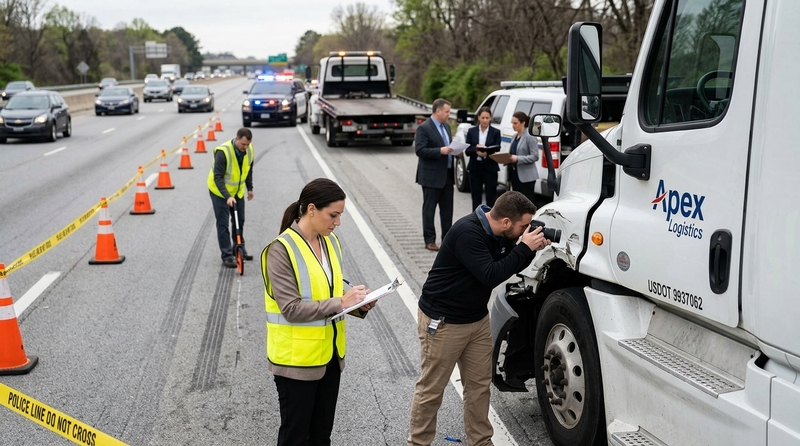
A truck accident lawyer can act immediately to preserve electronic log data, dispatch communications, maintenance records, and engine control data before they are lost. Because commercial carriers typically deploy their investigation teams within hours, having legal representation that can secure evidence from the scene and identify every liable party early in the process is critical to the outcome of your case.
More Parties at the Table
A truck accident may involve several parties at once. The driver may share blame with a carrier, repair shop, shipper, or loading crew. A claim often requires evidence such as contracts, logbooks, maintenance files, and dispatch records, which is time-sensitive and can be difficult to obtain.
Rules Beyond Traffic Laws
Car accident claims are often governed by state negligence rules. Truck lawsuits also involve federal motor carrier duties, driving hour limits, inspection standards, training rules, and cargo restraints. Counsel must compare daily conduct against those requirements, then connect each failure to the crash. That added legal layer gives insurers more room to dispute fault, causation, and responsibility.
Evidence Moves Fast
Key evidence in a truck case can vanish quickly. Electronic log data, engine control records, camera footage, dispatch texts, and repair histories may be held by different custodians. If preservation requests are issued too late, critical material can be overwritten or discarded. Early legal action matters here more than it does in many routine passenger vehicle collisions.
Injuries Are Often Severe
A fully loaded tractor trailer carries immense force, so the resulting bodily harm is often severe. Claims may involve brain injuries, spinal cord damage, crush trauma, burns, multiple operations, or lasting work limitations. Substantial medical expenses usually cause disputes over future treatment, lost earnings, and impact on daily functioning. That raises the stakes for both evidence and valuation.
Insurance Is Less Straightforward
Truck accident cases can involve layered commercial coverage, several insurers, excess policies, and disputes over the order of payment. Each carrier may attribute blame to another business. That arrangement can cause delays during negotiations and increase the chances of disputes regarding coverage.
Defense Tactics Are Stronger
Commercial carriers often react within hours after a collision. Their teams may inspect vehicles, photograph damage, interview witnesses, and shape the initial account of events. Those steps can influence later arguments about speed, lane position, fatigue, or cargo balance. People who arrive late may have to deal with a record already framed by the opposing side.
Independent Contractor Labels
A carrier may argue that the driver worked as an independent contractor; however, this designation does not resolve the matter. Courts often examine control, dispatch authority, equipment ownership, route demands, and day-to-day supervision. If a company directed the work in practical terms, it may still be held liable.
Cargo Can Affect Liability
Improper loading can lead to rollovers, jackknifes, spilled freight, or reduced braking distance. In those cases, fault may extend to a warehouse crew, broker, or shipping contractor. Weight tickets, loading diagrams, and trailer seal records can all be important evidence.
Expert Input Is Often Necessary
Many truck accident lawsuits require input from experts early in the case. Insights from reconstruction specialists, safety consultants, physicians, and vocational professionals can all influence the value of a claim. Their analysis can explain the role of stopping distances, driver fatigue, and mechanical failure in causing the accident. Their involvement increases both expenses and preparation time, but it often makes the facts of the case clearer for insurers and juries.
Conclusion
Truck accident lawsuits are more challenging because they involve severe injuries, corporate records, layered insurance policies, technical evidence, and federal safety duties. Each moving part creates another opening for disputing fault and causing delays. Prompt preservation of evidence and a clear understanding of who was responsible for managing the risks involved is necessary for building a strong claim.
