
Keeping Your Jeep Adventure-Ready: Maintenance Made Simple
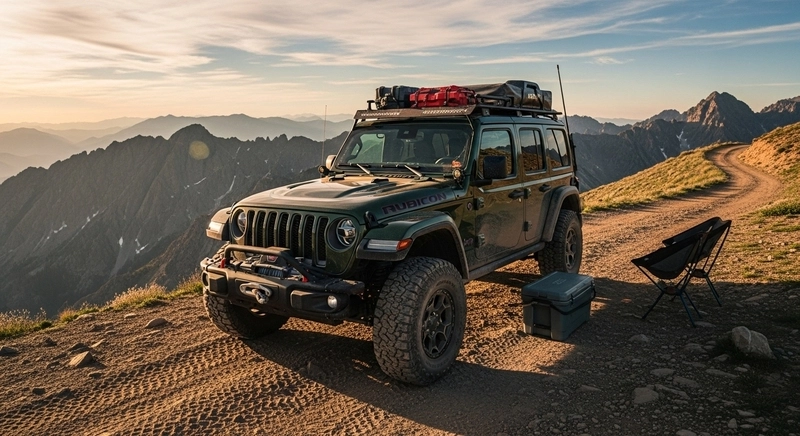
Your Jeep is not merely transportation, it’s your ticket to adventure. Whether you’re climbing over rocks, crossing streams, or traversing the far backcountry, your vehicle’s reliability can spell the difference between the trip of a lifetime and a dangerous situation.
Routine maintenance isn’t just about keeping your Jeep running, it’s about ensuring you get home safely after every outing.
Why Adventure Vehicles Require Special Attention
Off-road driving places unique stress on your vehicle that normal highway driving never could.
Steep slopes, water crossings, mud, boulders, and extreme articulation challenge every component to its limits. What might be a minor issue during your commute can become a major problem when you’re miles from the nearest paved road.
Critical Systems That Take the Worst Beating:
- Suspension components: Shocks, bushings, control arms, and track bars absorb constant impacts.
- Drivetrain: Transfer case, differentials, and axles handle intense torque and angle variations.
- Braking system: Brake pads, rotors, calipers, and lines work overtime on steep descents.
- Steering linkage: Tie rods, ball joints, and drag links endure lateral stress from uneven terrain.
- Cooling system: Engine and transmission temperatures climb when crawling at low speeds.
The Connection Between Trail Safety and Maintenance
Breaking down on a city street is inconvenient. Breaking down on the trail is dangerous. Before heading into the wilderness, proper maintenance ensures your Jeep is ready to handle whatever situations arise.
Pre-Trip Inspection Checklist
Before any off-road adventure, conduct a pre-expedition inspection:
- Fluids: Engine oil, coolant, brake fluid, power steering fluid, and differential oil.
- Tire condition: Check for cuts, bulges, or excessive wear; verify proper pressure for the terrain.
- Lights and electrical: Test headlights, taillights, brake lights, and auxiliary lighting.
- Undercarriage: Look for leaks, loose components, or damage from previous trips.
- Recovery equipment: Ensure tow points are accessible and recovery gear is aboard.
This fifteen-minute check can prevent hours of trailside repairs—or worse, requiring rescue.
How Digital Repair Guides Change the Game
Paper manuals stay home in the garage. Digital resources travel with you, providing vital information when you need it most.
Jeep repair manuals from platforms like eManualOnline can be downloaded to your phone or tablet, giving you factory-level technical knowledge even without cell signal.
Benefits of Digital Documentation for Adventure Vehicles:
- Offline access: Download manuals before your trip and access them anywhere.
- Complete coverage: Model-specific information for your exact Jeep.
- Diagnostic data: Troubleshooting flowcharts and error code definitions.
- Wiring schematics: Essential for electrical issues common in modified vehicles.
- Torque specifications: Critical for trailside repairs.
With this information at hand, you can diagnose problems accurately instead of guessing and repair them using proper methods.
Real-World Example: Pre-Trip Brake and Suspension Inspection
Many Jeep owners focus on engine performance while neglecting the brake system and suspension—until these systems fail on a steep downhill. Here’s how to perform a comprehensive inspection that could save your life.
Brake System Inspection
Visual inspection (15 minutes):
Remove all four wheels and examine each corner thoroughly. Look through the caliper at your brake pads, you should see at least 3mm of friction material remaining. Anything less requires replacement.
Check brake rotors for:
- Deep grooves or scoring
- Excessive rust or pitting
- Warping (visible as uneven heat discoloration)
- Minimum thickness (specified in your repair manual)
Fluid condition check:
Open your brake fluid reservoir. Fresh brake fluid is light amber or clear. If it’s dark brown or black, it has absorbed moisture and needs replacement.
Contaminated brake fluid reduces braking power and can cause complete failure during long descents.
Line and hose inspection:
Trace brake lines from the master cylinder to each wheel. Look for:
- Rust or corrosion on hard lines
- Cracks, bulges, or chafing on rubber hoses
- Secure mounting clips and brackets
- Leaks at connection points
Suspension System Check
- Ball joint inspection: Lift the front end until tires are off the ground. Grab each tire at 12 and 6 o’clock and attempt to rock it. Excessive movement indicates worn ball joints.
- eManualOnline Jeep repair manuals provide exact acceptable play specifications and replacement instructions for your specific model year.
- Shock absorber test: Press down firmly on each corner of your Jeep and release. The vehicle should bounce once and settle. Multiple bounces indicate worn shocks that can’t control your vehicle on rough terrain.
- Bushing inspection: Use a pry bar to check control arm bushings, track bar bushings, and sway bar links for excessive movement. Torn rubber or metal-to-metal contact requires immediate replacement.
Prevention Through Knowledge: Your Best Tool
The most expensive repairs happen 50 miles into the wilderness. Understanding your Jeep’s systems and maintaining them properly prevents most trail failures.
Essential Maintenance Schedule for Off-Road Jeeps:
- Before every trip: Fluid checks, tire inspection, quick visual undercarriage check.
- Every 3,000 miles: Oil change, tire rotation, grease chassis points.
- Every 6,000 miles: Brake pad inspection, bushing inspection, differential fluid check.
- Every 12,000 miles: Brake fluid change, steering component inspection, cooling system check.
- Annually: Comprehensive undercarriage inspection, full filter service, complete fluid service.
Building Your Adventure Maintenance Routine
Start with basics and build confidence. You don’t need to be a master mechanic, understanding how systems work and having reliable technical information makes you self-sufficient.
Access to detailed technical documentation through platforms like eManualOnline puts professional-level knowledge in your hands.
Basic tools and a methodical approach enable you to handle most required maintenance and identify problems before they become failures.
Your Jeep was built to explore, but it’s your responsibility to keep it adventure-ready. Regular maintenance, careful inspection, and proper knowledge ensure you drive home under your own power at the end of each adventure, just as every adventure should end.
