
Nissan Versa Years to Avoid: Tips for Choosing the Right Model
Without any doubt, Nissan is one of the most reliable automotive companies in the world. With both its domestic and commercial vehicles serving customers across continents, the company has been in business for decades and has proven itself to be reliable, but there are some Nissan Versa years to avoid.
Nissan Versa is a mid-sized compact sedan, but with major changes for the U.S market, mainly to meet regulatory requirements and safety features. Nissan added multiple airbags, advanced seatbelts, a better crash-absorbing body, and many other safety features.
Besides being a reliable automotive company, Nissan still had reliability issues with the Versa model. Just imagine yourself getting your first job after graduation. With a tighter budget, you bought a used Nissan Versa to drive you back and forth from home to the office.
But the transmission puffs and fails on the very first day of your career. How would you feel that day? This is why we have researched the Nissan Versa’s worst model years for you to avoid. In this article, we see the origin, problematic model years, and generation upgrades in detail.
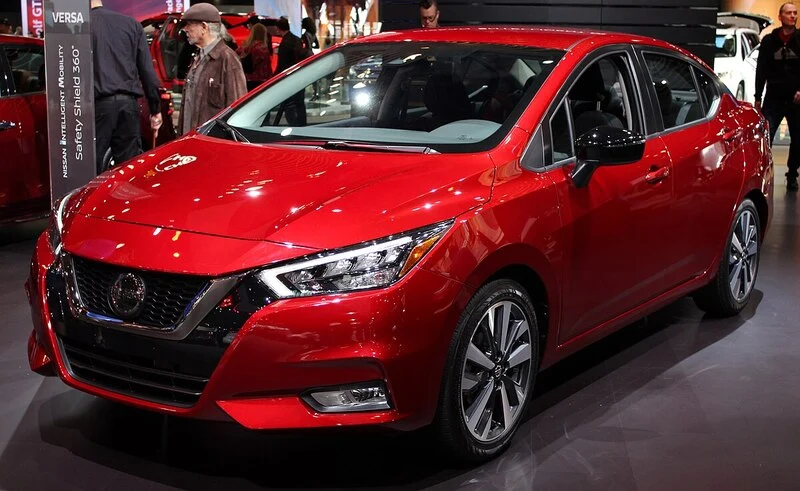
Nissan Versa Years to Avoid – Overview
Here is the quick overview of Nissan Versa years to avoid:
| Model Year | Common Issues | Recalls |
| 2007 | Airbag malfunctions, suspension problems, fuel system failures, engine rattling, premature engine wear | Not specified |
| 2008 | CVT issues, transmission leaks, coil spring fractures, exhaust rust, faulty airbag sensors | 7 recalls |
| 2009 | Steering looseness, strut wear, fuel pressure sensor failure, electrical faults, brake wear | 7 recalls |
| 2012 | CVT failure (~70K miles), coil fractures, electrical malfunctions, airbag warning light | 10 recalls |
| 2014 | Transmission failure (~90K miles), brake vibrations, power window failure, wiring issues | 6 recalls |
Origin of Nissan Versa
The bloodline of Nissan Versa goes all the way with Nissa Tiida, the sister model serves the Japanese domestic market, while Pulsar is only for EU countries. Since Versa is based on Tiida, their history and origin are also intertwined.
Nissa Tiida was launched as a replacement for Nissan’s Almera, Pulsar, Sentra, and Sunny in many regions across Europe and Latin America. The base structure of both Versa and Tiida is a compact-sized sedan with a stretched wheelbase from the Nissan B platform.
The design philosophy includes roominess, fuel efficiency, affordability, filling market gaps, cost efficiency, safety, and global emissions compliance. These words are sweeter to hear, but the reliability concerns are still there, and let’s move towards them.
Generations of Nissan Versa
Nissan Versa has three main generations. The first one launched back in 2007, and the last model year is 2025. Across these three generations, there have been many mechanical and cosmetic upgrades. Let’s see what each generation has to offer before learning about their problems.
| Generation | Model Years | Key Features & Upgrades | Engine & Transmission Options |
| First Generation | 2007–2011 | Simple, budget-friendly compact car; available in sedan & hatchback; introduced CVT option | 1.6L & 1.8L engines, 5-speed manual, 4-speed automatic, CVT |
| Second Generation | 2012–2019 | Larger cargo space (505L); trims: S, SV, SR; hatchback only for SR trim; added stability & brake assist | 1.6L engine, 5-speed manual or 4-speed automatic |
| Third Generation | 2020–2025 | Sleeker design, V-shaped grille, Apple CarPlay/Android Auto, better safety & tech; stronger exterior styling | 1.6L engine, 5-speed manual (base), X-Tronic CVT (higher trims) |
The First-Generation (2007-2011)
Nissan Versa’s first generation models were a simple compact car, designed for daily commute from home to work and back and forth. At the same time, this specific generation came with two engine configurations: 1.6 and 1.8-litre gasoline engines.
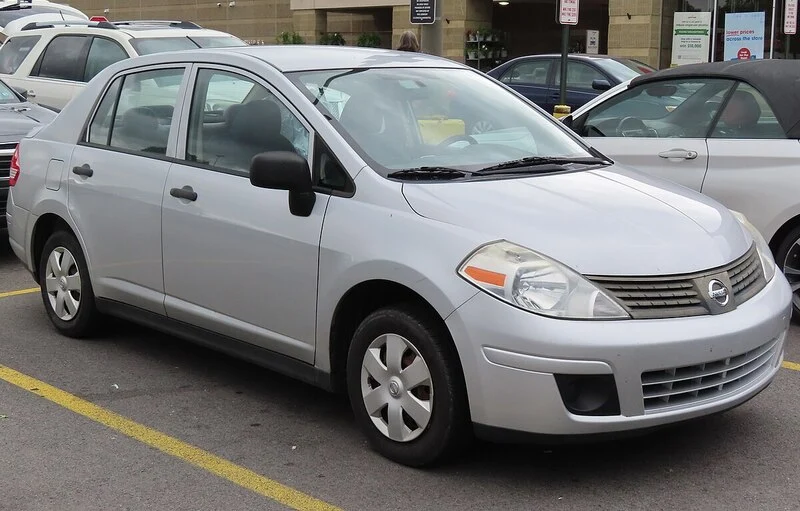
Besides that, this generation came with two different body shapes, “sedan” and “hatchback”. In terms of transmission, there was a choice of either a 5-speed manual or a 4-speed automatic gearbox. However, the automatic transmission was an exceptionally newer technology (CVT) being offered at that time.
The Second-Generation (2012-2019)
The second generation of Nissan Versa in 2012 had three trim options. S, SV, and SR were offered back then, where SR was limited to a hatchback version. Both sedan and hatchback variants have big trunk space (collectively, cargo space of 505 litres).
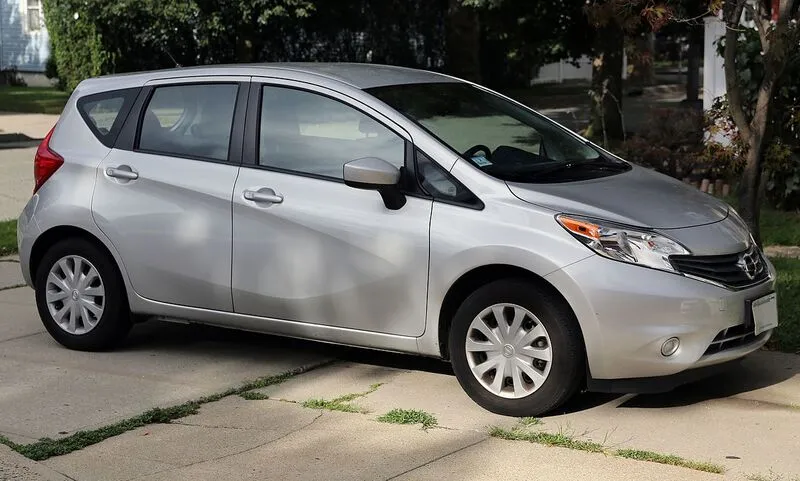
However, in this generation, engine configurations were strictly limited to a 1.6-liter gasoline engine with either a five-speed manual or four-speed automatic gearboxes. Among other features were the stability control and brake assist features.
The Third-Generation (2020-2025)
The third generation of Nissan Versa began with the 2020 Nissan Versa, introduced in 2019 with an entirely new design. It is powered by a 1.6-litre 4-cylinder engine, producing 122 hp and a stronger exterior.
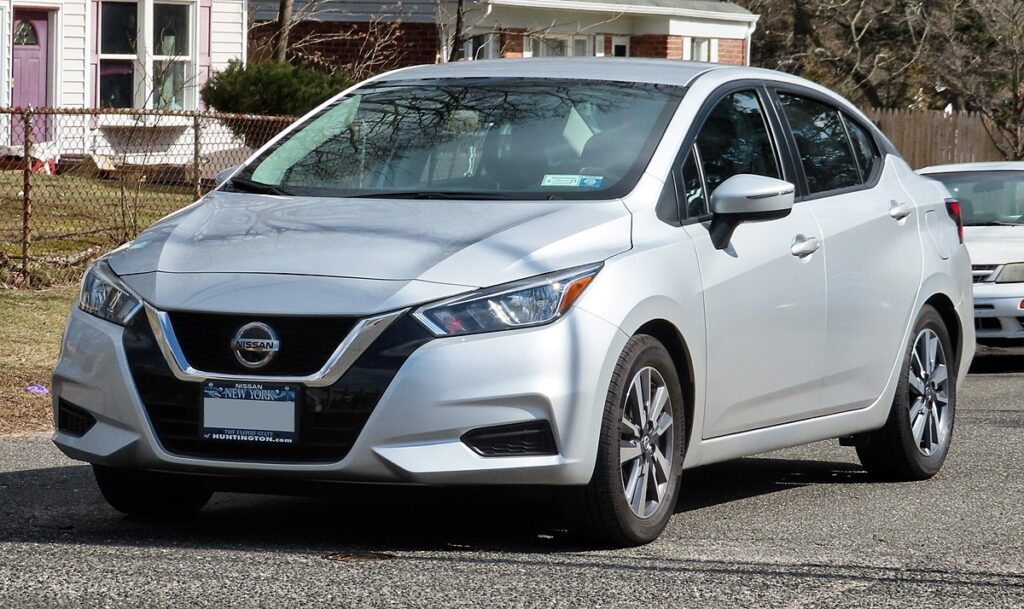
The third generation features a wide and V-shaped front grille, angled headlamps flowing into the car’s grille, arch-shaped taillights, more inclined A-pillars and roofline, giving it a sleek look. Apart from that, it also features Apple CarPlay, Android Auto, as well as auto climate control. The base trim is equipped with a 5-speed manual transmission, while the higher trims feature an advanced X-Tronic CVT gearbox.
Nissan Versa Years to Avoid
Since its 2006 debut to present, Nissan has continued to manufacture various models of the Nissan Versa almost every year. If you are interested in buying a Nissan Versa, you must consider the best and worst model years before making any investment. So, below we have listed the worst Nissan Versa years to avoid.
1) 2007 Nissan Versa
As the first-year model, the 2007 Nissan Versa quickly became the working class’s favorite sedan — mainly due to its features and affordability. However, within no time, owners started reporting the complaints to NHTSA for:
- Airbag system malfunction
- Suspension issues
- Fuel system irregularities
- Electrical system failures
- Loud engine rattling noises
- Premature engine failure
2) 2008 Nissan Versa
The 2008 Versa is the second model year of the first generation, which has nearly 538 complaints reported to NHTSA with seven major recalls. Undoubtedly, Nissan Versa was much affordable back then, but that should not translate into issues like:
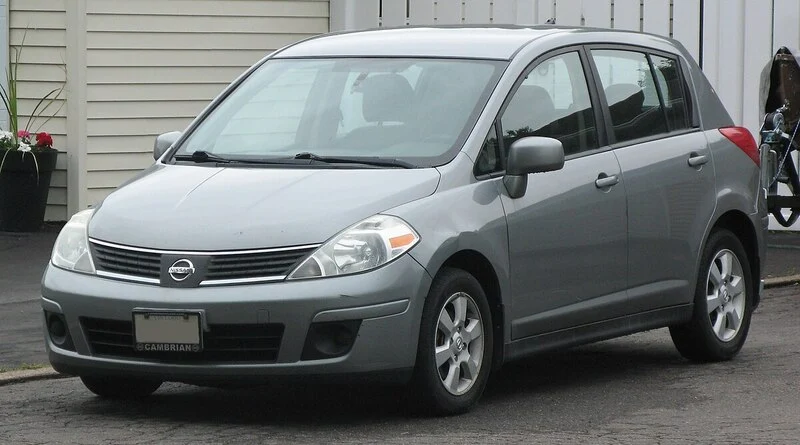
- Transmission malfunctions (oil leakages, jerky shifting)
- Front coil spring fractures with no reason
- Premature exhaust pipe rusting and leakage
- Faulty airbag sensors and airbag light warning
3) 2009 Nissan Versa
The 2009 Versa shared a bunch of problems with its predecessor model years yet with more complaints reported to NHTSA (which are 751 reports) and seven major recalls from Nissan. Other than these issues, some of the commonly known problems are:
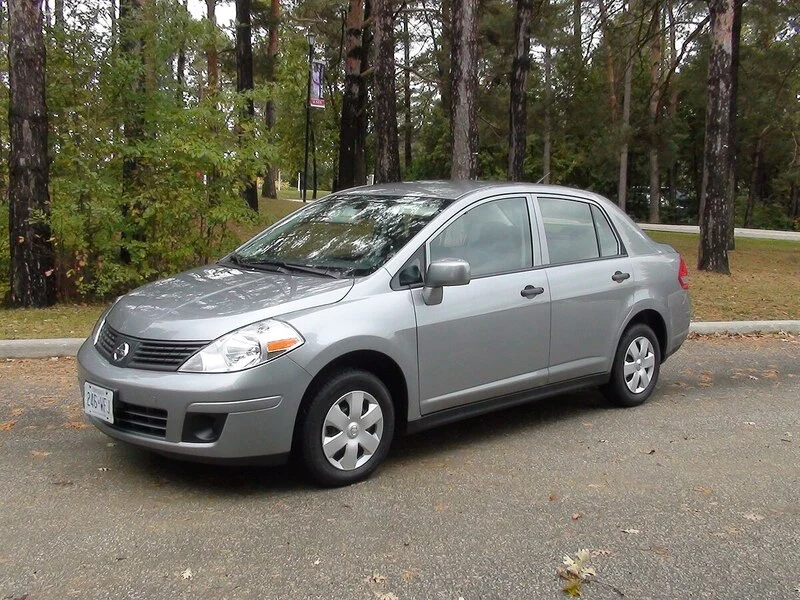
- Steering looseness and column noise.
- Premature front strut and mount wear (clunking noises over bumps)
- Fuel pressure sensor failure (causing poor fuel economy)
- Electrical issues (blown fuses, power window failure, faulty key fob operation)
- The faulty EVAP canister purge valve
- Excessive brake pads and rotor wear (vibration and squealing noise during braking)
4) 2012 Nissan Versa
The 2012 Nissan Versa is the very first model year of the second generation. Back then, it came with new upgrades. Notwithstanding that, there were even more complaints reported with this generation. NHTSA cites nearly 779 complaints along with 10 major recalls, which clearly speaks to its reliability. Some of these reported issues and common faults are:
- CVT Transmission Failure around 70,000 miles (due to poor design and low-grade manufacturing material)
- Front suspension coil fractures (due to bad metallurgy and design problems against road salt)
- An airbag warning light pops up (either the airbag will not open properly or will fail to open in a crash).
- Electrical components malfunctioning (due to faulty harness in most cases)
5) 2014 Nissan Versa
2014 Nissan Versa years to avoid Model can proudly say that my batchmates had fewer complaints reported, which is still not less for you to buy, standing at 240 complaints collectively to NHTSA. In response to major issues, Nissan recalled this very model year if no less than, at least 4 times for major and 2 times for minor recalls. Much the same way, this generation had many analogous issues with its previous generation, which are:
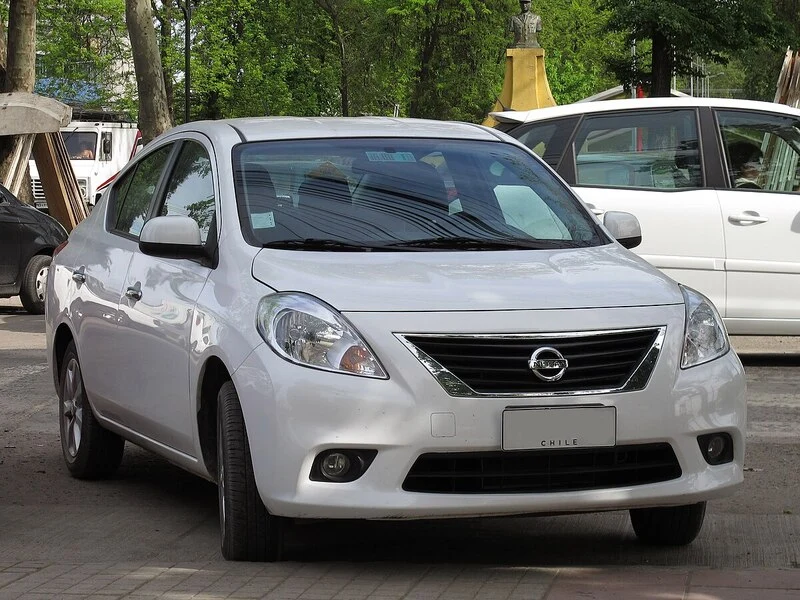
- Complete transmission failure around 90,000 miles (but before that, jerking, shuddering, and loss of power, all due to poor design in RE0F10A CVT unit)
- Brake pedal vibrations and noises (due to premature brake pad wear)
- Power windows failure (due to harness issues)
- Dashboard warning lights showing up with no reason (due to poor quality electrical connections)
- Struggling to start the engine (mainly due to water intrusion into wiring harnesses)
Best Nissan Versa Years So Far
After hearing so many good words, you will not even think of buying a Nissa Versa, but that’s not the case here. There are still many model years that had literally zero or single-digit NHTSA complaints, which makes them the best years so far:
- 2011 Nissan Versa
- 2013 Nissan Versa
- 2016 Nissan Versa
- 2018 Nissan Versa
- 2019 Nissan Versa
- 2020 Nissan Versa
Conclusion
No matter what model years you are buying, the most reliable or the worst of them. Just keep your eyes open and never blindly trust anyone without taking a proper test drive or getting it inspected by a professional expert.
Nissan Versa is a very versatile yet affordable compact sedan that still checks most features that you are looking for in a tighter budget. The only way to invest your hard-earned money into a Versa model is to avoid the above model years and ensure all these mentioned problems have been sorted out.
As experts suggest, you should invest wisely, especially when buying a used car, to know about Nissan Versa years to avoid. Nissan Versa is not only affordable but also fuel-efficient, yet with some highlighted issues with certain model years.
FAQs:
The Nissan Versa is an ideal vehicle for everyone due to its low fuel consumption and simple, roomy design, but it also depends on their individual preferences and affordability.
No, the latest Nissan Versa models are not available in a hatchback body style.
No, all three, the Nissan Pulsar, Versa, and Tiida, are the same. In 2004, Nissan released the Nissan Tiida for the Japanese market. The same vehicle was introduced in North America, the EU, and other regions as the Nissa Versa and Nissan Pulsar in 2007.
