
Saturn Vue Years to Avoid – Complete Reliability Guide for Buyers
The Saturn Vue was General Motors’ answer to a small SUV that would be affordable, practical, and yet have some rugged character. The first S.U.V. to bear the Saturn nameplate, it was made from 2002 to 2010 and shared some parts with other G.M. vehicles. Drivers loved its spacious cabin and carlike handling, but many model years also had a bad reputation.
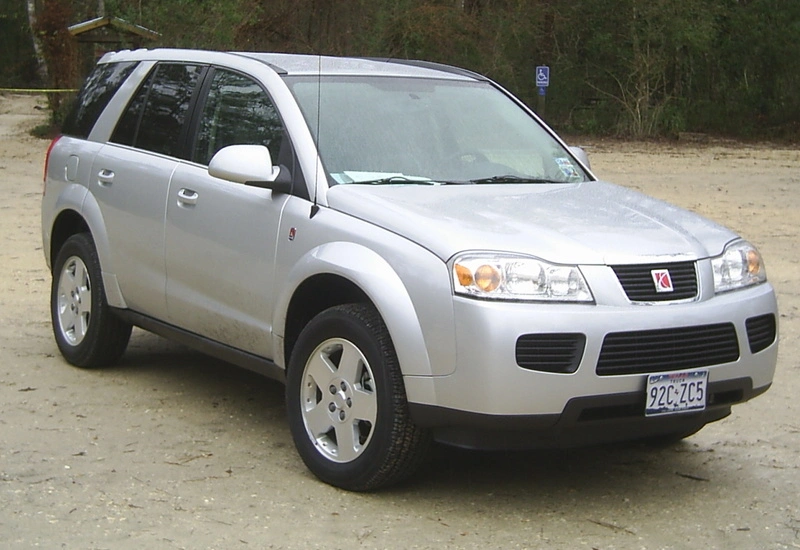
Early ones suffered from transmission failures, electrical glitches, and expensive repairs that hurt the Vue’s long-term reliability. Here in this guide, we’re going to explore which years of the Saturn Vue you should stay away from and what makes those particular model years bad, along with which ones are still good options on the used market today.
| Year | Verdict | Common Issues | Recommended |
| 2002 | Avoid | Transmission failure, recalls | No |
| 2003 | Avoid | Electrical & steering faults | No |
| 2004 | Avoid | CVT breakdowns, suspension wear | No |
| 2006 – 2007 | Good | Minor sensor issues | Yes |
| 2008 | Good | Improved reliability overall | Yes |
Why You Should Avoid Certain Saturn Vue Years?
GM brought the Saturn Vue to market in 2002 in response to increasing competition among compact sport utility vehicles. It was all style for the modern era, at a reasonable price, with a history of invention. Between cost efficiency and durability, Saturn struggled to find the balance point between these factors from 2002 to 2004. A lot of them experienced huge transmission and electrical issues with far less mileage than they anticipated. While at times problems were remedied by recalls and heightened warranties, the early Vues did solidify a sour reputation that continues to take its toll on resale to this day.
Here is a closer look at the problem years and just what went wrong.
2002 Saturn Vue
The 2002 Saturn Vue was a new model line, the first for the division, and it experienced some initial jitters. Saturn tried to stand out by introducing a new VTi (variable transmission) it claimed would provide smoother acceleration as well as better highway gas mileage. On paper, that was a breakthrough. It was a catastrophe in practice.
Many owners do not further beyond 50,000 to 70,000 miles before needing a new transmission. The CVT would also experience poor, jerky shifting, a loud whining noise during acceleration, and sudden power loss. Replacement costs were high, often running upwards of $4,000 to $5,000, which is nearly half the car’s resale value. GM eventually discontinued the transmission altogether following repeated complaints.
Safety was another weak point. The 2002 Vue scored only three out of five stars in some crash tests due mostly to structural deficiencies. Add this to reliability concerns, and the first model year is a pass if you’re in the market for a used Vue now.
2003 Saturn Vue
In 2003, Saturn tried to counteract some of the flak from the previous model year. Unfortunately, rather than provide a more reliable second-year model, the Vue continued to irritate owners. The sorry CVT transmission remained the only choice for four-cylinder cars and while it saw some software revisions, its physical deficiencies were not so easily edited.
The electrical issues were also more evident. Drivers complained of unresponsive dashboard clusters, malfunctioning ignition switches that prevented the vehicle from starting and battery drains due to shorted interior light circuits. The body control module (BCM) was a common cause, and when it went bad, symptoms included erratic instrument panel readings, fake warning lights and even no electrical function at all, no ignition power.
There were also problems with the steering column, including rattling, wobbling, and even intermediate shaft failure at times.
2004 Saturn Vue
For the 2004 Vue, it was also last call for the unreliable VTi transmission, and most of those failures still cropped up before 100,000 miles. Furthermore, even if GM were to offer additional warranty coverage on the transmission, many people have already drained all their transmission’s resources before reaching that point, or sold the vehicle out of sheer frustration.
But the problems didn’t stop with transmission woes; this model year was plagued by woeful engine mounts, loud suspension struts and early wheel bearing failure. The 2008-2010 Vue’s electric power steering system, developed to save weight and increase fuel efficiency, could fail if the motor corrodes over time, causing the vehicle’s steering to become either stiff or lose assistance altogether.
The interiors were a little more tailored, but there were remnants of cost-cutting. Plastic panels warped in the heat, and door handles snapped easily. Electricals never found their comfort zone, either, as there were still plenty of reports of flickering headlights and bad airbag sensors.
A major complaint for ’04 was driveability over the long term. Owners reported experiences of slow acceleration, rough idling and poor gas mileage that were typically the result of throttle body and sensor failures.
The 2004 Saturn Vue saw gradual cosmetic and creature comfort enhancements, but it still wasn’t able to shake the reliability issues of previous years. Couple this with the long-in-the-tooth transmission they no longer use and parts scarcity even today, and it’s not considered a good purchase in general.
Most Common Problems in the Saturn Vue
Transmission Failure
The Vue did have an Achilles heel, and that was the CVT (VTi) transmission – particularly on early models. Due to bad design and the frailty of its internal components, the system would frequently crash or simply burn out. Repairs or replacements can run between $3,000 and $5,000, one of the most expensive problems an owner faces.
Electrical System Failures
Electrical problems weren’t rare, particularly in the early Saturn Vues. The dashboard lights would flicker, the instrument cluster with its speedometer might fail, and airbag sensors would illuminate warning lights. Most of these are the result of shoddy wire harnesses and bad body control modules (BCM).
Suspension and Steering Problems
The Vues suffered from a suspension prone to premature wear, leading to clunking noises and uneven tire wear. “Many of these came in with failed strut mounts and control arm bushings. Some drivers experienced leaks, poor handling, and steering noise due to the failure of the intermediate shafts.
Corrosion and Structural Weakness
Certain Saturn Vues were also known to be susceptible to undercarriage rust and corrosion and particularly in regions that experienced cold winters. The subframe and suspension pick-up positions were modified for this purpose, which may introduce potential crash safety issues. Regular checks and treatment under-sealing can prevent the TOV tragedy in those who survive.
Airbag and Safety Sensor Faults
Another problem that surfaced repeatedly was safety systems breaking down. Failing air-bag sensors and pre-tensioners that did not lock seat belts in a crash led to warning lights being applied to the systems, and also periodic shutdowns. They often require expensive replacement and have prompted years-long recalls in some model years.
Best Saturn Vue Years to Buy
- 2006, 2007 and 2008: Saturn Vue Best possible Saturn Vue years Easily the best model year for the Saturn Vue is 06-08 due to some significant updates that came in these models.
- These versions had 3.5L V6 engines sourced from Honda with better response and less mechanical trouble than their predecessors.
- Transmission was also much more reliable as GM used a stouter automatic to cope with the weight of the SUV over its troublesome CVT.
- The 2007 Saturn Vue stands out for balanced performance, better fuel efficiency, and reduced owner complaints across reliability surveys.
- They did up the quality of the interior with better materials and such, made it a more modern feeling and less noisy inside and upgraded seating comfort, to make it feel a bit better built.
- Opt for one with full maintenance records and skip a first-generation CVT-equipped model from the early 2000s if buying used.
- Still, wager on the 3.5-liter V6, which is known for its long life and few drivetrain problems due to its durability.
FAQs:
Model year has a lot to do with reliability. Early examples (02-04) are very troublesome, whereas the newer version (06-08) is more trouble-free.
When it comes to the worst, the 2003 X-Type takes that honor thanks to a range of both transmission and electrical problems.
Maintenance costs are average, but repairs can get expensive if you suffer a broken transmission.
Most reliable is probably the 3.5-liter V6 engine from Honda.
Yes, but only if you pick a well-cared-for 2006–2008 car & confirm all recalls have been performed.
Conclusion
The Saturn Vue could be an excellent SUV, although it can very well depend on the year. The old designs between the years 2002 and 2004 were experiencing numerous problems regarding transmissions, electronics and even suspension hence it is better to avoid them. Models released between 2006 and 2008 particularly those that had the 3.5L V6 engine are far more reliable and driveable. Unless you are purchasing a new one, you need to ensure that the car has undergone quality maintenance and that all the recalls have been completed. These years have the best opportunity to buy a reliable SUV that will not disappoint.
