
The Strange Link Between Car Color and Crash Risk
When selecting a car, most consumers prioritize factors like fuel economy, reliability, and style. The color is usually seen as a purely aesthetic choice, reflecting personal taste or resale value. However, a surprising body of research suggests that a vehicle’s hue can subtly yet measurably influence its collision likelihood.
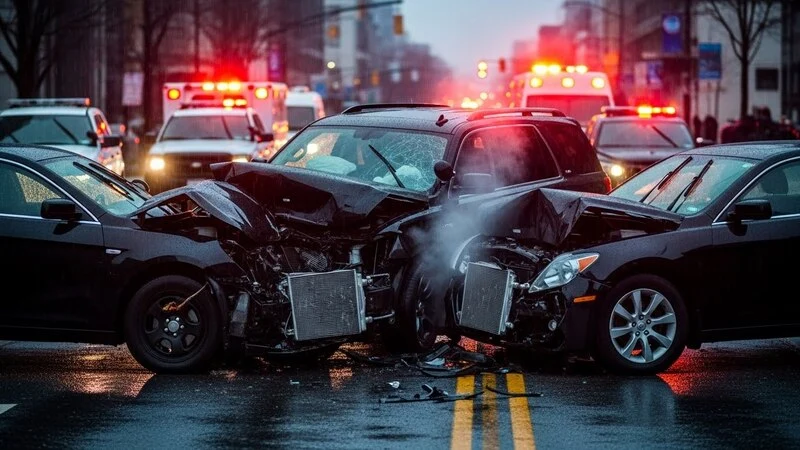
The link isn’t mystical or anecdotal; it’s rooted in the fundamental science of visibility and human perception. How well a car contrasts with its background, whether it’s a dark road or a bright sky, is a critical variable in how quickly and accurately other drivers can spot it and react to its presence.
This makes the color selection more than just a matter of fashion. It introduces a subtle element of passive safety that operates outside of mechanical or electronic systems. Understanding the correlation between shade and safety reveals the surprising dynamics that contribute to the overall car color crash risk.
Visibility Differences Across Colors
The core mechanism linking color to accident rates is conspicuity—how noticeable an object is within its environment. Lighter colors like white, yellow, and cream inherently reflect more light and maintain greater visual contrast against dark road surfaces, tree lines, and asphalt.
Conversely, dark colors such as black, deep gray, or navy blue absorb light rather than reflecting it. This absorption effect makes the vehicle visually “smaller” and allows it to blend seamlessly into shadows, asphalt, and other road features, effectively camouflaging the car.
Multiple studies consistently find that white cars have a statistically lower accident risk compared to darker vehicles. This isn’t due to superior driving skill among white car owners, but simply because the high contrast created by white paint ensures the vehicle is registered by surrounding drivers more quickly, allowing for vital reaction time.
How Lighting and Environment Affect Perception
The time of day and the surrounding environment dramatically amplify or mitigate the impact of car color. For dark vehicles, the danger increases exponentially during periods of low natural light, specifically at dawn and dusk. In these transition times, a black or dark grey vehicle can effectively disappear into the blending sky and shadowy landscape.
Studies have shown that black vehicles, which may only carry a slightly higher risk in bright daylight, can be up to 47% more likely to be involved in a collision during twilight hours compared to the safest colors. This significant jump highlights the profound effect of low contrast under adverse lighting conditions.
Furthermore, environment matters. A dark green car blends into wooded areas, while a grey car can disappear entirely in heavy rain, fog, or against a cloudy sky. The greatest safety benefit comes from colors that provide maximum contrast against the most common backdrops encountered by the vehicle.
Psychological and Behavioral Factors
Beyond simple physics, some theories explore how car color affects both the driver of the colored car and the drivers around it. Red cars, despite being bright, sometimes show a slightly elevated crash risk, which researchers suggest may be due to psychological association.
Red is often associated with speed, aggression, and high-performance vehicles, which may lead the owner to drive more aggressively. Conversely, drivers observing a red car might subconsciously perceive it as traveling faster or being driven more recklessly, subtly influencing their own reaction times and caution levels.
While the data on behavioral influence is mixed and less conclusive than visibility data, it suggests that the choice of color isn’t just seen in isolation. The color carries cultural and psychological connotations that can influence split-second decisions on the road, adding another layer of complexity to accident causation.
Research Showing Higher or Lower Risk Patterns
The most robust research, such as key studies conducted by the Monash University Accident Research Centre, establishes a clear hierarchy of risk based on color. Black is routinely identified as the riskiest color, followed by dark grey, silver, and blue. The safest colors tend to be white and yellow.
For example, compared to white vehicles, black cars have been associated with a 12% higher overall crash risk, while grey and silver often follow closely behind. However, these figures are just averages, and the risk disparity is greatest in poor visibility conditions, underscoring that color is a visibility multiplier.
It is important to note that a few studies have offered contradictory data, such as some suggesting silver might be highly visible and safer. These discrepancies are generally attributed to differences in methodology, geographical location, or failure to control for crucial confounding factors like driver age or vehicle type, but the consensus points overwhelmingly toward the benefit of high-contrast colors.
The color of a vehicle is undeniably one of the smallest factors influencing accident risk, dwarfed by driver behavior, speed, and weather. Nevertheless, the link revealed by large-scale traffic data confirms that color plays a subtle but real role in passive safety.
The fundamental principle remains: visibility is safety. Lighter and brighter colors reflect ambient light and create superior contrast in almost all conditions, giving other drivers an extra moment to perceive, process, and react to the vehicle’s presence.
Ultimately, while no paint job can compensate for distracted or reckless driving, understanding the car color crash risk provides a small, additional piece of information for consumers seeking to maximize their vehicle’s safety profile.
