
Expert Tips to Interpret RD Interest Calculator and FD Interest Calculator Results
Numbers on a calculator screen look simple enough. Enter the amount, rate, and tenure. A figure pops up. Done.
Except it is rarely that straightforward once the actual decision-making starts.
Most people use an RD or FD interest calculator once, look at the maturity amount, and make a decision based purely on that single number. What they miss is everything sitting underneath it. The compounding frequency, the tax impact, the real purchasing power of that maturity amount years from now, and whether the rate being used is even the right one to enter.
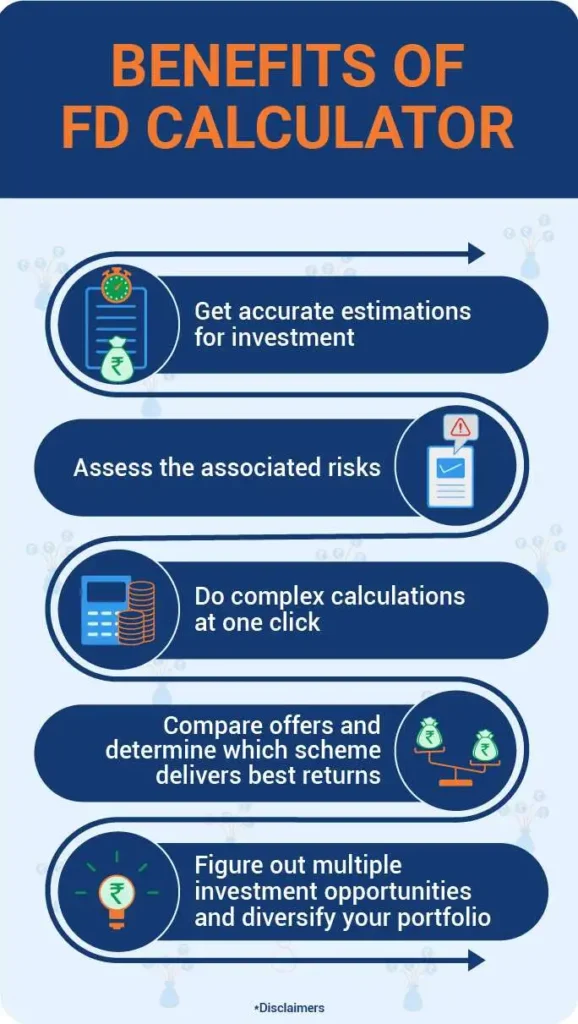
Here is how to properly read those results.
Understand What the Maturity Amount Is and Is Not
The first number shown by every calculator is the maturity amount. It is also the number most people fixate on entirely.
But the maturity amount alone tells only part of the story.
It does not account for tax. It does not reflect inflation. It does not show whether the same money deployed elsewhere would have grown more or less. It is just the gross figure before any of those real-world factors are applied.
Think of the maturity amount as a starting point for interpretation, not the final answer. Everything else builds on top of it.
Check the Compounding Frequency Before Trusting the Rate
This is something a lot of people gloss over, and it makes a genuine difference to the final number.
Banks and post offices compound interest at different frequencies. Quarterly compounding is the most common for FDs in India. Some instruments compound annually. Some monthly. The stated interest rate looks the same across all of them, but the effective yield is different.
An FD interest calculator typically asks for the compounding frequency as a separate input. If the wrong frequency is entered, the maturity figure will be off, sometimes by a noticeable amount over a longer tenure.
Before entering any numbers, check with the bank or the scheme document how often the interest is compounded. Use that figure in the calculator. The difference between quarterly and annual compounding on a 7 lakh deposit over 5 years is not trivial.
Compare the Effective Annual Yield, Not Just the Stated Rate
Two FDs can both advertise a 7% interest rate and still produce different returns. The compounding frequency is one reason. The payout structure is another.
A cumulative FD reinvests the interest and pays everything at maturity. A non-cumulative FD pays interest monthly, quarterly, or annually and returns only the principal at maturity.
An FD interest calculator shows different maturity amounts for these two structures on the same deposit. The cumulative option almost always produces a higher maturity figure because interest keeps compounding. The non-cumulative option gives regular income but sacrifices some of that compounding benefit.
Neither is universally better. It depends on whether regular income is needed or whether the goal is a maximum corpus at maturity. But knowing the difference before deciding matters.
Apply Tax Before Calling It a Final Number
This is the step that catches people off guard most often.
Interest earned on FDs and RDs is fully taxable in India. It is added to the total annual income and taxed at the applicable slab rate. Someone in the 30% bracket loses nearly a third of the interest earned to tax. The maturity amount the calculator shows assumes none of that has been deducted.
Run a quick post-tax calculation after getting the calculator result:
- Identify the total interest earned, which is the maturity amount minus the principal
- Apply the tax rate applicable to the situation
- Subtract that tax from the interest figure
- Add the remaining interest back to the principal for the real take-home amount
That post-tax number is what actually lands. Planning around the pre-tax figure is one of the more common and avoidable mistakes in fixed income investing.
Use the RD Calculator Differently From the FD Calculator
An RD interest calculator works on monthly contributions rather than a lump sum. The interest calculation differs because each monthly instalment earns interest for a different number of months, depending on when it was deposited.
The first instalment earns interest for the full tenure. The last instalment earns interest for just one month. The calculator averages this out automatically, but it is worth understanding why the effective return on an RD is slightly lower than that of an FD with the same tenure and rate.
If comparing an RD against an FD, do not rely solely on the stated rate. Look at the actual maturity amounts produced by each calculator for the same total investment. That comparison tells the real story.
Factor in Inflation for Any Tenure Beyond Three Years
A 5-year FD that grows from 5 lakhs to 7 lakhs looks solid. But if inflation runs at 6% annually over that period, the purchasing power of that 7 lakhs is considerably less than what 7 lakhs buys today.
A good calculator allows an inflation rate input and shows the inflation-adjusted maturity value. Use it for any deposit with a tenure of 3 years or more. The result is often sobering, but it is the honest picture.
Fixed-income instruments are not wealth builders in the traditional sense. They are stability tools.
Knowing their real return after inflation helps set the right expectation and builds a more balanced overall portfolio around them.
The Bottom Line
An RD interest calculator and an FD interest calculator are useful tools. But the number they produce is a starting point, not a conclusion.
Post-tax returns, compounding frequency, inflation adjustment, and a proper comparison between cumulative and non-cumulative options together give the complete picture. Use all of it before committing to a tenure and an amount.
