
Toyota Sienna Years to Avoid: What to Know Before You Buy
Toyota has been in the automobile business for nearly nine decades now, and they have always had their finger on people’s pulse, meaning they truly understand their needs, and this is wholly reflected in their engineering and design philosophy; however, there are still some Toyota Sienna years to avoid.
With a proven history of producing the world’s most reliable vehicles, Toyota has never given the slightest margin of doubt in its reliability. The Japanese automaker is globally known for innovating newer technologies and adapting to global standards.

As a result of that, Toyota launched the Sienna as the replacement of the Toyota Previa, which was their US-market rear-wheel-drive minivan. Instead of two petrol engines and diesel configurations, the Toyota Sienna comes with a 3.0-litre 1MZ-FE V6 petrol engine. In this article, we will discuss the Toyota Sienna years to avoid and the reasons behind them.
Quick Comparison of Toyota Sienna Years to Avoid
Here is the table showing the Toyota Sienna years to avoid:
| Model Year | Main Issues | Total NHTSA Complaints | Notable Recalls | Why to Avoid |
| 2004 | Sliding doors, brake wear, steering rack, corrosion | 2,054 | Spare tire cable corrosion | Most complaints, multiple safety-related problems |
| 2007 | Rough shifting, steering noise, sliding doors | 394 | Shift lock solenoid (600,000 units) | Transmission and steering reliability issues |
| 2011 | Suspension wear, oil leaks, dash cracking, shudder | 674 | VVT-i oil hose, dashboard surface | High repair costs, serious engine and transmission faults |
Toyota Sienna Years to Avoid
The Toyota Sienna has been incredibly successful in sales and reliability aspects. The current fourth-generation has a hybrid-only 2.5L engine setup with two electric motors, which makes it possible to achieve a fuel consumption of 36 mpg in combined.
Over these years, the Toyota Sienna has had an incredible, controversial history, where many owners were quite happy with its reliability and where a lot many reported reliability concerns with this minivan.
However, if you are planning to buy a used Toyota Sienna, you should definitely consider avoiding certain model years that were known for their poor reliability. Here’s our most comprehensive research about the model years of the Toyota Sienna to skip based on owner reports and official recalls:
1. 2004 Toyota Sienna
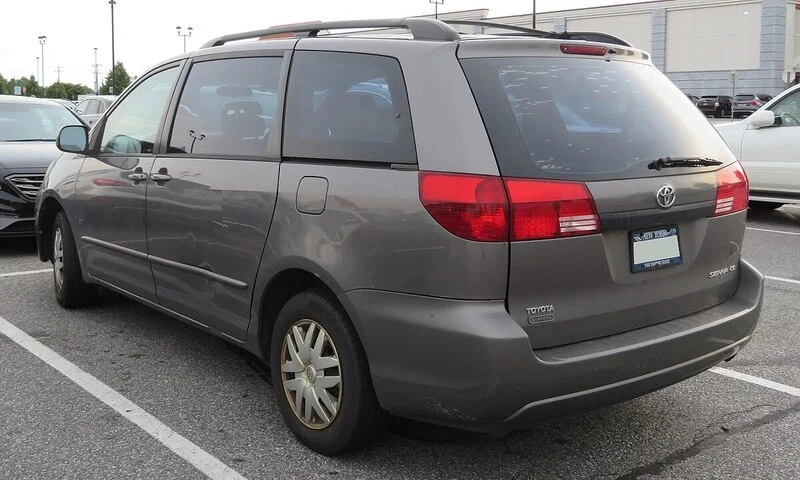
The first generation of the Toyota Sienna had three variants (CE, LE, and XLE). All trim levels had the same six-cylinder 3.0-liter gasoline engine, except for the major difference in seat configurations. The 2004 model has the most reported issues and complaints to NHTSA. Some of the common reasons to avoid this model are:
Sliding Doors
Many owners reported sliding door malfunctions with their 2004 Toyota Sienna. These malfunctions include the sliding door getting stuck, excessive force required to open it (in manual doors), or the latch not closing properly. The main cause for these issues was the power motor, door latch cables, and hinges (in manual doors).
Brake Problems
The 2004 Toyota Sienna had a very common problem with their brake pads wearing out way more prematurely than the recommended service interval (i.e., 20,000–30,000 miles). Another common issue is a grinding nose, vibrations during braking, and longer stopping distances. Poor quality brake pads, along with rotors and callipers, were the main culprit. But that’s not it, the actual cause is the inadequate design, which causes insufficient cooling and uneven wear.
Steering Issues
The 2004 Toyota Sienna reportedly has an issue with the steering rack where the bushings will wear out sooner than expected, along with tie rods causing the steering to vibrate or make clunking noises (at low speeds or when turning). Besides that, many owners reported the oil leaks from the power steering pump, which makes steering harder. More than 56 complaints were reported to NHTSA regarding the steering issue.
Spare Tire Carrier Corrosion
Specifically, the 2004 model had issues with the spare tire carrier where the cables were corroded, and caused the detached tire to hit other vehicles during highway trips. The main reason for this was the exposure to road salt in salt-heavy states (Connecticut, Illinois, and others), along with an improper place for the spare tire. The dealerships called for a recall in 2010 for affected models from 2004 onwards.
Reasons to Avoid the 2004 Toyota Sienna
One of the main reasons to avoid this model is the highest number of complaints reported to NHTSA, which adds up to 2,054 in total, and multiple recalls make 2004 the worst Sienna year. And, the critical components had major issues such as brakes, doors, and steering. All of these repairs can recur and are costly to repair every time.
2. 2007 Toyota Sienna
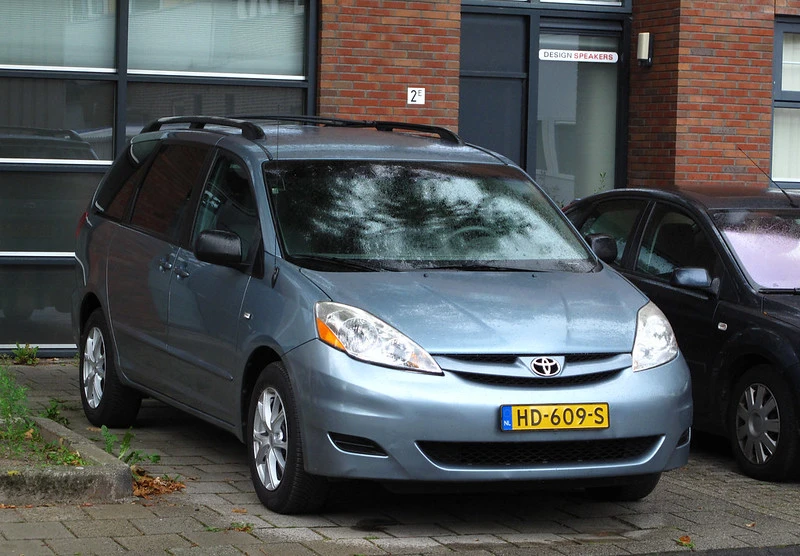
The 2007 Toyota Sienna came with Toyota’s most rugged and reliable 3.5L V6 (2GR-FE) engine, producing 266 hp, which was a major performance upgrade. Besides that, major safety features were added, such as Vehicle Stability Control (VSC) and side curtain airbags. Not only that, the automatic transmission was greatly refined to ensure smooth shifting. However, there were still some major issues, such as:
Rough Shifting Issue
One of the pressing issues with the 2007+ Toyota Sienna was its automatic transmission, which behaved roughly. The main faced issue is rough shifting along with gear slipping, jerking while acceleration, and in some cases, the complete failure. The premature wear of the six-speed automatic transmission was the clutch packs and the torque converter. In some cases, valve body malfunctions lead to jerky shifting. Nearly 51 reports were received by NHTSA related to automatic transmission.
Steering System Issues
One generation later, the Toyota Sienna still has issues with its steering rack. Many owners reported vibration and clunking noises while turning the steering wheel. Again, the steering rack bushings, tie rods, and wheel alignment were the main cause of the mentioned issues and of wheels pulling towards one side. NHTSA received at least 28 complaints for the 2007 Toyota Sienna alone for steering issues.
Sliding Door Malfunctions
Another common reported issue with the newer generation is the power sliding doors. In some cases, the doors would completely stick or fail to open/close. While a few owners reported that doors were making grinding noises, another group of them reported that doors not responding to controls. Collectively, 215 complaints were reported to NHTSA.
Shift Lock Solenoid Issue
A few owners of the 2007 Toyota Sienna reported that their vehicle was able to shift out of “Park” mode without pressing the brake pedal, which is due to a faulty solenoid, responsible for holding the shifter in a certain position. Nearly 600,000 Siennas were recalled for this solenoid replacement.
Reasons to Avoid the 2007 Toyota Sienna
Transmission and steering systems are considered the backbone of any automobile, as is the case for the Toyota Sienna. These issues were reported many times by owners on forums, and 394 complaints were reported to NHTSA. Not only that, a major recall for the model affecting nearly 600,000 units.
3. 2011 Toyota Sienna
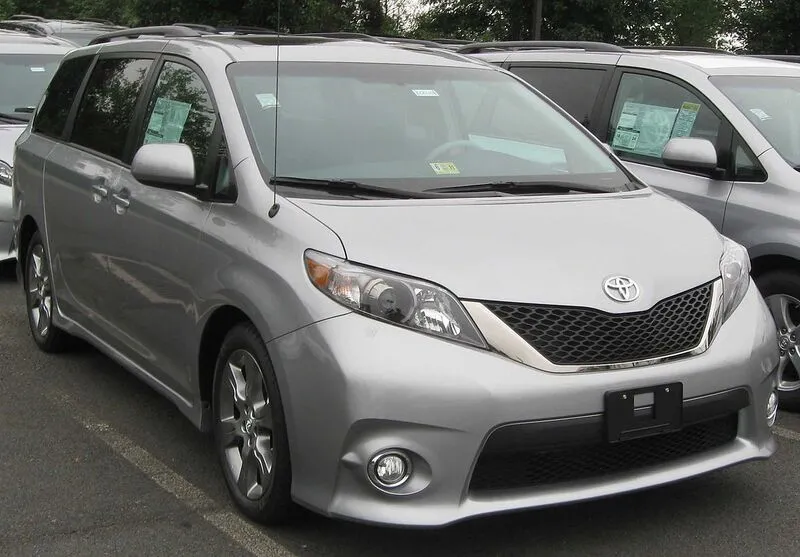
This generation of the Toyota Sienna years to avoid had major design changes, where the traditional minivan was replaced with a modern, sleek, and more aggressively aerodynamic minivan, with a slight additional engine option, 2.7L 4-cylinder (1AR-FE), only to improve the fuel economy. However, problems also did not leave this model year alone; some of them are:
Suspension Problems
A considerable number of owners faced the major issue with the suspension (mainly struts, shocks, and control arms), where these components wore out way earlier than expected. The reason for suspension failure is the poor build quality of the suspension and the vehicle’s heavy body weight. This failure led to issues like unstable handling and uneven tire wear.
Engine Oil Leakage Issues
Most of the owners of Toyota Sienna with a 2GR engine have experienced the engine oil leakage; oil spots under the car, burning smell of oil, low oil warning, and, in cases, knocking noise. The most common reason was that the oil supply hose in Variable Valve Timing-i (VVT-i) was made of rubber, and the material would degrade due to extreme heat in the engine compartment.
Dashboard and Interior Trim Cracking
Interior cracking is the most convincing reason to avoid this model year, where the owners reported the dashboard getting cracked and even melted. The issue was in the manufacturing, where the engineers were used to a slightly less solid plastic, considering the moderate weather in the U.S. It was more often reported with Siennas being under the sun for a long time. However, that should not happen, as the vehicles are designed to operate under harsh conditions.
Torque Converter Shudder
Owners recorded at least 174 reports to NHTSA, where their Toyota Sienna was shuddering (and even vibrating) at speeds from 25–45 mph. Precisely, this issue was associated only with the 6-speed automatic transmission. If you want to buy a Toyota Sienna, take it for a drive and observe if any issues appear before making a deal.
Reasons to Avoid the 2011 Toyota Sienna
The only reason to avoid 2011 is its unreliable reputation, as 674 reports were received by NHTSA. If you are still buying this 2011 model, be prepared to deal with issues with the torque converter, dashboard cracking, and the expensive repair costs, too.
Final Thoughts
Last but not least, the Toyota Sienna has proved itself to be quite a reliable and family-friendly minivan. However, some of its model years did not live up to the reliable expectations from Toyota. Toyota Sienna years to avoid, such as 2004, 2007, and 2011, had the most issues reported by thousands of owners, and dozens of recalls, making them the most unreliable model years.
