
Vehicle Stability Control vs. Anti-Lock Brakes: Understanding the Differences
Vehicle safety features significantly reduce accident risks, with Vehicle Stability Control (VSC) and Anti-lock Braking Systems (ABS) being among the most essential technologies. Each plays a crucial yet distinct role in ensuring vehicle control during various emergency situations. Familiarity with their differences allows drivers to effectively utilize these features, enhancing safety and reducing the likelihood of accidents.
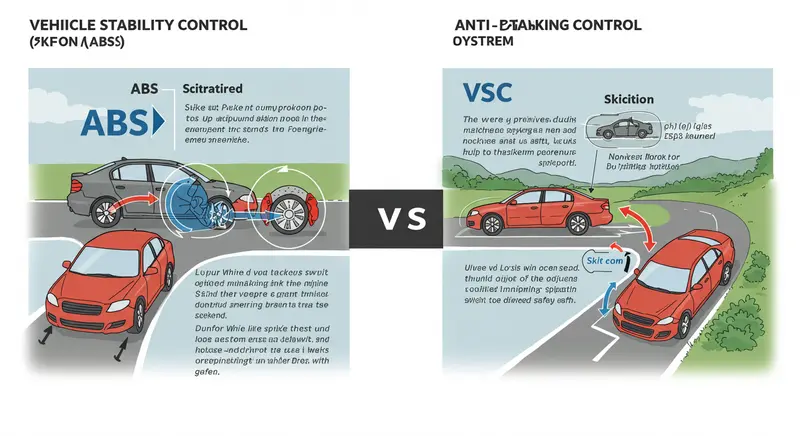
Although both systems aim to improve driver safety, VSC primarily addresses vehicle stability and control, especially during maneuvering or cornering. In contrast, ABS specifically targets braking, preventing wheel lock-up during hard braking scenarios. Clarifying the differences and complementary roles of VSC and ABS provides drivers with the knowledge to use these features effectively.
Comparison of Vehicle Stability Control and Anti-lock Braking Systems
| Aspect | Vehicle Stability Control (VSC) | Anti-lock Braking Systems (ABS) |
| Primary Function | Prevents skidding and rollover by maintaining directional stability | Prevents wheels from locking up during hard braking, preserving steering control |
| Activation Scenario | Loss of traction or control during cornering, evasive maneuvers, or sudden lane changes | Sudden braking on slippery, uneven, or challenging surfaces |
| Key Benefit | Reduces risks of rollovers, spinouts, and side collisions | Enables steering control during emergency braking, reducing crash likelihood |
| Limitations | Relies on adequate tire traction; cannot overcome extreme speed or poor driving decisions | May slightly increase stopping distances on loose gravel or snow-covered roads |
| Complementary Role | Maintains vehicle stability during complex maneuvers, complementing braking systems | Maintains steering and control during sudden braking situations, supporting VSC |
How Vehicle Stability Control Works
Vehicle Stability Control, often referred to as Electronic Stability Control, operates by continuously monitoring the driver’s steering input and vehicle movements through advanced sensors. When a discrepancy between intended direction and actual vehicle trajectory is detected, VSC intervenes, applying brakes individually to specific wheels.
This selective braking helps correct oversteer or understeer conditions, stabilizing the vehicle quickly and efficiently. VSC typically integrates with traction control systems, maximizing effectiveness in diverse driving conditions, such as slippery roads or abrupt steering maneuvers. By automatically responding to threats of instability, VSC greatly reduces the risk of accidents, particularly rollovers and side-impact collisions.
Understanding Anti-lock Braking Systems (ABS)
Anti-lock Braking Systems prevent wheels from locking during intense braking, helping maintain directional control even under urgent stopping scenarios. When sensors detect wheel lock-up due to sudden braking, ABS rapidly modulates brake pressure, allowing the wheels to rotate intermittently.
This mechanism helps the driver retain steering control, significantly improving the vehicle’s ability to avoid collisions. ABS excels particularly on slick surfaces, such as wet roads or ice, by reducing skidding and shortening stopping distances compared to locked-wheel braking. It provides critical support, enabling safer navigation and better collision avoidance during emergencies. In situations where accidents still occur despite using ABS, reaching out to the number 1 rated Los Angeles car accident attorney serving Rose, Klein & Marias LLP can help drivers deal with complex legal scenarios and secure fair compensation.
Situations Where VSC Excels
Vehicle Stability Control proves most effective during scenarios involving sudden steering adjustments, evasive maneuvers, or aggressive cornering. When a driver must swerve rapidly to avoid an obstacle, VSC automatically stabilizes the vehicle, significantly reducing the risk of loss of control.
High-speed highway situations or curvy roadways also highlight the benefits of VSC. Quick lane changes or abrupt directional shifts become safer as the system mitigates skidding, spinouts, and rollovers, ensuring drivers maintain maximum control and confidence in their vehicle’s handling capabilities.
Importance of ABS in Emergency Braking
ABS is particularly beneficial during emergency braking scenarios, where quick reaction and steering precision are essential. On slick, uneven, or gravelly surfaces, wheel lock-up typically leads to skidding, loss of control, or increased stopping distances. ABS mitigates these issues by maintaining wheel rotation, ensuring the driver can steer around obstacles effectively.
This technology provides invaluable assistance during abrupt stops, significantly reducing collision likelihood in congested or hazardous traffic situations. ABS ensures a higher degree of vehicle control, improving driver response and increasing overall safety during emergency braking events.
Recognizing System Limitations
Vehicle safety technologies like Vehicle Stability Control (VSC) and Anti-lock Braking System (ABS) enhance driving safety, but they are not foolproof. Understanding their limitations helps drivers use them effectively and avoid over-reliance. Key considerations include:
- VSC depends on tire condition – Worn or underinflated tires reduce grip, limiting the system’s ability to prevent skidding.
- Speed and reckless driving impact VSC effectiveness – Excessive speed or aggressive maneuvers can exceed VSC’s ability to maintain control.
- ABS does not shorten stopping distances – While ABS helps maintain steering control, it may slightly extend stopping distances, especially on slippery roads.
- Cautious driving remains essential – Even with advanced safety features, responsible driving is necessary to prevent accidents.
Recognizing these system limitations allows drivers to make informed decisions and drive safely in all conditions.
Maintenance for Optimal Performance
To ensure maximum effectiveness, both VSC and ABS require regular maintenance. Routine checks of brakes, tires, sensors, and related components are essential for reliable system performance. Adhering to manufacturer recommendations, including timely inspections and replacements of worn parts, plays a crucial role in maintaining these systems.
Warning lights that indicate potential malfunctions in VSC or ABS should never be ignored. Delays in repairs can significantly compromise system functionality, putting drivers at risk. It is vital to address any warning signals promptly to ensure continued safety.
Regular servicing is key to keeping these advanced safety systems operational when most needed. This practice helps preserve driver confidence and overall safety on the road. Consistent maintenance allows for optimal performance, enhancing peace of mind while driving.
Maximizing Safety with Advanced Technology
Vehicle Stability Control and Anti-lock Braking Systems are essential in contemporary vehicle safety, each addressing specific driving risks. Comprehensive knowledge of their capabilities, operational scenarios, and limitations allows drivers to confidently leverage these technologies, significantly enhancing road safety.
Effective use of VSC and ABS, combined with careful driving habits and diligent maintenance, creates the best defense against accidents. Awareness and proactive behaviors, supported by these advanced systems, ensure that motorists remain safer across various driving conditions.
