
Why Do So Many Americans Believe That Car Payments Are Just a Normal Way of Life?
Over the last century, the culture of car payments in America has greatly evolved from a valuable service, mainly influenced by combined factors such as limited public transport, economic developments, consumer buying power, and more importantly by investing entities.
Since the country is so large, there was a constant lack of decent public transport in the last few decades. Therefore, having a car become more of a need than a passion for most Americans. In today’s blog, we will plunge to see what, how, and when financing became a thing in the automotive industry.
How Car Financing Became the Standard in the U.S.
In 1910, Arthur J. Morris, an attorney, established the first-ever financial institution named Morris Plan Bank in Norfolk, Virginia, with an aim to let the working class have access to credit. His banks were the first to introduce the term “installment credit” which lets borrowers repay their loans through regular affordable installments.
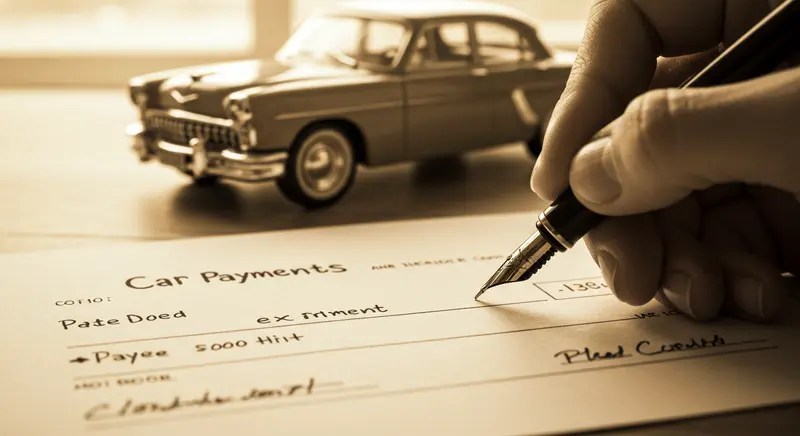
Morris was a trailblazer who broke new grounds, and for less than a decade, General Motors recognized the potential and came up with a brilliant idea of car financing. The company started financing their vehicles in installments to their customers, which made automobiles more accessible to a broader audience — making it a common commodity. This is one of the main reasons behind your question; why do so many Americans believe that car payments are just a normal way of life?
The Role of Consumerism and Lifestyle Marketing
Consumerism simply means considering more consumption of certain good products in favor of consumers’ interest, that have a positive impact on the economy. America witnessed a huge boom in the automotive industry after World War II, becoming a status symbol.
Car manufacturing companies took advantage of this phenomenon and started capitalizing more on their products by marketing them as desirable lifestyles. For instance, an old company Packard advertised their cars as heavenly products and portrayed them as more affordable luxury for the middle class.
Even today, luxury brands such as BMW or Mercedes-Benz market their products as lifestyle products, which surely plays a big role in shaping what people want. These luxury brands are also fully aware that their highest number of consumers are now younger people.
Therefore, instead of focusing solely on the luxury lineup, they focus more on affordability, inclusivity, sustainability, and modern technology. Even though Mercedes’ recent partnership with East Side Golf is clear evidence that these companies want to keep connected with multicultural communities and younger audiences.
Psychological and Social Reasons Behind Monthly Car Payments
The most interesting part is the people’s preference to opt for monthly car payments rather than full ownership — which we believe more greatly influenced psychological and social factors. Here’s an exploration of these factors:
The Perception of Monthly Payments vs. Full Ownership
As per Gallup Poll survey last year, nearly 54% of Americans self-identified as middle class, including lower-middle and upper-middle classes, whose income ranges from $40,000 till $200,000 annually — where almost every preferred car monthly payments as a more manageable approach to acquiring a vehicle than investing in it completely.
That’s not it, this financial strategy saves them from higher upfront costs and gives them access to newer models. Psychologically, the concept of monthly payments gives immediate gratification, which makes individuals enjoy new cars without paying in full, cash for full ownership to avoid an instant financial burden over a longer time.
Keeping Up with Newer Models and Social Status
As the automobile industry is developing spontaneously, new technology and newer car models are coming out more often, which people see as a status symbol. In layman’s terms, this means many buy new cars not just for their features but to show off their success. And, this idea is called conspicuous consumption — buying things to impress others.
That’s not it, the concept of keeping up with newer models is somewhat connected with how trends are spreading in society. According to the diffusion of innovations theory, new products become popular in different stages. The first ones to buy them are called early adopters, who are trendsetters and influence others to follow their lead. So, when they get the latest car, it makes others want it too.
The Fear of Driving an Older, Paid-Off Car
Mostly Americans negatively perceive older cars with reliability, safety, and social perception, even if they are in their fully paid ownership. This cognitive bias is called the endowment effect — where individuals think that their higher value items will diminish over time. In this mindset, they go over and over again and buy newer models and trade in old models.
But even if you do not follow this, the social status and peer influences will make you upgrade to a newer model to not be associated as someone who drives an old 1995 Lexus LS400 but a new BMW 3 Series.
Breaking Free from the Car Payment Cycle
If you are someone who wants to save a decent amount to invest, then you should certainly break yourself free from the car payment cycle. This is the very first and pivotal step toward financial independence.
Recurring car installments are not your thing because these vehicles are depreciating assets that lose value over time. By adopting strategies such as purchasing used cars, or paying full cash, can help individuals avoid falling into the pitfalls of perpetual car debt.
How Buying Used Cars Can Save Thousands?
If you choose to buy a used car instead of a new one, it can save you a lot of money. You might be thinking how-so, newer cars lose their initial value more quickly in the first few years — which simply means you pay for a product that has a higher price but won’t be worth in a couple of years.
On an average, a new car costs about $47,000, while a good used one with decent miles could range from $20,000 to $27,000 — potentially saving you $20,000 or even more in savings, Since mostly modern cars have decent safety feature, reliable engines and strong suspension which can make them last over 200,000 miles, so buying used can still get you a reliable vehicle for much less.
The Benefits of Paying Cash for a Car
- No Interest Payments: When you pay cash for the car, you can save potentially thousands in savings, and get rid of interest charges when financing that can add up over time. resulting in immediate savings.
- Avoiding Debt: When paying cash for a car, you freed yourself from recurring monthly payments and the stress of debt, and you instantly own the car outright.
Conclusion
You can break free from the car payment cycle. But, it begins with smart financing planning and a change in your mindset. Even with less cash in hand, you can get pretty decent used cars that are just a few years older, and save you thousands. By doing so, you can easily escape the burden of continuous car debt, which gives individuals long-term financial stability, greater financial freedom.
FAQs:
Most Americans think that new cars are expensive, they finance their cars because that allows them to afford newer models with easy monthly payments.
Buying a car with cash is always a better approach financially. It saves you from higher interest and debt collection. However, the best choice depends on your financial stability and long-term goals.
Car loans became common in the U.S. due to rising car prices and mainly due to aggressive marketing by lenders.
It will only limit your financial freedom and make it harder to save, invest, or afford.
