
Chevy 3.6 Firing Order: Full Diagram, Cylinder Numbering, and Maintenance Tips
Chevy’s 3.6L V6 is one of General Motors’ most popular and qualified to be used in any LS or LT car, with an ideal balance between performance and efficiency. You’ll find this engine in well-liked vehicles such as the Chevy Camaro, Equinox, and Impala, all of which continue to build a strong track record for reliability. But knowing the Chevy 3.6 firing order is imperative for anyone hoping to keep their performance on point, do some tune-ups, or troubleshoot misfires in the engine.
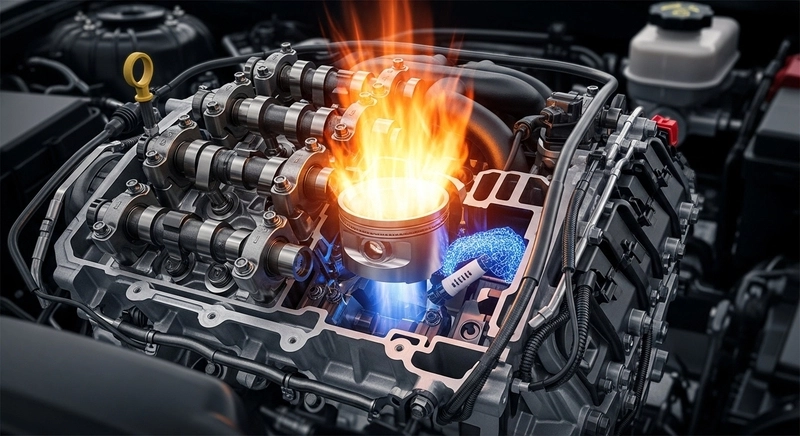
And in this article, we’re going to go over all that you need to know about the firing of the Chevy 3.6 engine, from its cylinder layout, bank arrangement, and compatible vehicle models down to some maintenance advice. In this article, we cover how you maintain your Chevy’s 3.6L engine for peak performance.
Why the Chevy 3.6 Firing Order Matters?
Knowing the Chevy 3.6 firing order can be an easy shortcut for when you need to troubleshoot your engine or want to maintain it yourself. The step-by-step format makes spark plug replacement, coil testing, and timing checks easy.
In addition to performance, Fuel Air Spark Technology says learning the firing order can help avoid costly examples of shooting oneself in the foot. One crossed wire or incorrect connection, and you can fry your ignition system and waste fuel, or even blow up the catalytic converter. Incorrect firing order results in loss of power, sudden stalling, and vehicle accident injury inccidents.
By keeping the firing order right, you will experience maximum efficient fuel burn, ideal ignition timing, and everything working in perfect harmony at any RPM.
Safety and Performance, What It Means Beyond the Motor
Now, most firing order conversations revolve around performance, but there is another aspect of an engine’s correct operation that often gets ignored: driver safety. An engine that misfires could lead to erratic stalling or power loss, situations which are potentially dangerous on the road, especially in congested traffic or inclement weather.
Whether it be between Chevy truck models or between a couple of different V6 powertrains, that is one place where the ignition timing must remain stable, since the timing is not going to help the engine if it cannot output enough stable power that exceeds its safe limits. And wrong ignition timing can cause random loss of power while passing, which could be deadly. A lot of drivers are not aware that technical problems such as misfiring could actually lead indirectly to road accidents.) If anything malfunctions and then causes an accident or injury, the need for a professional inspection promptly is essential, as well as contacting legal or insurance help if necessary to file vehicle accident injury claims.
By making sure your engine’s firing order matches the original factory specified sequence, you would be not only protecting your car engine but also improving personal safety when driving.
Chevy 3.6 Firing Order
The Chevy 3.6 firing order is also known as the Vortec 36; the 219 represents this engine’s displacement in cubic inches. The firing order for the Chevrolet V6 is 1-2-3-4-5-6. Both sides of the cylinder block are numbered as follows.
This is how the firing occurs in numerical order, with each cylinder firing one after another. It’s an unobtrusive firing order, one that delivers power in a smooth and orderly manner while providing excellent engine balance.
This ignition sequence is used on all of the most recent iterations of the GM 3.6L V6 powerplant, ranging from:
- LLT (2008–2012)
- LFX (2012–present)
- LY7 (2004–2011)
- LFY and LGX (more recently used in newer models)
Cylinder Numbering and Bank Configuration
To determine the firing order, you must know how the cylinders on your engine are numbered and arranged; see below. This is the GM 3.6L V6 motor; it’s a 60º V with two banks of three cylinders each.
Here’s the layout:
Driver’s Side (Bank 1 – Odd Numbers)
- Cylinder 1
- Cylinder 3
- Cylinder 5
Passenger Side (Bank 2 – Even Numbers)
- Cylinder 2
- Cylinder 4
- Cylinder 6
This cylinder layout is similar to what is recorded on some other six-cylinder engines, such as those inside the Nissan family (both in disposition and resemblance to the Nissan 5.6 Firing Order, which also focuses on balanced combustion and power delivery across banks.
How Does the 1-2-3-4-5-6 Firing Order Work?
On the Chevy 3.6L, the cylinders fire sequentially one after each other, for example, starting with Cylinder #1, then going down to Cylinder #6, and back up to Cylinder. This alternating fire pattern helps keep:
- Consistent power output
- Balanced crankshaft rotation
- Reduced engine vibration
- Smooth idle and acceleration
Unlike some older uneven-firing V6 engines, the even-firing design in GM’s 3.6L shifts the pressure balance evenly and helps enhance performance and reduce vibrations without adding complexity to manufacturing. This leads to a longer service life and less wear on engine parts such as the crankshaft, connecting rods, and valves.
Uses of the Chevy 3.6 Engine
It’s Not Just About the V6. There are a lot of good vehicles that have been powered by the 3-6L V6; it’s one of GM’s most versatile engines, appearing under the hood of Chevrolet, Cadillac, GMC, and Buick models. How to find my engine’s firing order. If you have one of those vehicles, 1-2-3-4-5-6 is the firing order for your engine. Chevrolet Models:
Chevy Camaro (RS and LT trims)
- Chevy Impala
- Chevy Equinox
- Chevy Traverse
Chevy Malibu (certain trims)
- GMC Models
- GMC Acadia
- GMC Terrain
Cadillac Models:
- Cadillac CTS
- Cadillac SRX
- Cadillac STS
- Cadillac XT5
- Buick Models:
- Buick LaCrosse
- Buick Enclave
Pontiac & Holden Models:
- Pontiac G6
- Pontiac G8
- Holden Commodore (VZ Series)
Because of this, the firing order is essentially the same as it is in all other LS-based engines, and we have interchangeability.
Common Misconceptions Concerning Firing Order
Problem Symptoms Table of Firing OrderIf the incorrect firing order is used, damage could occur to the engine. Early detection of these symptoms can save you from expensive damage. Typical problems include:
- Engine misfires or rough idle
- Loss of power or hesitation
- Increased fuel consumption
- Check Engine Light activation
- Unusual engine noises
How to Maintain a Chevrolet 3.6 V-6 Engine?
To help your battery continue to run, follow these essential maintenance tips:
- Replace Spark Plugs Regularly: Worn or dirty spark plugs can affect the firing order. Swap them out every 60,000 to 100,000 miles (model year and type of plug dependent).
- Maintain the Timing Chain System: While it’s not a belt, the chain will stretch, which is more stretching than it is wearing. Keep the oil system clean and run the correct viscosity to prevent timing chain tensioner problems.
- Clean Fuel Injectors: The injectors can misfire or fail to fire uniformly if there is a clog of carbon. Buy premium fuel or dump in injector cleaners every few thousand miles.
- Check Ignition Coils: Bad coils may lead to spark interruption in some cylinders. If you sense a misfire, check each coil to see that it is firing correctly.
- Regular Oil Changes: A contaminated or low level of oil will lead to hydraulic lifter noise, as well as timing chain stretch. The Chevy Traverse oil Type & change Guide for peak engine performance prevents normal lubrication & ensures good timing of the engine smoothly.
Advantages of Knowing Your Chevy 3.6 Firing Order
It’s not just mechanics who find it helpful to know the firing order of their engine; every Chevy owner can use this information! Here’s why:
- Identify the cause of misfires and rough idling in seconds.
- Cut your spark plug workload in half when swapping plugs, wires, or coils.
- Deliver maximum power and fuel efficiency.
Performance Insight: What Makes the 3.6L So Special
Chevy’s new 3.6L V6 used in the Camaro is a modern work of engine design art with the added benefit of an old-school deep racing heritage and racy, pain-peeling noise. Equipped with variable valve timing (VVT) and direct injection, the available muscle at this level is anything but compact. This engine provides a robust driving experience with fuel economy that doesn’t have to suffer.ENGINE= The engine ranges from 280-335 horsepower, depending on which model you choose, and offers strong acceleration without the compromise of fuel economy.
Combined with the right 1-2-3-4-5 Photo 6: With the proper firing order of 1-2, it works to create an exceptionally smooth and responsive engine that is as capable in traffic as it is on long open highways.
Conclusion
The order (1-2-3-4-5-6) is the firing order of a Chevy V6; Trust me, I own one. No matter if your car is an LFX, LLT, or LGX, knowing this order will keep it running better and cleaner with less maintenance.
So long as you maintain the proper cylinder layout and perform routine maintenance, your Chevy 3.6L engine can give you years of performance past the 200,000-mile point. Knowing a bit about the firing order can save on frustration and help you get your engine running as good as new!
FAQs
All Chevy 3.6L engines use the 1-2-3-4-5-6 firing order.
No. All 3.6L engines have the same firing order regardless of LS or LT and the kinds of changes that happen within.
Firing the wrong cylinder can cause misfires, loss of power, rough running, and possible engine damage.
If you take care of your vehicle and do routine maintenance, the Chevy 3.6L can easily give more than 200k miles, often reaching 300k+ miles.
