
From Accident to Claim Approval: How AI Car Damage Scanners Are Changing Insurance Workflows
For decades, insurance companies have processed auto claims the same way: a policyholder , an adjuster gets assigned, an inspection gets scheduled, and everyone waits. This sequence made sense when there were no better options. Today, there are. AI-powered car damage scanners are cutting through the inefficiencies that have defined insurance workflows for generations, turning a process that once took weeks into one that wraps up in hours. The insurers who have already made this shift aren’t just saving money, they’re winning customers who won’t go back to the old way.
How AI Car Damage Scanners Work
The technology behind car damage scanners merges computer vision, machine learning, and cloud infrastructure to give professional-grade assessment from normal smartphone photography.
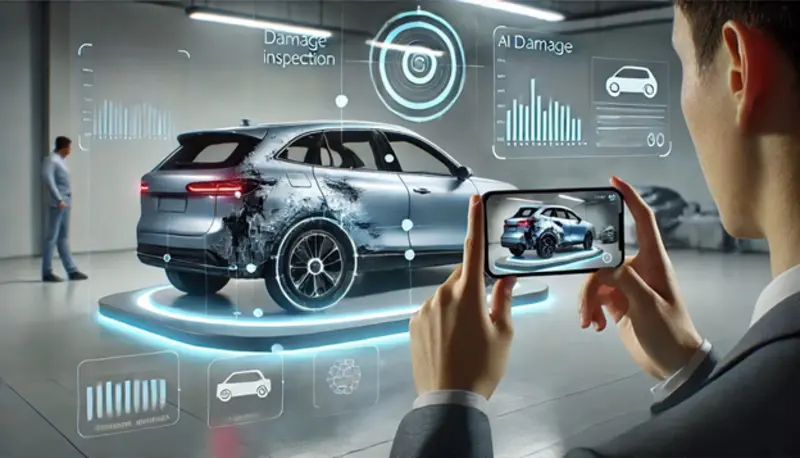
Photo Capture and Upload Process
Users capture vehicle damage following guided prompts from a mobile application. Real-time feedback flags quality issues like bad lighting, incorrect angles, not enough coverage before upload, instead of after, ignoring the delays that come from submitting documentation that cannot be used. Many users complete the whole process in just five minutes without any previous inspection training, as it is not needed. Images are uploaded immediately with the help of mobile data, helping with the analysis in just a few seconds.
Computer Vision Analysis
The images that are uploaded go through computer vision models that are trained with the help of millions of labeled vehicle damage examples with thousands of vehicle makes and models, under different real-world conditions. The analysis works at the pixel level, studying damage characteristics that casual visual inspection might miss. Unlike human review, which focuses attention selectively, the system covers the whole vehicle surface captured in the submitted photos without gaps.
Damage Identification and Classification
The AI identifies specific damaged components — panels, structural elements, glass, lighting assemblies, trim — and classifies both damage type and severity. The distinction between cosmetic damage addressable through paintless dent repair, moderate panel damage requiring bodywork, and structural damage requiring component replacement carries significant cost implications. Getting this classification right at the outset is what determines whether the downstream estimate holds up through the repair process.
Report Generation
Structured damage reports are created automatically within two to three minutes of submission. They also involve factors like component-level damage descriptions, severity ratings, repair methodology recommendations, and itemized cost estimates taken from current parts pricing databases and regional labor rate data. The consistent format is directly with downstream claim processing systems, eliminating manual transcription and the mistakes that come with it.
Transforming the Claims Process: From Accident to Approval
AI car damage scanners help by removing the sequential dependency that makes every stage wait for the previous stage to finish.
First Notice of Loss Automation
Mobile FNOL applications let policyholders document claims from accident scenes without waiting for business hours or call center lines. Automated intake takes in account the structured claim data, confirms receipt instantly, and triggers processing workflows without any human involvement. The policyholder leaves the scene by only taking the claim number, damage records that are documented, and transparency on next steps, removing the uncertainty that phone-based FNOL develops.
Instant Damage Documentation
Documentation that is made at the scene before vehicles are moved carries a lot of weight in comparison to documentation created days later, which cannot match. This benefits policyholders with legitimate claims and gives insurers stronger records when assessing complex or disputed situations. The timing of documentation matters as much as its quality.
Automated Assessment and Estimation
AI assessment creates repair cost estimates by matching identified damage with the databases of actual repair results from thousands of facilities. The systems account for parts availability, regional labor rates, and vehicle-specific repair needs. Industry data shows AI estimate accuracy reaching 90-95% in front of the final repair costs, a meaningful step up from the 75-85% typical of manual estimation, which has a higher variance between individual estimators.
Straight-Through Claim Processing
Claims meeting predefined criteria for complexity, liability clarity, and fraud risk are processed automatically from submission with the help of payment authorization without needing any human review. Straight-through processing rates of 40-60% for property damage claims show a huge change compared to the 5-15% achievable with the help of traditional approaches. For policyholders, this means same-day settlements instead of week-long waits.
Car Damage Assessment: Accuracy and Consistency
Effective car damage assessment needs more than speed, as it demands analytical consistency that manual processes have a hard time delivering at scale.
AI vs Human Accuracy Comparison
The accuracy gap between AI and manual assessment shows a structural difference instead of a marginal improvement. Human estimators bring expertise but also variability, like different training, different reference materials, and different levels of familiarity with specific vehicle types. AI systems apply identical evaluation logic, which is taken from analyzing millions of historical claims with known repair results. The result is 90-95% accuracy in comparison to final repair costs, compared to 75-85% for manual estimation, with significantly less variance across cases.
Consistent Evaluation Criteria
When two policyholders with similar damage get different assessments because different adjusters handled their claims, problems happen and follow. AI assessment removes that difference. Every claim and the process gets the same analytical treatment, creating defensible, reproducible results that decrease problem rates and build policyholder confidence and trust in the fairness of this process.
Reducing Downstream Errors
Mistakes in initial damage assessment propagate through the whole claims process. Components that are missed need supplemental requests when the repair process is going on, higher cycle times, and needing extra approval workflows. Companies that use AI assessment report supplement rates dropping 30-40%, reflecting the more in-depth damage capture that systematic analysis gives.
Fraud Detection in Claims Processing
Insurance fraud costs the U.S. industry $308.6 billion annually, according to the Coalition Against Insurance Fraud’s 2022 report. AI brings detection capabilities that manual review simply cannot replicate at the volumes modern insurers handle.
Image Authenticity Verification
Forensic image analysis studies factors like metadata, compression artifacts, and pixel-level manipulation signatures to confirm that submitted photos show genuine, current damage. The study takes into consideration everything and analyzes cloning, compositing, and airbrushing that would pass the test of visual inspection by human reviewers. Metadata study and examination also help with confirming capture timestamps as well as GPS coordinates, highlighting submissions where the claimed accident scene doesn’t match with the documented initial origin of the photo.
Duplicate Claim Identification
AI keeps searchable databases of submitted imagery, studying and comparing new submissions alongside the historical records. Duplicate detection identifies reused photos across multiple claims, whether from the same policyholder or different individuals working from shared fraudulent imagery. The matching algorithm catches any duplicates even when images have been altered, cropped, rotated, or color-adjusted to remove the proof of duplication and avoid detection of it.
Anomaly Flagging
Machine learning models trained on confirmed fraud cases study and identify the statistical anomalies for many claim populations, geographic clustering of similar incidents, timing patterns which are related to organized fraud rings, and damage characteristics inconsistent with claimed accident mechanics. These patterns are invisible when reviewing individual claims but become detectable through portfolio-level analysis.
Customer Experience Transformation
The customer experience impact of AI-powered claims processing goes beyond speed — it touches transparency, control, and confidence throughout the process.
Self-Service Inspection Capabilities
Self-service inspection changes the situation of the claims relationship. Rather than waiting for insurer-scheduled appointments, policyholders initiate and document claims on their own terms with the help of guided mobile applications, which also use AI. The process needs minimal technical skill and takes under five minutes for most users. This immediacy decreases the anxiety that comes with not knowing when the process will actually begin and also increases the trust.
Real-Time Claim Tracking
Automated status notifications remove the information gap that leads the policyholders to call centers for constant updates. Milestone notifications like claim received, assessment complete, estimate generated, and payment authorized keep the policyholders informed without needing them to chase for the same. Web and mobile portals give on-demand visibility at any hour, eliminating the business-hour limitation that irritates customers managing claims and juggling them along with their work schedules.
Real-World Impact and Results
The operational improvements AI car damage scanners give are measurable and consistent for many deployment contexts.
Processing Time Improvements
Organizations applying the AI assessment report average claim cycle time decreases of 60-70% for property damage claims. During catastrophic weather events — historically the scenarios most likely to produce severe service failures — AI-enabled insurers maintain consistent processing speed while manual-only operations face backlogs that generate regulatory scrutiny and customer attrition.
The Future of AI in Insurance Workflows
The capabilities available today represent an early stage in a longer technology trajectory with real implications for how insurance operates.
IoT and Telematics Integration
Vehicle sensor data recorded at the moment of impact will enrich damage assessment with objective accident mechanics — speed, direction, impact location, and force distribution. This context will improve assessment accuracy for complex damage scenarios and support more reliable automated liability determination, reducing the investigation requirements that currently make complex claims expensive to process.
Autonomous Claims Processing
As model accuracy improves and organizational confidence in AI decision-making increases, the limit for human review will change toward actually unusual cases. The adjusters of the near future will handle complicated, ambiguous, and contentious claims, a smaller but higher-stakes portfolio than today’s adjuster manages.
The insurance industry has operated on the same fundamental claims workflow for generations. AI car damage scanners are the first technology to address the structural limitations of that workflow rather than simply digitizing its manual steps. For insurers ready to move beyond incremental improvement, the technology to deliver genuinely different customer experiences is already here. The competitive question is no longer whether to adopt it, it’s how much time remains before the gap between AI-enabled and traditional operations becomes difficult to close.
