
Hidden Car Damage After an Accident: Why Your Car May Not Be Safe to Drive
Car accidents are jarring experiences, even when they seem minor. In the immediate aftermath, most people focus on physical injuries, insurance details, and visible vehicle damage. But what many drivers don’t realize is that some of the most dangerous damage done to a vehicle in a crash is completely invisible to the naked eye. A car that looks perfectly fine after a collision can have serious structural, mechanical, or electrical issues that make it genuinely unsafe to drive, and could increase the severity of injuries in any future accident.
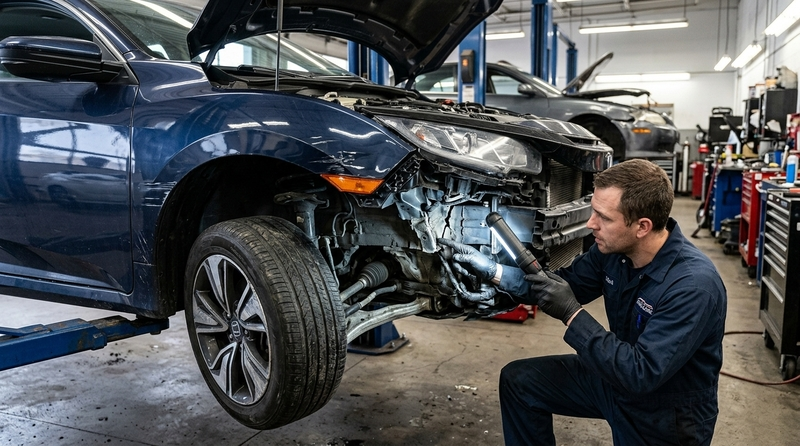
According to the Insurance Institute for Highway Safety (IIHS), even low-speed crashes can cause significant structural deformation that compromises a vehicle’s ability to protect occupants in a subsequent collision. Modern vehicles are engineered with crumple zones, reinforced cabins, and precisely calibrated safety systems, all of which can be thrown off by a collision that leaves no visible scratch on the bumper. That’s why a professional mechanical inspection after any accident is not optional; it’s a critical safety step.
If you’ve recently been in a collision in the Port Charlotte, Florida area, getting a thorough post-accident inspection from a trusted local shop like Tom Joyce Automotive can give you the peace of mind you need, and the documentation your insurance claim may require. With over 30 years of experience and thousands of verified five-star reviews, they’re the kind of shop that will tell you the truth about your vehicle’s condition, not just what you want to hear.
Frame and Structural Damage: The Silent Safety Killer
One of the most common and dangerous forms of hidden accident damage is to the vehicle’s frame. When a car’s frame is bent, twisted, or weakened, even slightly, the entire safety architecture of the vehicle is compromised. In a subsequent collision, the vehicle may not crumple in the engineered way it was designed to, meaning impact forces that should be absorbed by the frame get transferred directly to the occupants.
Frame damage is notoriously difficult to detect without a professional inspection. A shop with a frame measuring system can identify millimeter-level deviations that indicate bending or twisting that is invisible to the eye. If you notice your car pulling to one side, unusual tire wear, or doors that don’t close cleanly after an accident, these can be signs of frame misalignment, but often there are no signs at all.
Airbag and Sensor Systems: When Safety Features Stop Working
Modern vehicles are equipped with a network of crash sensors, airbag control modules, and supplemental restraint systems. In even a moderate collision, one or more of these sensors can be triggered, reset incorrectly, or damaged in a way that prevents the airbags from deploying in the next accident. If the airbag warning light illuminates after a crash and then disappears on its own, that doesn’t mean the problem is resolved; it can mean the system has reset to a non-functional state.
Even if no airbags deployed in your accident, the sensors that trigger them may have been compromised. A diagnostic scan by a qualified technician is the only way to verify that these systems are functioning correctly. This is especially important for families with children, where proper airbag and seatbelt pretensioner function is a matter of life and death.
Brake Lines and Suspension: Damage That Gets Worse Over Time
Brake lines and suspension components are among the most vulnerable parts of a vehicle in a collision, particularly in side impacts or crashes that involve the undercarriage. A brake line that is pinched, crimped, or slightly cracked may function normally for weeks after an accident before failing completely, often at the worst possible moment, like when braking suddenly at highway speed.
Suspension damage is similarly deceptive. Bent control arms, cracked ball joints, or damaged tie rods may not make themselves known until you’re navigating a sharp curve or an emergency maneuver. These components are critical for vehicle control, and compromised suspension not only increases stopping distances but can cause a driver to lose control entirely in certain driving scenarios.
Wheel Alignment and Tire Integrity After a Collision
Even a minor curb strike or low-speed fender-bender can throw a vehicle’s wheel alignment significantly out of spec. Misalignment causes uneven tire wear, increased fuel consumption, and pulling during braking, but more importantly, it affects how the vehicle responds in emergency situations. A car with poor alignment does not steer or brake predictably, which increases accident risk for the driver and everyone around them.
Tires themselves should also be carefully inspected after any accident. Internal structural damage to a tire, caused by a hard impact, can create a bubble or weak spot in the sidewall that is not visible externally. These weak spots can result in sudden blowouts, particularly at highway speeds or in hot weather, which is a serious concern for drivers in Florida.
Fluid Leaks and Engine Compartment Damage
Front-end collisions can damage radiators, coolant hoses, oil pans, transmission lines, and power steering components in ways that aren’t immediately obvious. A small coolant leak might go unnoticed for days before the engine overheats at an inopportune moment. Similarly, a damaged transmission line can cause gradual fluid loss that leads to erratic shifting or complete transmission failure miles down the road.
One of the simplest but most important things a driver can do after any accident is to check the ground beneath their parked vehicle for new fluid spots over the following days. Fresh puddles of any color, green or orange coolant, red transmission fluid, dark brown oil, or clear power steering fluid, are red flags that require immediate professional attention.
Why a Post-Accident Inspection Matters for Your Legal Claim
Beyond safety, a thorough post-accident inspection creates a documented record of all damage, both visible and hidden. This documentation is critically important when dealing with insurance adjusters, who may attempt to attribute pre-existing wear or post-accident damage to conditions other than the collision. A written inspection report from a reputable automotive shop gives you a professional, dated record of exactly what the accident did to your vehicle.
This becomes especially important if your injuries or vehicle damage are disputed. Personal injury attorneys frequently rely on vehicle inspection reports to establish the severity of a crash and the forces involved. A shop with a strong track record and verifiable repair history adds credibility to that documentation in ways that a single-visit discount shop simply cannot.
Don’t Wait: Get Your Vehicle Inspected After Every Accident
The temptation after a minor accident is to shake it off, exchange insurance information, and get back to daily life as quickly as possible. But the hidden damage described above doesn’t announce itself; it accumulates, worsens, and often reveals itself at the worst possible time. Driving an unexamined vehicle after a collision is a risk that no amount of convenience is worth.
Whether your accident was a parking lot scrape or a highway collision, the smartest move you can make for your safety, and your legal and insurance position, is to have a qualified mechanic perform a comprehensive inspection before putting significant miles back on the vehicle. Don’t let hidden damage turn a manageable situation into a dangerous one.
