
How Much Car Insurance Coverage Do I Need? A Complete Guide
Every driver is very well-versed with one expense, and that is car insurance. However, they will still always find themselves struggling with how much coverage they actually need. Don’t suffer like this: let us provide you with a clear-cut answer. Otherwise, you could incur thousands of dollars in out-of-pocket costs after an accident. One must evaluate the type of coverage, state requirements, financial position, and value of the car to achieve the right balance. In this article, we will break down the basics of car insurance and how to determine the desired coverage amounts. We will also provide you with some practical tips on how to balance price with security, so you can choose a policy that suits you well.
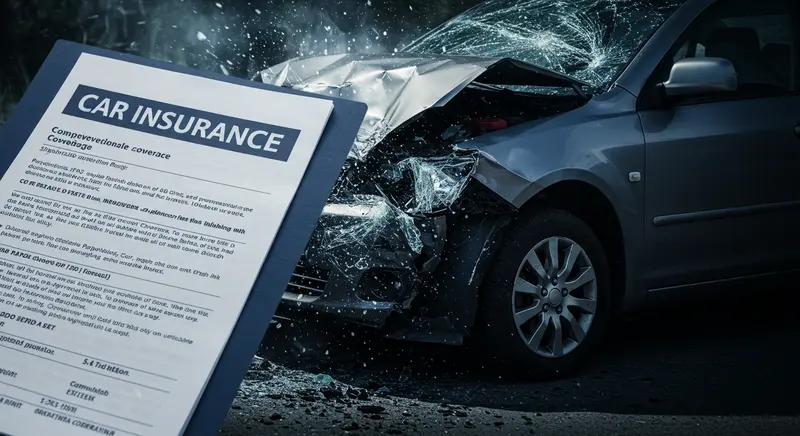
Understanding Car Insurance Coverage Basics
Car insurance covers your financial part in case of accidents, theft, and some other unforeseen damage. Most policies typically combine the required and optional coverages within a single policy.
- Liability coverage is designed to help cover damages and injuries to others.
- Collision coverage applies to an accident where your car crashes into anything, like a car or object, that damages your car.
- Comprehensive coverage includes losses not due to a collision, such as theft and fire.
- Additional coverages, such as roadside assistance, rental reimbursement, and uninsured motorist protection, are also available.
Every part has a function. But the right mix is what makes a car fit for purpose. The fitting of these components will depend on your level of risk and the availability of funds.
Minimum Car Insurance Requirements by State
In all U.S. states, the minimum insurance liability is being set. You may encounter some such limits as 25/50/25, i.e., in bodily injury per person, 50,000 in bodily injury per accident, and 25,000 in property damage. These minimums will allow you to drive, but in reality, they are too small to fit into any real accidents.
In a significant crash, these limits can be exceeded and additional casualty issues will be on you. This is why experts suggest maintaining a buffer of a minimum
How to Decide the Right Amount of Liability Coverage?
To determine the appropriate amount of liability coverage, it is essential to understand how it provides financial protection. The liability coverage is said to be the most vital element of auto insurance as it pays for the damages or injuries you may cause to others in an accident. If you are responsible for injuring someone, this policy helps cover their medical expenses, lost wages and even legal fees. As the name implies, collision coverage pays for the costs of repairing or replacing your car after a covered accident.
Most states require a minimum amount of coverage. In some states, this can be as low as $25,000 per person, but that may not adequately cover you in the event of an accident. Choosing a limit such as 100/300/100 will be the safest option. You can get coverage for $100000 per person, $300000 per accident and $100000 for property damage. With the increased limits, you have a better financial cushion and are less likely to personally pay for high claims or lawsuits.
Do You Need Collision and Comprehensive Coverage?
If your vehicle is new, costly, or financed, collision and comprehensive insurance are generally worth the investment. Collision coverage is useful when you cannot afford repairs for your vehicle after you are determined to be at fault in an accident. The expert advises that comprehensive insurance will help you cover against theft, vandalism, hail or fire, which are beyond your control. If you have a car that’s worth only a few thousand dollars, coverage can sometimes exceed the value of that old car when you are driving it. A suggestion to save the premium is to drop the coverage.
How Much Car Insurance Do Lenders Require?
If you are driving an older vehicle worth only a few thousand dollars, then coverage can be more expensive than the vehicle’s value itself. It may be wise to drop them and save the premium, then it may be.
When you lease or finance a vehicle, the lender will almost always make you add collision coverage and comprehensive coverage up to the point that you pay off the loan. This proves that their car, a valuable asset, is insured. You may also need to purchase GAP insurance, which compensates for the difference between the car’s value and the loan value if the car is totaled.
Factors That Influence How Much Coverage You Need
The coverage level you need depends on several factors.
- The value of your vehicle is higher because A high-end or recent model requires more coverage.
- Individuals who drive long distances daily can find it challenging to remain attentive.
- Depending on where you live, such as in an urban area, accident and theft rates can be higher. So having more coverage may be justified.
Individuals with some savings or assets should consider higher liability coverage limits. It will save you from lawsuits that can put your net worth at risk.
Optional Coverages to Consider
Optional coverages provide protection in the following:
- Uninsured/underinsured motorist coverage helps you if someone hits you with little insurance.
- MedPay or PIP pays medical bills for you and your passengers after a car accident, regardless of who is at fault.
- If your car breaks down or needs to be repaired after an accident, roadside assistance and rental reimbursement can be extremely helpful.
The costs of these accessories are relatively low compared to the protection they provide.
How to Balance Cost vs. Protection?
We must balance security against cost to keep your premiums low, consider increasing your deductibles. Please verify that you can afford the deductibles. You can obtain quotes from multiple insurers, which can be compared and may result in lower rates for the shopper.
When you buy packages like home and car insurance, you can pool your risks. We want to prevent financial disasters, but we don’t care much about minor misfortunes.
FAQs About Car Insurance Coverage
Not always. If your car’s value is low, paying for collision and comprehensive may not be cost-effective.
Experts recommend at least 100/300/100, or higher if you have significant assets to protect.
A garage reduces risk but doesn’t eliminate it. Comprehensive protects against theft, fire, and natural disasters, which can still happen.
Final Thoughts
A whole lot more goes into the right amount of car insurance than state laws. Saying no to extra expenses is only sometimes the answer to staying financially healthy. Consider the worth of your vehicle, your driving behaviour, the location you dwell and your money. Next, create a policy that balances liability, collision, comprehensive and optional coverages. When you drive lawfully, you expand your mind and allow yourself to drive easily when things do not go your way.
