
What Happens When Multiple Drivers Share Blame for an Accident
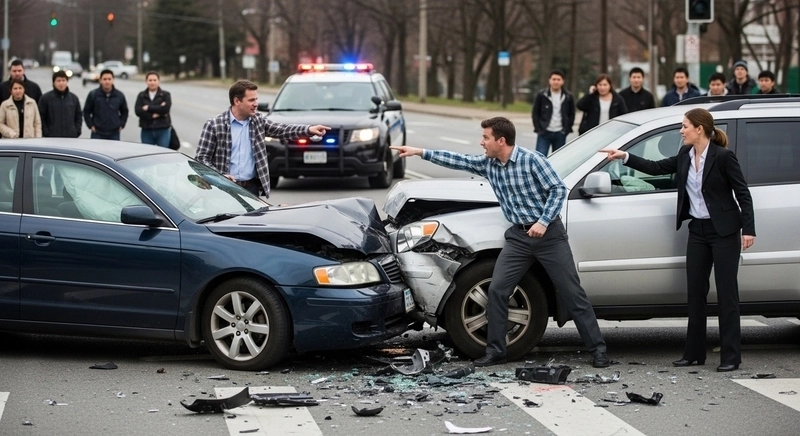
Multi-driver accidents are some of the messiest cases on the road.
When 3 or 4 cars pile in on one another, it may seem impossible to determine who was at fault. Each driver has a different story, each insurance company has a different motive, and each attorney has their own slant.
But here’s the kicker:
The way fault is apportioned will determine your financial settlement. An informed appreciation of comparative negligence will enable you to:
- Know exactly what compensation you can pursue
- Avoid getting bullied by insurance adjusters
- Position your claim to recover the most money possible
This article breaks down everything you need to know.
What’s inside this guide:
- How Shared Fault Actually Works
- Texas And The 51% Rule
- Punitive Damages Explained
- How Insurance Companies Twist The Story
How Shared Fault Actually Works
When more than two cars are involved in a wreck… Things get complicated fast.
Investigators must examine each individual driver and determine what their specific contribution to the collision was. Was a driver speeding? Was another driver texting? Did a third driver fail to brake in time
Each of these actions is then assessed and given a percentage of fault. In the unusual situation, punitive damages may be available if the at-fault party was acting in a particularly bad way – like driving under the influence or road racing, meaning that if one driver was doing something really reckless, you may be able to go after additional compensation on top of normal damages.
If you reside in the State of Texas, you definitely need to hire a Houston car accident attorney the second a comparative fault accident occurs. Why? Punitive damages are only awarded if there is clear and convincing evidence of gross negligence, malice or fraud. Proving that requires extensive legal experience. The difference between ordinary negligence and gross negligence is where punitive damages come into play.
That’s why having a real lawyer matters from day one.
Texas And The 51% Rule
Texas has a unique law that you should know about. It’s referred to as the modified comparative negligence rule or the 51% rule.
Here is how it works in plain English:
- If you are 50% or less at fault, you can recover money
- If you are 51% or more at fault, you walk away with zero
- Your compensation gets reduced by your fault percentage
Ah so if you had $100,000 in damages and you are 30% at fault you only get $70,000.
But here’s where it gets scary:
Just a small shift in fault percentage can wipe out your entire claim.
A slight change in the percentage of fault attributed to you—for example, from 49% to 51%—could bar you from recovery entirely. That’s a 2% swing between being awarded almost half of your damages and nothing.
Now you can see why insurance companies go to such great lengths to get your fault percentage higher.
It’s a very real risk and it occurs daily. In 2024, there were 48,522 crashes in Bexar County, and each one needed a fault determination. That’s tens of thousands of accidents in which someone had to decide who did what.
Multiply that times the entire state of Texas and you can begin to fathom just how many times a day this rule is invoked.
Punitive Damages Explained
Most people only know about regular damages.
These are the medical bills, lost wages and pain and suffering payouts that make up a typical accident claim. But in some accidents, you may be entitled to a lot more…
Punitive damages
Punitive damages are additional funds intended to punish a driver for outrageous behavior. Punitive damages are not designed to compensate you for your losses. Instead, they are designed to send a message that this type of conduct is not tolerated.
When can you get punitive damages?
In Texas, punitive damages are reserved for cases where someone acted with:
- Gross negligence
- Malice
- Fraud
A good illustration would be a drunk driver involved in a multi-vehicle pile-up. It is so irresponsible, normal damages do not suffice. Ditto for street racing accidents, fleeing the police, or 100 mph in a school zone.
Punitive damages can also be sought when several drivers share liability… If even one of those drivers was grossly negligent, that driver can be assessed additional punitive damages on top of their portion of the standard damages.
This is why thorough investigations matter so much in shared fault cases.
Don’t let the insurance company’s quick settlement offer deter you from also pursuing punitive damages.
How Insurance Companies Twist The Story
Here is something you should know about insurance adjusters…
They are not your friend.
The second a multi-vehicle accident occurs, insurance companies go into overdrive to deflect fault from their driver and onto everyone else. They have a financial incentive to do this… Every percentage point of fault they can push onto you is thousands of dollars they don’t have to pay.
What kinds of tactics do they use?
- Twisting innocent statements you made at the scene
- Cherry picking parts of the police report
- Hiring their own “experts” to dispute the facts
- Pressuring you to accept a low settlement quickly
The goal is simple. Get you to 51% fault before you know what happened.
And here’s the worst part:
Insurance adjusters put a preliminary number on fault. However, those first few weeks after an accident, they tend to be on your side’s side. Those first numbers they give you will likely not be realistic.
That’s why you should never take a fault determination as a fact. Police reports can be disputed. Insurance assessments can be modified. Witness statements can be reevaluated.
But you need someone fighting for you to make all that happen.
Final Thoughts
Multi-driver accidents are not straightforward wrecks. They are legal puzzles that must be strategically solved.
Multiple drivers? Every percentage point is crucial. The difference between recovery of all, some, or none of your damages can depend on the allocation of fault.
To quickly recap:
- Shared blame accidents involve fault being assigned across multiple drivers
- Texas has the 51% rule, so you must be 50% or less at fault to recover
- Punitive damages may be available if a driver acted with gross negligence
- Insurance companies will fight to push fault onto you
- Strong legal representation can challenge unfair fault percentages
The biggest mistake you can make following a multi-vehicle wreck is to try and go it alone. Insurance companies have whole teams of people working against you, and they are very good at what they do.
Get the right help, gather the right evidence, and protect your right to compensation.
