
Nissan Pathfinder Years To Avoid And Why?
Nissan is one of the reliable Japanese automobile manufacturers, and has nearly three dozen different car models in production. The company is currently serving nearly every market with its highly reliable vehicles, but there are some Nissan Pathfinder years to avoid, which will be covered in this article.
In the 1990s, SUVs dominated the automobile industry. Chevrolet Blazer, Ford Bronco, Jeep Cherokee, and Toyota 4Runner were in fierce competition. Nissan, in response, came up with a sport utility vehicle built on a ladder-type frame, and named it Nissan Pathfinder.
The Nissan Pathfinder had the same frame as the Nissan Frontier. However, after 2013, the modern Nissan Pathfinder came with a unibody platform instead of a ladder chassis, which makes it more comfortable, efficient, and even more practical.
Nissan Pathfinder has proved itself as a reliable sport utility vehicle, with great build quality and off-roading capabilities. However, some model years had common known faults or issues. These model years and generations have the most problems, and should be avoided:
Nissan Pathfinder Years to Avoid – Quick Overview
Nissan Pathfinder years to avoid in a nutshell are:
| Model Year(s) | Generation | Major Issues |
| 1987–1995 | First Generation | Transmission failure, underbody rust, power loss, braking issues |
| 1996–2004 | Second Generation | Frame rust, strut housing corrosion, oil consumption, EVAP system clogs |
| 2005–2010 | Third Generation | Radiator failure (Strawberry Milkshake of Death), timing chain wear, fuel gauge issues |
| 2008–2012 | Third Generation (Later) | Sunroof malfunctions, no-start condition, cracked exhaust manifolds (V8 models) |
| 2013–2016 | Fourth Generation | CVT shuddering, transmission failure, climate control glitches, airbag sensor malfunction |
| 2017–2020 | Fourth Generation (Later) | Electrical system glitches, faulty sensors, and backup camera issues |
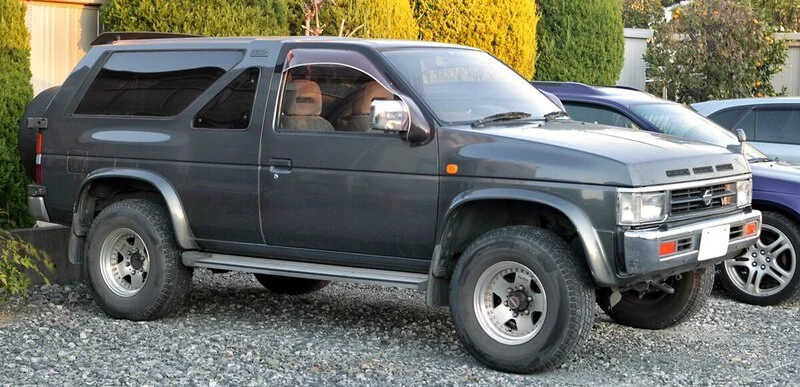
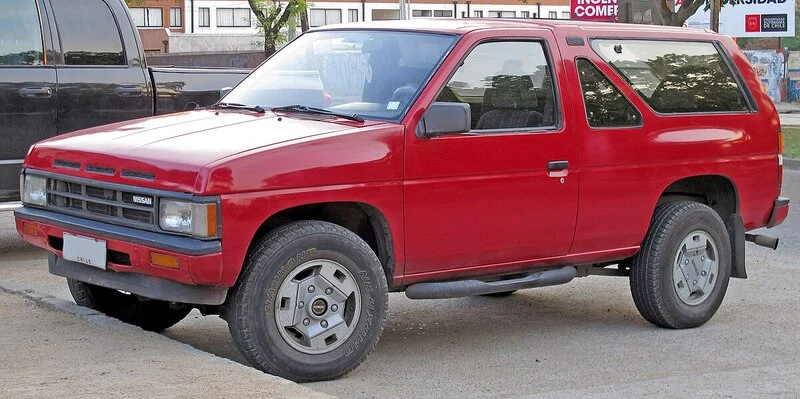
First Generation (1987–1995) Nissan Pathfinder
The first-generation Nissan Pathfinder was a rugged vehicle built more like a truck, and came with a 3.0L V6 gasoline engine (with engine code as VG30E). There was either a 4-speed automatic or a 5-speed manual transmission option. Not only that, but the drivetrain options were limited to either rear-wheel drive or a four-wheel drive system. Some of these common issues with this generation were:
Automatic Transmission Failure
The first generation of Nissan Pathfinder had a common design issue with stock transmission coolers in models with automatic transmission. Many owners have faced and reported complete transmission failure due to the clogged cooler. A few have only reported that transmission struggles to shift into higher gears or enter fail-safe mode.
Underbody Rusting Problem
Nissan Pathfinder’s first generation had a common issue of rusting in specific areas; specifically under the back seat, the bottom rear corner of the trunk door (or back door), under the floor near the gas pedal, and rear wheel arches. Owners reported these areas had poor sealing against moisture, causing rusting.
Engine Loss of Power & Bucking Issue
Nissan Pathfinder (from 1987 to 1989) had a VG30i throttle-body injected petrol V6 engine, which commonly had a loss of power problem. Many owners reported lag and sometimes bucking when accelerating. The engine itself is mechanically reliable and strong, but the failing mass airflow sensors and dirty throttle bodies were a reason for all issues.
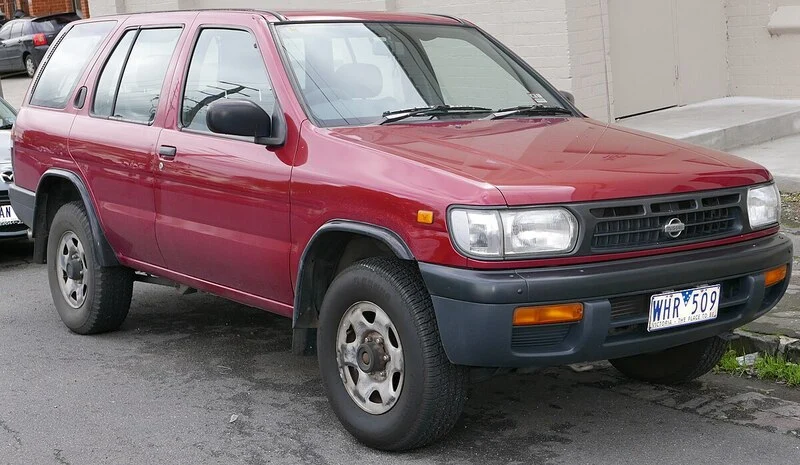
Second Generation (1996–2004) Nissan Pathfinder
Nissan Pathfinder’s second generation was something different than the previous generation. It had a unibody construction instead of a body-on-frame design, and had a 3.3L V6 petrol engine with multi-port fuel injection, which was more fuel efficient yet still had electrical sensor issues. In the same way, this generation had many other problems, such as:
Frame and Structural Rust
In terms of rusting, the second-generation Nissan Pathfinder years to avoid was no less than the first generation. However, these generation models had rusting issues with the frame. To be more specific, the rusting was visible in the areas that were exposed to road salt (used to de-ice during winters).
Strut Housing Corrosion
Much the same with frame rusting, the second-generation Nissan Pathfinders sold in North America had a very common issue of corrosion in the front strut housing, where many owners reported that the strut tower separated from the vehicle. Nissan even had to recall the Pathfinders of this generation for a possible solution.
Engine Oil Consumption
As discussed earlier, Nissan engines are highly reliable, but only if they are taken care of. Many owners of 2002 and 2004 models reported excessive consumption of engine oil, which turns out to be either worn piston rings or valve seals. Both of these components are part and parcel of engine performance and can have potential long-term damage.
EVAP System Clogs
Nissan has been actively following the global regulations related to environmental protection. So, they have added the evaporative emission control system in Pathfinders. Some owners reported that clogged purge valves caused gas spilling and even charcoal canister failures within the system.
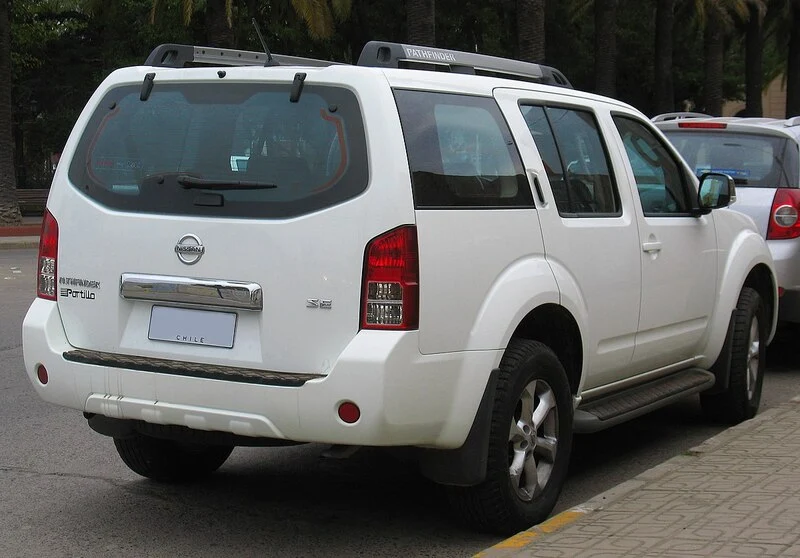
Third Generation (2005–2012) Nissan Pathfinder
The 3rd generation (from 2005 to 2012) Nissan Pathfinder years to avoid had many structural and mechanical upgrades, such as added 3rd row seats and a more rugged boxy design. Not only that, in terms of drivetrain, it was equipped with a larger 4.0-liter V6 engine and a V8 option. However, there were also many issues with this generation, such as:
Radiator and Transmission Failure (“Strawberry Milkshake of Death”)
The 3rd generation of Nissan Pathfinders, particularly from 2005 to 2010 models, had RE5R05A 5-speed automatic transmission. And these gearboxes were shamefully known for issues, where the coolant leaks and mixes with the transmission oil, causing erratic shifting, slipping gears, and eventual transmission failure. Owners referred to this issue as the “Strawberry Milkshake of Death.”
Timing Chain Wear
Nissan Pathfinders with a 4.0L gasoline V6 engine (VQ40DE) had a very common fault with their timing chain, which was reported to wear out prematurely. Many owners expressed their grief on forums that the whining or buzzing noise was heard from the engine (especially on startup). If you have this generation or are planning to buy, consider replacing it urgently to avoid severe engine damage.
Fuel Gauge Malfunction
Many owners have reported that their Pathfinders were having inconsistent fuel readings. For instance, either the gauge showed the tank as empty when it was not, or full when it was nearly empty, or constantly fluctuating while driving. This was a concern for owners as they did not know when to refuel. However, a faulty fuel level sending unit was the root cause, and its replacement can be really expensive.
Sunroof Issues
The model years of 2008 to 2012 of Nissan Pathfinders had many problems with the sunroofs. Some of the common issues are drainage clogs, sunroof not opening/closing, rattling, wind noise (at high speeds), and glass shattering (due to sudden temperature shifts). If you are planning to get one, make sure you check for these mentioned issues before making a deal.
No Crank/No Start Condition
A few owners have also reported that their Pathfinder failed to start, which means the engine would not crank, no matter what. The reports also state that the batteries were fully charged. After a thorough research, we found that there were many causes for these issues, which are all expensive to repair, such as a faulty power distribution module (it can be a starter relay or a fuel pump) or starter motor.
Cracked Exhaust Manifolds (V8 Models)
The Nissan Pathfinders with the 5.6L V8 gasoline engine are still known to crack the exhaust manifold, where the first indication of the problem is a ticking noise during acceleration. The only solution to this problem was complete exhaust manifold replacement.
Fourth Generation (2013–2020) Nissan Pathfinder
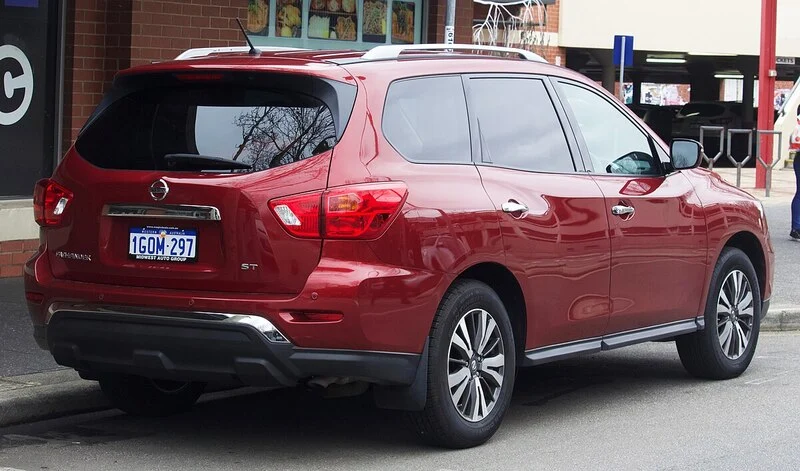
The Nissan Pathfinder model years, from 2013 to 2020, went through a major makeover, both cosmetically and mechanically. Its structure was completely changed from a rugged, truck-like to a car-like crossover SUV. Together with this generation of Pathfinder, it shared the same platform as the Nissan Altima and Murano. However, some of its common problems are:
CVT Transmission Issues
The earlier models of the fourth generation (from 2013 to 2016) had problems with the continuously variable transmission (CVTs), which mainly included shuddering, jerking during acceleration, delayed acceleration, transmission overheating, and even complete transmission failure in some cases.
Airbag Sensor Malfunction
The Nissan Pathfinder (2013 to 2014 models) had reported issues with airbag sensor malfunction, where the airbags did not open in cases of crashes. Nissan Motors immediately recalled certain models for the replacement of the occupant classification system sensor.
Climate Control System Failure
Many owners from the 2013 to 2016 Nissan Pathfinder years to avoid reported multiple times that their climate control system was not working. In such cases, the owners stated the following issues:
- The air conditioning nis ot blowing cold air even when the A/C is turned on.
- The heater does not warm up inside during winter.
- The fan speed nis ot changing.
- The touchscreen freezes or becomes unresponsive.
Apart from many root causes, the most common is the control module, due to software glitches in the module. The only solution was reprogramming at the dealership or replacing the control unit.
Electrical System Glitches (2017–2020)
Since newer models had fewer mechanical issues, they were associated with issues on the technical side. For instance, the models from 2017 to 2020 reportedly had issues such as malfunctioning backup cameras, faulty sensors triggering false warnings, and power door locks and windows not working. All of these issues are easily resolved through software updates.
Bottom Line
The Nissan Pathfinder has been an incredible off-roading machine with good interior space and a high-performance engine. The earlier generations of Nissan Pathfinder years to avoid, particularly the first three generations, had more major mechanical issues. However, in the newer generation, many mechanical issues have already been sorted out, except for a few electrical issues. More importantly, the 2014 models and after had fewer complaints.
