
Understanding Rollover Accident Claims in Jacksonville
Jacksonville drivers face risks on high-speed corridors like Interstate 95 and the Interstate 295 beltway. These massive highways often see heavy commercial truck traffic alongside passenger vehicles traveling at high speeds. A sudden turn or a tire failure in these conditions leads to a loss of vehicle stability. Such incidents result in the vehicle flipping onto its side or roof.
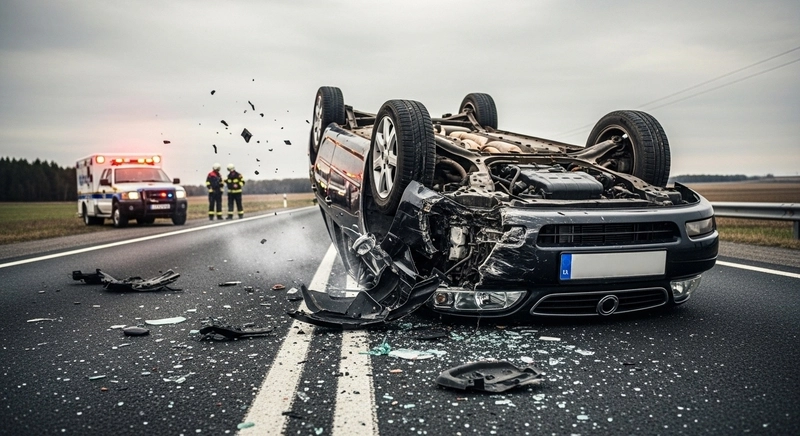
The physical forces in these crashes are immense. They often result in catastrophic injuries for those involved. Navigating a rollover accident requires investigation into vehicle design and road maintenance. Liability is rarely simple. It often involves multiple parties, from negligent drivers to automotive manufacturers who produced a defective roof or a faulty safety system.
Victims must prioritize their medical care while also preserving the physical state of the vehicle. A crushed roof or a failed seatbelt is a critical piece of evidence. Acting quickly to secure the wreckage is the difference between a successful claim and a denied one. The legal process can be difficult to deal with. Victims must understand the factors that led to accident in order to navigate the law well.
Common Causes of Rollover Accidents
Most people assume that a rollover only happens to top-heavy SUVs. This is a total myth. Any vehicle can flip depending on the conditions. According to the National Highway Traffic Safety Administration, “tripping”—when a tire strikes a curb, soft shoulder, or guardrail—is a leading cause of rollovers.
Poor road design or poorly marked construction zones contribute to these trips. If a road crew leaves a dangerous drop-off on the shoulder, the city or a contractor might be at fault. High-speed turns and over-correcting after drifting out of a lane are also primary causes. These split-second errors often stem from driver fatigue or a quick distraction.
Identifying Liable Parties
Who is responsible when a car flips? The answer is not always the person behind the wheel. A skilled legal team looks at every possible failure point. This approach ensures that all sources of compensation are identified for the victim.
Potential defendants often include:
- Negligent Drivers: A motorist who forces you off the road or clips your bumper.
- Automobile Manufacturers: Companies that build vehicles with a high center of gravity or weak roof pillars.
- Tire Manufacturers: Manufacturers of tires that de-bead or blow out under normal driving conditions.
- Government Entities: Agencies responsible for fixing dangerous potholes or clearing debris from Jacksonville highways.
The Importance of Professional Reconstruction
You cannot win a rollover case with just a few photos. You need clear evidence. Accident reconstruction experts use physics to determine the exact speed and angle of the flip. They look at skid marks on the road and data from the car.
Experts answer questions like: Did the brakes fail? Was the driver speeding? Did a mechanical defect cause the steering to lock up? They also analyze weather conditions, road surface quality, and vehicle load at the time of the crash, all of which can influence the rollover dynamics.
These details are vital to fighting insurance companies. Insurance companies often try to blame the driver for losing control even if there was a mechanical error.
Key Takeaways
- Rollover crashes are often caused by “tripping” on road hazards or shoulders.
- Speed and vehicle design are the two biggest factors in whether a car flips.
- Manufacturers can be held liable for weak roofs or defective safety features.
- Independent experts must reconstruct the crash to prove the true cause of the roll.
- Preserve all crash evidence immediately to protect your claim.
