
Should I Talk to the Other Driver After My Accident?
Following a vehicle collision, your initial reaction might involve approaching the other motorist to discuss the incident. While maintaining courtesy and ensuring everyone’s safety is instinctive, participating in extensive conversations about the accident can severely compromise your legal standing and financial compensation.
The period immediately after a crash involves heightened adrenaline, disorientation, and emotional tension. Your decision-making capacity may be compromised, and you might not completely grasp the full scope of damage or injuries. What appears to be harmless dialogue can rapidly transform into damaging statements that insurance providers and opposing legal representatives will exploit against you subsequently.
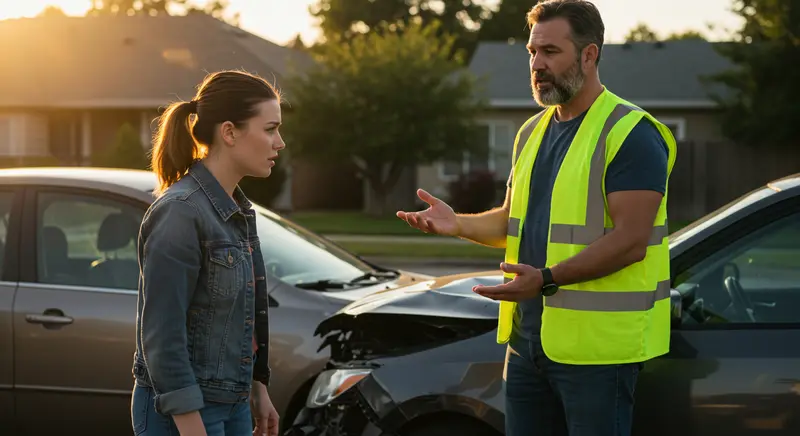
Anything You Say Can Be Used Against You
Your statements possess considerable legal importance following an accident. Even innocent remarks such as “I’m sorry this occurred” or “I didn’t notice you approaching” can be interpreted as confessions of responsibility. Insurance adjusters are educated to search for any sign that you acknowledge liability for the crash, despite the genuine circumstances.
Remarks regarding your physical state are similarly risky. Stating “I feel okay” while you’re still experiencing shock can damage subsequent injury claims when signs emerge hours or days afterward. Soft tissue damage, concussions, and additional injuries frequently present delayed beginning symptoms that aren’t directly evident at the location.
The opposing driver might additionally be documenting the discussion on their device or have observers present who could subsequently provide testimony about your remarks. What you mean as sympathetic worry can be reinterpreted as legal responsibility, possibly resulting in thousands of dollars in damages you merit.
You Need Professional Legal Guidance
Complex liability issues require professional analysis that goes far beyond roadside conversations. Car accident lawyers at the Sloan Law Firm understand how to preserve your legal rights. They ensure proper evidence collection and witness interviews occur under controlled circumstances.
Skilled lawyers understand what inquiries to pose, how to structure questions to prevent compromising your case, and when to stay quiet to safeguard your interests. They can communicate with other parties through proper legal channels that maintain professional boundaries and documentary evidence.
Legal professionals also understand the timing of various procedural requirements, from insurance notifications to lawsuit filing deadlines. Their guidance ensures you don’t inadvertently waive essential rights or miss critical opportunities for recovery.
Emotions Run High and Judgment Suffers
Crash sites represent emotionally volatile environments where clear judgment becomes challenging. The other motorist may experience anger, distress, or seek fault assignment. Participating in dialogue during this unstable period can rapidly develop into disputes or confrontations that complicate legal proceedings.
Your emotional condition faces equal compromise. Impact shock, passenger safety concerns, and vehicle damage anxiety generate mental confusion that undermines your communication capacity. You might inadvertently provide conflicting statements or supply inconsistent details that harm your reliability subsequently.
Expert investigators and legal counsel recognize that immediate post-crash declarations frequently prove unreliable due to psychological pressure. Insurance providers will utilize these statements disadvantageously, contending that your initial response reflects your genuine event comprehension.
You Lack Complete Information
You can’t see traffic camera footage, examine skid marks properly, or understand how vehicle damage patterns reveal the proper sequence of events. Without this complete picture, any statements you make about causation are essentially speculation.
The other driver may also withhold essential details about their actions leading to the collision. They might not mention that they were texting, running late, or dealing with vehicle problems. Your conversation gives them insight into your perspective while you remain uninformed about critical factors that caused the accident.
Weather conditions, road defects, mechanical failures, and third-party actions influence accident causation. These factors often aren’t apparent immediately and require professional investigation to uncover. Premature discussions about fault ignore these complexities and can lock you into inaccurate narratives.
Insurance Companies Monitor Everything
Modern insurance practices involve sophisticated monitoring and investigation techniques. Companies routinely check social media accounts, review medical records, and interview witnesses to build cases against claimants. Your statements to the other driver often reach insurance adjusters within hours of the accident.
Adjusters are skilled at identifying inconsistencies between statements you make throughout the claims process. If your roadside comments differ from your later formal statements, they’ll use these discrepancies to question your credibility and reduce settlement offers.
The other driver’s insurance company is financially incentivized to minimize its payout. They’ll coach their insured on interpreting your statements in ways that favor their position. Your well-intentioned words become ammunition in their effort to deny or reduce your rightful compensation.
Endnote
While politeness and human decency are essential values, protecting your legal and financial interests requires strategic silence after a car accident. Exchange basic insurance and contact information as required by law, but save detailed discussions for conversations with your attorney and insurance company. Your future well-being depends on making smart decisions in those crucial moments following a collision.
