
The Role of Camera Footage in Proving Liability at Intersections
Memory fades and perspectives shift after a sudden impact. Relying on what people think they saw is often a recipe for confusion and frustration. Years ago, cases hinged almost entirely on who could tell the more convincing story to a responding officer.
Those days of guesswork are rapidly vanishing as digital eyes watch over nearly every corner. Instead of debating the timing of a yellow light, parties now look for a memory card. The shift toward objective proof has changed how insurance claims are handled.
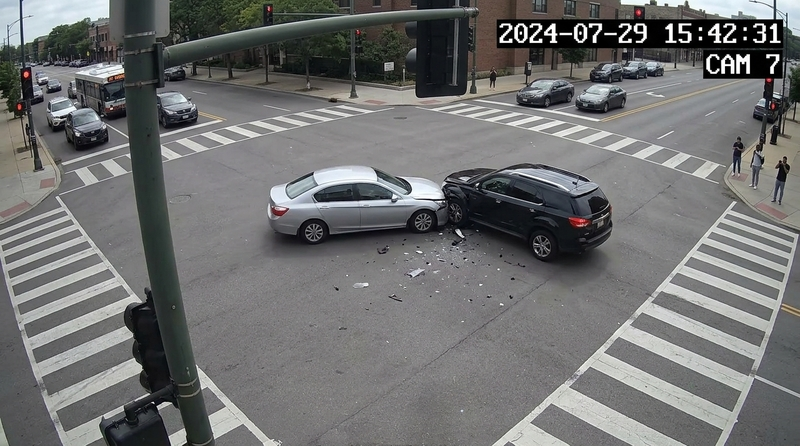
This new standard of evidence provides a level of certainty that previously felt impossible to achieve. When legal teams look to establish intersection accident liability, they prioritize these recordings because high resolution frames rarely lie about which driver ignored a clear red signal.
Personal Recordings as the Ultimate Silent Witness
Dashcams used to be a niche gadget for tech enthusiasts or professional long haul truckers. Now, these small devices sit on the windshields of millions of everyday commuters who want an extra layer of protection. They act as a constant observer.
Having a personal recording device means the moments before a collision are captured from a driver’s specific point of view. It removes the stress of trying to remember every tiny detail while in a state of shock. The footage stays safe on a card.
These devices are particularly useful at busy crossings where things happen in the blink of an eye. If a car swerves or cuts off another driver, the lens catches the exact movement. This creates an undeniable record of events that simplifies the entire process.
Locating External Perspectives from Surrounding Infrastructure
Drivers often forget that they are being watched by more than just other motorists. Intersections in major cities are frequently equipped with government sensors and traffic management cameras. These high angle views offer a broad perspective of the entire scene during a crash.
Private businesses also play a massive role in piecing together a timeline. Gas stations, banks, and convenience stores usually have outdoor surveillance systems that monitor their parking lots and adjacent streets. This footage can be vital if the participants do not have cameras.
Accessing these files usually requires a formal legal request or a subpoena if the owner is hesitant to share. Speed is of the essence because many systems overwrite their data within a few days. Getting a lawyer involved quickly ensures this crucial evidence is preserved.
Reconstructing the Timeline with Multi Angle Precision
Proving what happened involves more than just seeing a car move through a frame. Investigators often take multiple video files and sync them up to see the event from different sides. This multi angle approach reveals blind spots that a single camera might miss entirely.
Audio recordings from inside a vehicle or from a nearby storefront can be just as telling as the visuals. The sound of a horn or the screech of tires provides context for the timing of a collision. It helps determine if a driver attempted to brake.
When experts combine these various streams of data, they create a digital recreation of the accident. This technical synchronization allows everyone to see the physics of the impact in slow motion. The resulting clarity makes it very difficult for an at fault party to deflect.
Settling Disputes When Memories Disagree
Human memory is famously unreliable during high stress situations like a car crash. Adrenaline surges through the body and can actually distort how a person perceives time or distance. Two honest people can walk away from the same event with completely different stories.
This discrepancy often leads to a stalemate where insurance companies cannot determine who to believe. Video evidence breaks these deadlocks by providing a neutral account that does not rely on emotion or bias. It acts as an objective tie breaker for the legal system.
Instead of a prolonged battle of words, the parties can simply review the tape. Seeing the actual sequence of events usually encourages a faster settlement. It prevents the need for expensive trials that rely on the shaky memories of witnesses who were barely paying attention.
Conclusion
The transition to a digital first approach in legal proceedings has created a fairer environment for everyone on the road. Knowing that an objective record exists encourages better behavior and more honest reporting after a collision occurs at a busy city intersection.
While technology can never replace the need for cautious driving, it serves as a powerful safety net when the unthinkable happens. It ensures that the truth remains at the forefront of any investigation, regardless of how much time passes after the impact.
Embracing these visual tools allows the legal system to function with much higher efficiency. As cameras become even more common, the path to justice becomes clearer, protecting those who follow the rules and holding those who ignore them accountable for their actions.
